6 Best Row Counters For Large Blanket Projects
Tracking stitches in large blankets is vital. We review the six best row counters to help you maintain accuracy and simplify your complex knitting projects.
Knitting a large-scale blanket is a marathon, not a sprint, and losing your place in a complex stitch pattern can lead to hours of frustrating frogging. When you are working through thousands of stitches across a six-foot-wide afghan, a reliable tracking system becomes your most vital companion. This guide explores the best tools to keep your progress on track so you can focus on the rhythm of your needles. Selecting the right counter is about finding a tool that integrates seamlessly into your unique knitting flow.
Knitter’s Pride Mindful Collection Row Counter
This elegant, manual clicker is a favorite for those who appreciate a tactile, analog experience. Its smooth, rounded design feels substantial in the hand and avoids the sharp edges that can snag delicate wool or silk blends.
The mechanism is incredibly reliable, providing a crisp "click" that confirms your input without the need for batteries or digital screens. Because it is a standalone piece, you can place it on your side table or keep it in your project bag without worrying about it resetting accidentally.
However, the trade-off is that it requires you to physically remember to reach for it after every row. If you are prone to getting lost in the meditative flow of a long row, you might occasionally forget to click, which can be a significant setback in a 300-row blanket.
Clover Kacha-Kacha Clicker Row Counter Tool


The Kacha-Kacha is widely considered the gold standard for portable, manual row counting. Its name mimics the sound it makes, which is a satisfying, mechanical snap that leaves no doubt that your count has been registered.
Unlike cheaper plastic alternatives, the internal gears are durable and resist the "stuck" feeling that often plagues budget counters. For large blankets, where you might be tracking upwards of 500 rows, this longevity is essential.
It does feature a side-locking mechanism to prevent accidental clicks, which is a lifesaver when the tool is bouncing around in a crowded knitting bag. Just be mindful that the small dial can be tricky to operate if you have limited dexterity or are working in low-light conditions.
Cocoknits Maker’s Keep Magnetic Row Counter
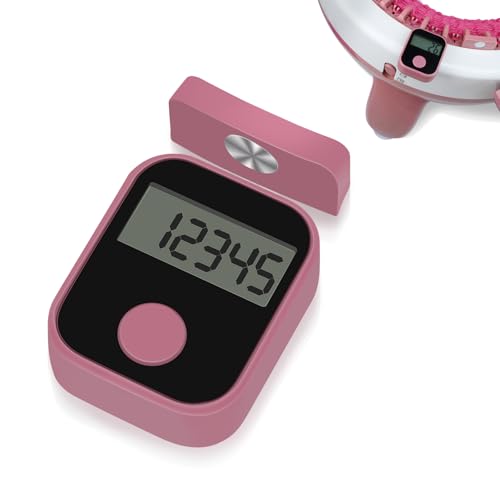
This tool is part of a broader system that centers around a magnetic slap-bracelet, allowing you to wear your counter directly on your wrist. It is a game-changer for knitters who find themselves constantly searching for their tools under a pile of heavy blanket yarn.
The magnetic nature of the system means you can attach it to any metallic surface, or simply keep it on your arm for immediate access. It eliminates the "where did I put that?" panic that often interrupts your knitting rhythm.
While the convenience is unmatched, the magnets are strong enough that you should keep them away from sensitive electronics or credit cards. It is an investment piece, but for a multi-month blanket project, the ergonomic benefit of not having to reach for a counter is worth the cost.
Susan Bates Digital Ring Row Counter Style

The ring-style counter is designed to be worn on your thumb or index finger, keeping the tracking mechanism right at your point of contact. This is particularly useful for knitters who maintain a very tight tension and don’t want to break their grip on the needles.
Digital displays are easy to read at a glance, and this model usually includes a backlit screen for late-night sessions on the couch. You can simply tap the large button with your free hand without ever putting your knitting down.
The main downside is the battery life and the potential for the screen to turn off if you take long breaks between rows. Ensure you have spare coin-cell batteries on hand, as there is nothing worse than the screen going blank in the middle of a complex lace repeat.
Row Counter App: Best Digital Tracking Method
For the modern knitter, a smartphone app offers features that physical tools simply cannot match. Most apps allow you to create multiple projects, track increases and decreases, and even save photos of your progress alongside your row count.
The primary advantage is the ability to set alerts or voice-activated commands, which is incredibly helpful when your hands are covered in yarn. You can also sync your progress across devices, ensuring you never lose your count if you switch from a tablet to a phone.
The risk here is the digital distraction; it is easy to get pulled into notifications while you are reaching for your phone to log a row. If you struggle with focus, a dedicated physical tool might still be the superior choice for your mental peace.
Boye Aluminum Traditional Needle Row Counter
These classic counters slide directly onto the end of your knitting needle, keeping your count physically attached to your work. They are a no-nonsense, budget-friendly solution that has been used by generations of knitters.
Because they are fixed to the needle, they are virtually impossible to lose, making them excellent for large, stationary blanket projects. They are lightweight and won’t throw off the balance of your circular needles, even when working with long, heavy cables.
The trade-off is that they can only be used with specific needle sizes, and they don’t always fit on the very thick needles often used for chunky blankets. Always check your needle diameter before purchasing to ensure a proper, non-binding fit.
Why Blankets Require Specialized Row Counting
Blankets are unique because they often involve massive stitch counts and long, repetitive sections that can lead to "knitter’s amnesia." When you are working on a project that takes months to complete, the margin for error increases significantly.
Unlike a scarf, where you can easily count your rows visually, a 60-inch wide afghan is far too cumbersome to stretch out and measure accurately. You need a system that is as reliable as the effort you are pouring into your heirloom piece.
Furthermore, many blankets use complex stitch patterns that require you to track not just rows, but repeats. A specialized counter allows you to manage these layers of information without overwhelming your memory.
Essential Features for Large Project Counters
When shopping for a counter for a large project, look for these three critical characteristics:
- Locking Mechanism: Prevents accidental bumps from changing your count.
- Visibility: A clear, easy-to-read display that doesn’t require squinting.
- Durability: A sturdy build that can withstand months of daily handling.
Consider how the tool integrates with your specific knitting style. If you are a "travel knitter," prioritize portability and a locking feature. If you are a "couch knitter," prioritize comfort and ease of use.
Managing High Row Counts in Blanket Patterns
When your pattern calls for 400 or 500 rows, tracking becomes a mental game. Many knitters find it helpful to use a "secondary" counter or a simple sticky note to track the number of full pattern repeats completed.
Don’t be afraid to use multiple methods simultaneously. For example, use a digital app for your main row count and a physical clicker for your current row to provide a backup in case of a digital glitch.
Always write down your current row count on a project card at the end of every session. Even the best electronic counters can reset if a battery dies or a button is pressed in your bag, so a paper backup is your ultimate safety net.
Tips for Staying Consistent With Your Tracking
The most important rule is to log your row immediately after completing it, not before you start the next one. Building this into your muscle memory prevents the common mistake of "did I click that yet?"
If you find yourself frequently forgetting, try linking the action to a physical cue, like taking a sip of tea or adjusting your position. Consistency is a habit, and once you establish a routine, tracking will become as automatic as the knit stitch itself.
Finally, forgive yourself if you lose your place. Even the most experienced experts occasionally have to count rows manually by tracing the "V" shapes of the stitches; it is a fundamental skill that every knitter should eventually master.
Choosing the right row counter is a personal decision that balances your knitting style with the demands of your project. Whether you prefer the satisfying click of a manual tool or the feature-rich convenience of an app, the best choice is the one you will actually use every single time. By integrating a reliable tracking method, you remove the guesswork from your blanket project, allowing you to enjoy the process as much as the finished result. Happy knitting, and may your rows always stay perfectly counted.