6 Best Sewing Gauges for Consistent Hem Widths
Achieve professional finishes with these 6 top sewing gauges. Discover tools that ensure precise, consistent hem widths for all your garment projects today.
Achieving a perfectly straight hem is the difference between a project that looks "handmade" in a clunky way and one that looks truly professional. Whether you are finishing the edge of a hand-knit cardigan or sewing a lining for a delicate wool skirt, consistency is your best friend. A reliable sewing gauge removes the guesswork, ensuring your folds are identical from start to finish. Mastering these simple tools will elevate your fiber arts projects to a level of polish you’ll be proud to wear.
Clover 5-in-1 Sliding Gauge: The Top All-Rounder


The Clover 5-in-1 is the Swiss Army knife of the sewing room. Its sliding marker stays firmly in place, which is vital when you are measuring multiple hem depths on a single garment.
It features a point turner and a compass pivot, making it incredibly versatile for more than just hems. If you often switch between sewing hems and marking buttonhole spacing, this is the tool that stays on your desk.
Because it is made of a heat-resistant material, you can actually press your fabric right up against the edge. Just be careful not to hold your iron in one spot for too long, as even the most durable plastic has its limits.
Dritz Ezy-Hem Gauge for Precise Folded Edges
If you struggle with keeping long, straight hems consistent, the Dritz Ezy-Hem is a game-changer. It is a metal ruler designed specifically for folding fabric over, which saves your fingers from the heat of the iron.
The metal construction allows you to press directly onto the gauge with a hot steam iron. This is especially helpful when you are working with natural fibers like linen or heavy cotton that require high heat to set a crisp crease.
The markings are etched into the metal, so they won’t rub off after years of use. It is a simple, no-nonsense tool that does one thing perfectly: creating a razor-sharp fold every single time.
Collins Sewing Gauge with Integrated Slider
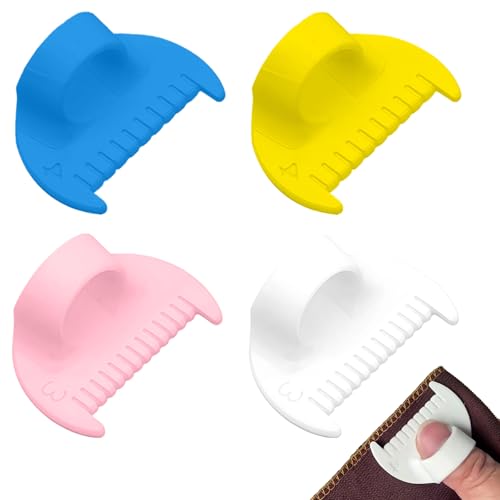
The Collins gauge is a classic for a reason. It is lightweight, inexpensive, and features a smooth-sliding indicator that doesn’t get stuck midway through your measurement.
This tool is perfect for the knitter who is just beginning to integrate sewing into their fiber arts practice. It is straightforward and lacks the complexity of multi-purpose tools, which prevents the frustration of fiddling with extra features you don’t need.
While it is made of plastic, it is sturdy enough for everyday tasks. Keep it in your notions bag with your favorite cable needles and tapestry needles so it’s always within reach when it’s time to finish a project.
Singer Adjustable Hem Gauge for Quick Measuring
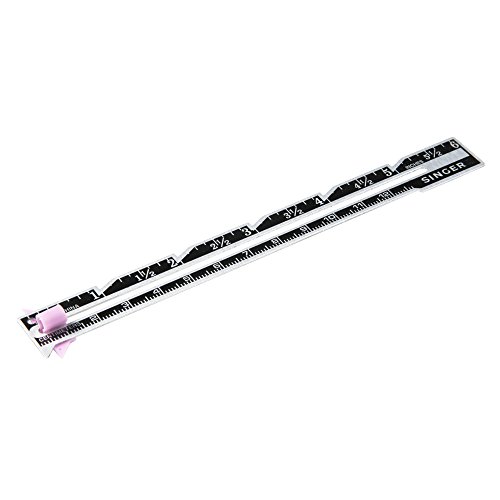
Singer’s adjustable gauge is designed for speed. When you have a large project, like a floor-length wool skirt, you need a tool that lets you move quickly without sacrificing accuracy.
The sliding mechanism is robust, allowing you to lock in your desired hem depth securely. It is particularly useful when you have to measure a wide hem that needs to be folded twice, such as a double-fold hem on a lightweight silk or cotton lawn.
Don’t let the simplicity fool you; this tool is a workhorse. It helps you maintain a consistent distance from the edge, which is critical when you are topstitching a hem on a finished knitted garment.
Omnigrid 6-Inch Quilting Gauge for Accuracy

Though designed for quilters, the Omnigrid gauge is an essential tool for any fiber artist. Its transparent yellow-green tint makes it incredibly easy to see your fabric markings, even on dark or textured materials.
The grid lines are printed with high precision, which is a massive advantage when working with small-scale projects. If you are hemming a delicate accessory or a small pocket, the fine lines allow for microscopic accuracy.
Because it is a flat, clear ruler, you can use it to check the grain line of your fabric before you start your hem. It is a multipurpose tool that bridges the gap between precision quilting and garment construction.

LDH Scissors Hem Gauge for Heavyweight Fabrics
LDH is known for quality, and their hem gauge is no exception. It is designed with a sturdier build, making it ideal for those who work with heavy wools, canvas, or thick denim.
When you are working with dense fabrics, you need a gauge that doesn’t flex or bend under pressure. This tool holds its shape, ensuring that your hem line remains dead straight even when the fabric is bulky.
It is a bit of an investment compared to basic plastic rulers, but it pays off in durability. If you are a dedicated maker who plans on sewing for decades, having a tool that won’t warp or crack is a wise choice.
Why Accurate Hem Gauges Improve Your Finishing
Accuracy in hemming is about more than just aesthetics; it is about the structural integrity of your garment. A hem that is uneven will cause the fabric to hang incorrectly, leading to unsightly ripples or drooping.
When you use a gauge, you ensure that the fabric weight is distributed evenly around the bottom of the garment. This is especially important for knitwear, where the fabric has natural stretch and can easily become distorted if the hem isn’t balanced.
Think of it like blocking a lace shawl; if your tension is inconsistent, the final shape will be off. A hem gauge acts as your "blocking tool" for the edges of your sewn projects, ensuring a professional, balanced finish.
Essential Features to Look for in Hem Gauges
When shopping for a hem gauge, prioritize the following features to ensure you get the most utility out of your purchase:
- Clear, permanent markings: Avoid gauges where the numbers are printed on the surface; they will wear off.
- A secure slider: The sliding marker must stay in place until you manually move it.
- Heat resistance: If you plan to press with your iron, metal is superior to plastic.
- Size compatibility: Ensure the gauge covers the range of hem depths you use most frequently.
Ultimately, the best gauge is the one that feels comfortable in your hand and fits your specific project needs. If you find yourself constantly reaching for the same one, you’ve found your match.
Metal vs. Plastic Gauges: Which Lasts Longer?
Metal gauges are the gold standard for longevity and heat resistance. They are less likely to warp, melt, or break, making them a one-time purchase that can easily be passed down to the next generation of makers.
Plastic gauges, while less durable, offer the advantage of being lightweight and often more visible against certain fabric colors. They are a great entry point for beginners who aren’t yet sure which features they prefer.
If you are a heavy user who sews every week, invest in metal. If you are an occasional maker who prefers a lightweight kit, a high-quality plastic gauge will serve you perfectly well for years to come.
Tips for Achieving Perfectly Even Hem Widths
Start by pressing your hem allowance before you even think about stitching. Use your gauge to measure the depth at regular intervals, pinning as you go to hold the fabric in place.
When working with slippery or delicate fabrics, use a "basting" stitch to hold the hem in place before sewing it permanently. This prevents the fabric from shifting under the presser foot and keeps your gauge-measured width intact.
Finally, always measure from the finished edge of the fabric, not the raw edge, if your hem is folded. Consistency is a habit; the more you use your gauge, the more intuitive your measuring will become.
Investing in a quality sewing gauge is a small step that yields massive improvements in the professional look of your work. By removing the guesswork from your hemming process, you free up your mental energy to focus on the creative aspects of your fiber arts projects. Whether you choose a versatile sliding tool or a sturdy metal ruler, you are building a foundation for better construction. Keep your gauge close, measure twice, and enjoy the satisfaction of a perfectly finished edge.