7 Best Felting Needle Holders For Grip To Try
Improve your needle felting precision with these 7 ergonomic holders. Discover the best grip designs to reduce hand strain and enhance your crafting comfort.
Needle felting is a rhythmic, meditative craft that transforms loose wool into intricate sculptures, but it can be surprisingly taxing on the hands. If you’ve ever felt your fingers cramping after an hour of sculpting a delicate needle-felted animal, you know that the right tool is the difference between joy and discomfort. A proper needle holder doesn’t just improve your grip; it changes the entire mechanics of how you penetrate the wool. Here are seven exceptional tools designed to keep you crafting longer and more comfortably.
Clover Pen Style Needle Felting Tool: Best Overall


The Clover Pen Style tool is a staple in many fiber studios for good reason. Its slender, lightweight profile mimics the feel of a fountain pen, making it incredibly intuitive for those of us who have spent years holding knitting needles or crochet hooks.
The real magic here is the spring-loaded action. It allows for a smooth, consistent stabbing motion that prevents the needle from dragging through the fiber, which is a common cause of premature needle breakage.
Because it uses a standard, interchangeable needle system, you can easily swap in different gauges as you transition from bulk sculpting to fine surface detailing. It is the perfect "workhorse" tool for any project, from small ornaments to larger, structural pieces.
Ashford Multi-Needle Felting Tool: Best Heavy Duty

When you are working on a large-scale project—like felting a dense, life-sized wool sculpture—a single needle simply won’t cut it. The Ashford Multi-Needle tool is designed for speed and coverage, allowing you to move large amounts of fiber quickly.
This tool features a sturdy, wooden handle that provides excellent leverage. It is particularly helpful when you need to firm up a core structure, as the multiple needles lock the fibers together in a fraction of the time it would take with a single point.
Keep in mind that this tool is not for fine detail work. Use it for the initial bulk-building phase of your project, then switch to a single-needle holder once you are ready to refine the shape and smooth out the surface.
Bear Creek Felting Ergonomic Handle: Best for Grip
If you suffer from arthritis or general hand fatigue, the Bear Creek Felting handle is a game-changer. Its bulbous, ergonomic design is specifically engineered to be held in the palm rather than pinched between the fingers.
By shifting the pressure from your small finger muscles to the larger muscles of your palm and wrist, you significantly reduce the risk of repetitive strain. It feels substantial and secure, ensuring your hand doesn’t slip during long felting sessions.
This is an investment piece for the dedicated needle felter. While it might feel slightly bulky at first, the long-term relief it provides for your joints makes it an essential addition to your toolkit.
Hamanaka Three-Needle Punch Tool: Best Precision
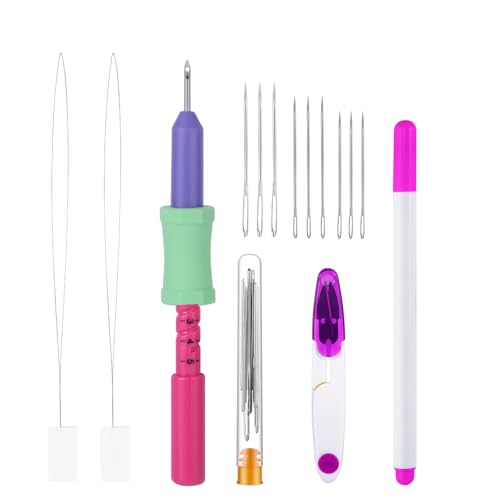
Hamanaka tools are renowned for their Japanese craftsmanship, and this three-needle punch is no exception. It offers a unique balance between the speed of a multi-needle tool and the surgical precision needed for facial features or small details.
The needles are arranged in a way that allows you to work in tight, controlled spaces without compromising the structural integrity of your piece. It is exceptionally well-balanced, meaning you don’t have to fight the tool to get it to go exactly where you want.
If you are a perfectionist who spends hours perfecting the expression on a felted animal, this is your best friend. It allows for a level of detail that larger, bulkier tools simply cannot achieve.
Dimensions Needle Felting Tool: Best for Beginners

Many beginners start with a basic, unbranded needle holder, but the Dimensions tool offers a significant step up in quality without a steep learning curve. It is affordable, easy to load, and features a comfortable grip that helps new felters develop good technique.
The tool’s design encourages a vertical stabbing motion, which is the most important habit for a beginner to form. If you angle your needle too sharply, it will snap; this tool’s housing helps keep your angle true.
It’s an excellent "starter kit" tool that won’t break the bank while you decide if needle felting is a craft you want to pursue long-term. It provides a solid, reliable experience that builds confidence.
Woolbuddy Wooden Needle Holder: Best Sustainable

For those of us who prefer natural materials over plastic, the Woolbuddy wooden holder is a beautiful choice. It is crafted from eco-friendly wood, offering a warm, tactile feel that only improves with age.
Beyond its aesthetics, the wooden handle provides a natural, non-slip grip that works well even if your hands get a bit sweaty during intense work. It is simple, durable, and feels like a professional artisan tool in the hand.
Because it is a single-needle holder, it is best suited for precision work and finishing. It’s a wonderful choice for the maker who values sustainability as much as they value the quality of their finished fiber art.
Schacht Spindle Company Felting Tool: Best Design

Schacht is a legendary name in the spinning and weaving world, and their felting tool reflects that deep expertise. The design is sleek, incredibly durable, and features a clever mechanism for securing needles that prevents them from wiggling during use.
The weight distribution is perfect, allowing for a fluid motion that feels like an extension of your own hand. It is clearly designed by people who understand the physics of fiber manipulation.
While it is a premium tool, the build quality ensures it will last for years of heavy use. If you want a tool that looks as good as it performs, this is the one to choose.
Why Ergonomic Handles Reduce Hand Fatigue in Felt
Needle felting requires thousands of repetitive motions, which can lead to tendonitis or nerve irritation if your grip is too tight. A standard, thin needle can force your hand into a "claw" position, which is a recipe for soreness.
Ergonomic handles work by increasing the diameter of the tool, allowing your hand to remain in a more neutral, relaxed position. This simple change in geometry drastically reduces the force your tendons need to exert to keep the tool steady.
Think of it like using a thick-handled crochet hook versus a thin metal one; the thicker handle distributes pressure across your palm. By relaxing your grip, you also gain better control over the depth and placement of your needle stabs.
Essential Features to Look for in Felting Tools
When shopping for a tool, consider how the specific design will interact with your unique hand size and project goals. Not every tool is right for every felter, so look for these key indicators:
- Weight: A tool that is too light can feel flimsy, while one that is too heavy can cause fatigue. Look for a "goldilocks" weight that feels substantial but maneuverable.
- Needle Security: The needle must be held firmly in place. Any "wobble" will lead to broken needles and uneven felting.
- Material: Wood offers a warm, grippy feel, while silicone or rubberized coatings provide a secure, non-slip surface.
- Ease of Replacement: You will break needles—it is an unavoidable reality of the craft. Ensure the tool allows for quick, tool-free needle changes.
How to Maintain Your Felting Needles for Longevity
The most common reason for broken needles is not the tool, but the angle of entry. Always enter and exit the wool at the same 90-degree angle; "leveraging" or prying the needle sideways while it is buried in the wool is the fastest way to snap the shaft.
Regularly inspect your needles for burrs or rust. Even a tiny, invisible nick on the tip can snag your wool and ruin the smooth finish of your project. If you feel the needle dragging or making a "grating" sound, it’s time to swap it for a fresh one.
Finally, keep your needles clean. Over time, oils from your hands and microscopic fibers can build up on the needle shaft. A quick wipe with a soft cloth can keep them sliding smoothly through the wool, making your felting process much more efficient.
Choosing the right felting tool is a personal journey that depends on your hand health, project scale, and aesthetic preferences. By investing in a handle that promotes a relaxed, ergonomic grip, you protect your body and enhance the quality of your fiber art. Take the time to experiment with these options, and you will find that the right tool doesn’t just make felting easier—it makes it more creative. Happy felting, and may your fibers always lock together perfectly.