6 Best Stitch Markers For Tracking Cable Repeats
Master complex cable patterns with our top six stitch markers. We review the best durable, snag-free tools to help you track repeats with ease and precision.
Mastering complex cable patterns requires more than just steady hands and a sharp eye for tension; it demands a reliable system for tracking your repeats. When you are deep into a complex aran sweater, losing your place in a 12-row cable repeat can lead to hours of frustrating tinking. The right stitch markers act as your project’s roadmap, keeping your cables aligned and your sanity intact. Choosing the right tool for the job is the difference between a meditative knitting session and a complete frogging disaster.
Cocoknits Colorful Nylon Ring Stitch Markers


These nylon rings are the gold standard for those who prefer a minimalist, unobtrusive approach to cable tracking. Because they are seamless and coated in a smooth nylon finish, they glide over your needles without catching on the plies of your yarn.
They are particularly effective when working with delicate fibers like alpaca or mohair, where snagging can cause unsightly halo distortion. Since they don’t lock, they are best suited for marking the beginning of a cable repeat that stays in place for the duration of the project.
Keep in mind that their lightweight nature means they can occasionally get lost in the folds of a large garment. If you are working with a highly textured yarn, the lack of weight might make them harder to spot during a quick scan of your work.
Clover Locking Stitch Markers for Cable Work

Clover’s locking markers function like tiny safety pins, making them indispensable for marking specific rows or checking your cable crosses. If you need to verify that you’ve completed a specific number of rows since your last cable twist, these allow you to anchor the marker directly into the stitch.
This is a lifesaver when you are working on a project with multiple cable panels that don’t all cross on the same row. By locking a marker into the fabric at the start of each repeat, you create a visual ledger that is impossible to ignore.
Be careful when using these on very fine, high-twist yarns, as the plastic hinge can occasionally snag a stray fiber if you aren’t gentle. Always ensure the marker is fully closed to prevent it from snagging your sweater as you carry it in your project bag.
Knitter’s Pride Rainbow Metal Stitch Markers

Metal markers are a favorite among knitters who prefer a bit of weight to help keep their work organized. The smooth, colorful finish on these metal rings makes them easy to distinguish, which is helpful if you are using different colors to denote different types of cable repeats.
Because they are made of metal, they are incredibly durable and won’t succumb to the stretching or snapping that can plague cheaper plastic rings. They also have a pleasant "clink" sound that many knitters find rhythmically satisfying during long sessions.
The primary trade-off is their weight; if you are using very lightweight needles, they can sometimes cause the needle tip to dip slightly. However, for most medium-to-heavyweight cable projects, they provide the perfect amount of stability.
Katrinkles Wooden Cable Count Stitch Markers

Katrinkles markers are a brilliant, tactile solution for knitters who struggle to remember which row of a cable repeat they are currently on. These wooden markers are often etched with numbers, allowing you to physically move the marker to correspond with your current row.
They provide a sense of groundedness that plastic or metal simply cannot match, especially when working with natural fibers like wool or linen. The wood has a slight "grip" that prevents it from sliding around too much, keeping your count exactly where you left it.
Because they are slightly thicker than ring markers, they are best used on needles size US 4 (3.5mm) and above. Using them on very fine lace needles might create unnecessary tension in your stitches, so reserve these for your worsted and bulky cable projects.
Tulip Heart-Shaped Locking Stitch Markers
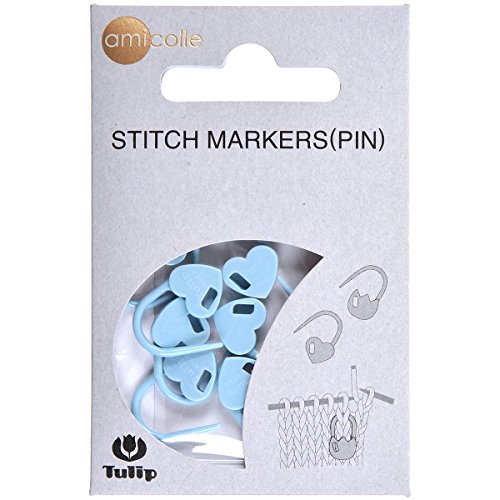
Tulip is renowned for the quality of their manufacturing, and these heart-shaped locking markers are no exception. The hinge mechanism is exceptionally smooth, meaning you won’t experience that "catch" that often ruins the flow of your knitting.
The heart shape isn’t just aesthetic; the tapered point makes it easier to insert the marker into a tight cable stitch without distorting the fabric. They are perfect for knitters who find standard locking markers too bulky or difficult to manipulate.
These are an investment, but they are worth it for complex projects where you are frequently moving markers. Their reliability means you won’t spend your knitting time fighting with your tools, allowing you to focus entirely on your cable crosses.
DPN-Style Flexible Coil Cable Stitch Markers

These coil-style markers are designed to stay put on the needle while offering a bit of flexibility. They function similarly to a traditional cable needle but are small enough to be used as a permanent marker that stays on the needle between rows.
They are excellent for knitters who find that traditional ring markers slide off the needle tips too easily. The coil design grips the needle just enough to stay in place, yet it moves smoothly when you slide it from one needle to the other.
If you have a tendency to knit with a very tight gauge, be aware that these can sometimes leave a small gap in the stitch where the marker sits. To mitigate this, try to move the marker to a different position every few rows to redistribute the tension.
How to Choose Markers for Complex Cable Repeats
When selecting markers for cables, consider the complexity of the repeat and the weight of your yarn. If your pattern involves a 20-row repeat with multiple overlapping cables, you need a system that is both visually distinct and physically secure.
- For simple, long-repeat cables: Use simple, snag-free rings to mark the start of the pattern.
- For complex, multi-panel cables: Use locking markers to track individual cable crosses.
- For row-counting: Use numbered or sequential markers to keep track of your progress.
Don’t be afraid to mix and match your markers. Using a distinct, brightly colored marker to signal the start of a round and smaller, subtle markers for individual cable repeats is a pro-level strategy that prevents confusion.
Plastic vs Metal Markers: Which Should You Use?
Plastic markers are generally lighter and gentler on delicate fibers, making them ideal for fine-gauge knitting or projects using slippery yarns like silk. They are inexpensive and come in a wide variety of shapes, which is helpful for color-coding your pattern sections.
Metal markers, on the other hand, offer superior durability and a satisfying tactile weight. They are less likely to break or warp over time, making them a great long-term investment for a knitter who tackles a lot of heavy-duty projects.
The choice often comes down to your personal knitting style and the needles you are using. If you use wooden needles, metal markers can sometimes feel a bit abrasive; if you use metal needles, plastic markers often provide a better contrast and grip.
Why Snag-Free Designs Matter for Cable Knitting
Cable knitting involves a lot of manipulation, which means your yarn is constantly moving over and around your needles. A marker with a rough edge or a poorly finished seam is a disaster waiting to happen, as it can snag a single strand of your yarn and pull it out of place.
This is especially critical with high-twist yarns or fibers that are prone to pilling. A snag can leave a permanent "scar" in your fabric that no amount of blocking will fully remove.
Always run your finger over a new marker before using it; if you feel a catch or a sharp bit of plastic, discard it. Your project represents hours of hard work, and it isn’t worth risking the integrity of your stitches for a cheap tool.
Troubleshooting Lost Counts in Cable Patterning
If you find yourself constantly losing your place in a cable repeat, it’s time to change your tracking strategy. The most common mistake is relying on memory rather than a physical tool; even the most experienced knitters will eventually lose count during a long session.
Start by using a dedicated marker for every single cable repeat, even if it feels like overkill. If you are working on a project with a 12-row repeat, place a locking marker on the fabric every time you complete a cross.
Finally, don’t ignore the "telltale sign" of a cable cross. If your cables look "off" or the tension seems loose, stop immediately and count your rows against your pattern chart. It is always faster to fix a mistake three rows down than it is to realize it after you’ve finished the entire piece.
Finding the right stitch markers is a deeply personal part of the knitting journey that bridges the gap between chaos and order. By testing different styles and being honest about your own knitting habits, you can build a toolkit that supports your creative process rather than hindering it. Remember that the best marker is the one that allows you to focus on the rhythm of your stitches rather than the stress of the count. Happy knitting, and may your cable crosses always be perfectly aligned.