7 Best Soft Tapes For Body Measurements To Try
Finding the right measuring tape is essential for accuracy. We review the 7 best soft tapes, focusing on durability, ease of use, and precise measurement scales.
Achieving the perfect fit for a hand-knit garment starts long before you pick up your needles. Without precise body measurements, even the most expensive hand-dyed yarn won’t save a sweater from fitting poorly. A reliable soft tape measure is the most underrated tool in your knitting bag. Here are seven options to ensure your next project fits exactly as intended.
Dritz Ezy-Read Tape: Best Overall for Knitters


When you are deep into a complex cable pattern, the last thing you want is to squint at faded markings. The Dritz Ezy-Read features high-contrast, large numbering that makes it nearly impossible to misread your stats.
This tape is exceptionally flexible, which is a massive advantage when measuring tricky areas like the upper arm or the curve of the bust. Because it doesn’t fight against the body’s natural contours, you get a much more consistent reading every time.
However, the vinyl can stretch slightly over many years of heavy use. If you find yourself measuring for a dozen sweaters a year, check it against a metal ruler every few months to ensure it remains true.
Singer Professional Fiberglass Tape Measure

Fiberglass tapes are the gold standard for those who prioritize durability above all else. Unlike standard vinyl, the fiberglass core in this Singer model prevents the tape from stretching, even after years of being coiled in a project bag.
If you are someone who frequently measures finished garments or gauge swatches, this stability is essential. You want a tool that provides the same measurement today as it did when you first bought it, regardless of humidity or temperature changes in your craft room.
The trade-off here is a slightly stiffer feel compared to pure vinyl tapes. It might not drape quite as softly over the shoulders, but the trade-off for long-term accuracy is well worth it for the serious garment knitter.
Hemline Retractable Tape for Precision Work
Retractable tapes are a lifesaver for the knitter who keeps their tools scattered across various project bags. By housing the tape in a sturdy case, you protect the markings from wear, tear, and accidental snagging on your yarn.
This model is particularly excellent for quick checks during the construction phase of a sweater. If you need to measure the length of a sleeve before starting your decreases, a simple push-button retraction keeps your workspace clutter-free.
Be aware that the internal spring mechanism can eventually wear out if handled roughly. Treat the retraction gently, and it will serve as a reliable companion for years of sweater-making.
Sewline Fabric Glue Pen and Tape Measure Set

Sometimes the best tools come in bundles that solve multiple problems at once. This set is a favorite for those who do a lot of finishing work, as it pairs your measuring tool with a tool for temporary basting or securing seams.
For knitters who struggle with garment construction, having these tools together encourages better habits. Measuring your seams before and after pinning ensures that your final garment matches the schematic provided in your pattern.
While the tape itself is standard quality, the convenience of the kit is the real selling point. It is a perfect addition for a beginner who is just starting to build their essential toolkit.
Tailor’s Choice Soft Vinyl Measuring Tape
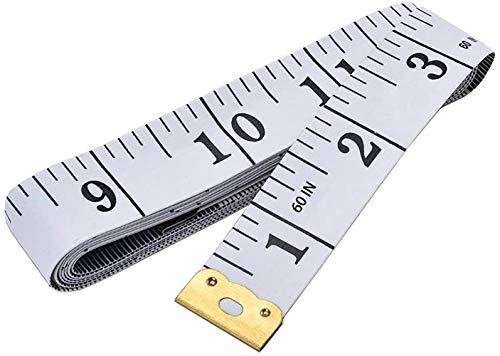
Sometimes, simplicity is the most effective approach. This soft vinyl tape is incredibly pliable, making it the perfect choice for measuring complex shapes like armholes or necklines.
Its soft texture means it won’t irritate the skin if you are measuring yourself for a custom-fit project. When you are trying to get an accurate measurement of your own back, you need a tape that follows your movement without sliding around.
Because it is so soft, avoid pulling it taut while measuring. Let the tape rest against the body naturally to ensure you aren’t compressing your measurements and creating a garment that is too tight.
Fiskars 60-Inch Tape Measure for Garments

Fiskars is a household name for a reason: they understand ergonomics and usability. This 60-inch tape offers plenty of length, which is vital when you are measuring large-scale projects like long cardigans or floor-length shawls.
The markings are crisp and clear, designed to withstand the constant handling that comes with frequent use. It is a "workhorse" tool that doesn’t pretend to be anything other than a reliable, accurate measuring device.
If you are prone to misplacing your tools, the bright, recognizable branding makes this tape easy to spot at the bottom of a deep knitting bag. It is a solid, no-nonsense choice for any knitter’s collection.
Quilter’s Select Non-Slip Measuring Tape

While designed for quilters, this tape is a hidden gem for knitters who struggle with the tape sliding off their fabric. The non-slip backing helps keep the tape in place when you are measuring a flat-laid sweater or a gauge swatch.
If you are blocking a finished piece and need to ensure your dimensions are perfectly square, the grip is a game-changer. It prevents the tape from shifting while you are trying to pin your work to the blocking mats.
It is slightly thicker than standard tapes, which makes it less ideal for measuring body curves. Keep this one for your blocking station and use a thinner, more flexible tape for measuring your body.
Why Accurate Body Measurements Matter for Fit
Most knitting patterns are written with a specific amount of "ease," which is the difference between your body measurement and the garment’s finished measurement. If your base measurement is off, that intended ease is ruined before you even cast on.
Taking your measurements accurately allows you to choose the correct size based on your actual body, rather than just picking the size you usually wear in store-bought clothes. Hand-knits don’t have the same mechanical stretch as commercial fabrics, so precision is non-negotiable.
Remember to take measurements while wearing the undergarments you intend to wear with the finished sweater. This small detail can change your bust or waist measurement by an inch or more, which is the difference between a perfect fit and a piece that sits in your closet.
Key Features to Look for in a Soft Tape Measure
When shopping for a tape, look for high-contrast markings that won’t fade over time. You want black numbers on a white or yellow background, as these are the easiest to read in dim evening light.
- Fiberglass reinforcement: This prevents the tape from stretching over time.
- Double-sided markings: Always choose a tape that has both inches and centimeters.
- Metal end caps: These prevent the ends of the tape from fraying and provide a solid anchor point.
Avoid tapes with clear, plastic-coated markings if possible, as these can create glare under bright lights. A matte finish is much easier on the eyes during long knitting sessions.
How to Maintain Your Tape for Lasting Accuracy
Your tape measure is a precision instrument, not a toy. Avoid leaving it coiled tightly in a bag for months at a time, as this can cause the tape to develop a permanent "memory" or curl that makes it difficult to use.
If your tape gets dirty, wipe it down with a damp cloth and mild soap, then let it dry completely before retracting or coiling it. Never use harsh chemicals, as they can cause the printed markings to flake off.
Once a year, take a moment to compare your tape against a trusted metal ruler. If you notice a discrepancy, it is time to retire the tape; the cost of a new one is far less than the cost of a sweater that doesn’t fit.
Investing in a quality tape measure is one of the most cost-effective ways to improve your knitting. By prioritizing accuracy and tool maintenance, you ensure that your hard work results in a garment you will wear for years. Choose the tape that best fits your specific knitting habits and start your next project with confidence. Happy knitting!