6 Best Waxes for Conditioning Yarns for Smoother Work
Discover the 6 best waxes to condition your yarn. Learn how these essential tools reduce friction, prevent fraying, and ensure a smoother knitting experience.
Every knitter eventually encounters the frustration of yarn that drags, splits, or fights against the needle. A simple touch of wax can transform a sticky, high-friction project into a rhythmic, meditative experience. By reducing the surface tension of the fiber, you allow your stitches to slide effortlessly, resulting in more consistent tension and fewer hand cramps. Mastering the use of these tools is a hallmark of a maker who values both efficiency and the longevity of their materials.
Bee’s Wax Blocks: The Classic Natural Choice
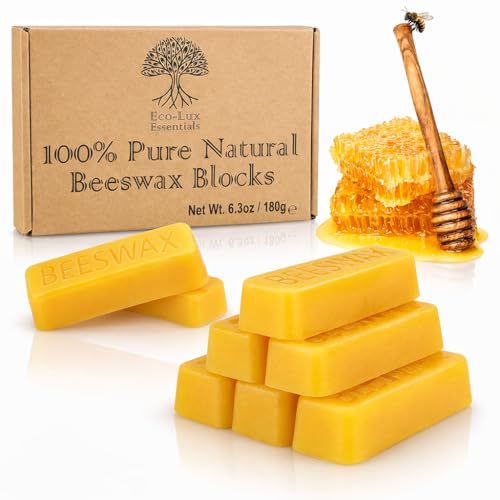

Raw beeswax blocks are the gold standard for a reason. They provide a pure, tacky coating that tames unruly, fuzzy fibers like mohair or high-twist wool without the inclusion of chemical additives.
Because they are sold in solid, unrefined chunks, they are incredibly economical. You can keep a block in your notions bag for years, simply rubbing your yarn across the surface whenever you feel the drag begin to increase.
However, be mindful of the "tack" factor. If you over-apply natural wax to a soft, delicate fiber, it can leave a visible residue that feels waxy to the touch. Start with a light swipe and build up only if your gauge still feels labored.
Dritz Beeswax Holder: Best for Thread Control

The Dritz holder is designed with a slotted plastic housing that keeps the wax block contained and your fingers clean. It is an excellent choice if you are tired of getting sticky residue on your hands or your project bag lining.
The integrated slots allow you to pull your yarn through the wax at a consistent pressure. This prevents the "clumping" that often happens when you press too hard on an exposed block of wax.
This tool is particularly useful for stranded colorwork. When you are juggling two or more strands of yarn, keeping them conditioned ensures they don’t snag on each other, which is essential for maintaining even tension across your floats.
Clover Thread Waxer: Portable Precision Tool

Clover’s design is all about the "click." It features a small, replaceable wax disc housed in a compact, portable case that fits perfectly in even the smallest project pouch.
The real advantage here is the precision. Because the wax is in a thin, controlled disc, you are less likely to over-apply product to your yarn. It’s perfect for knitters who travel and need a quick fix for a sticky yarn while on the go.
If you are working with fine lace-weight yarns, this is your best friend. The lighter application ensures your delicate fibers remain airy and soft while still benefiting from the reduced friction against your metal or bamboo needles.
Bohin Beeswax: Ideal for Smooth Fiber Glide
Bohin’s beeswax is known for its high purity and consistent texture. It feels slightly smoother than raw, unrefined blocks, making it an excellent choice for knitters who want a reliable, predictable glide every time.
Many knitters find that this wax is particularly effective on cotton or linen blends. These plant fibers can be notoriously "grabby" on needles, and Bohin provides just enough lubrication to keep the stitches moving without making the yarn feel plasticized.
The bottom line is consistency. If you are working on a long-term project like a sweater, using the same brand of wax throughout ensures that your yarn’s behavior remains uniform from cast-on to bind-off.
Sewline Glue Pen: The Modern Wax Alternative
While technically a temporary adhesive, the Sewline Glue Pen is a favorite "hack" among modern knitters. The wax-like consistency provides a slick barrier that is remarkably easy to wash out during the blocking process.
It is ideal for knitters who struggle with yarn ends that won’t stay tucked in. A tiny dab of this on your yarn tail can hold it in place while you weave it in, acting as a temporary anchor that disappears once the garment is laundered.
Use this sparingly, as it is more adhesive than a traditional conditioning wax. It’s not meant for the entire length of your yarn, but rather for specific troubleshooting tasks where precision is required.
Taylor Seville Wax: Best for Synthetic Yarns

Synthetic fibers like acrylics or nylon blends can sometimes feel "squeaky" against metal needles. Taylor Seville’s wax formulation is engineered to bridge the gap between these man-made fibers and your tools.
This wax is less prone to flaking than pure beeswax, which is a major benefit if you are working with dark-colored yarns. You won’t have to worry about white wax crumbs getting trapped in your stitches.
If you find that your synthetic yarn is causing static buildup, this wax can help dissipate that charge. It creates a smoother surface that prevents the "static cling" that often makes knitting with acrylics a chore.
Why Waxing Yarn Improves Your Knitting Tension
Uneven tension is often just a symptom of friction. When your yarn drags against the needle, you tend to pull harder to compensate, which leads to tight, distorted stitches.
By waxing your yarn, you equalize the surface drag. This allows the yarn to feed off the ball and over the needle with minimal resistance, letting your hands relax into a more natural, consistent rhythm.
- Consistent Gauge: Easier slide means you aren’t tugging the yarn, leading to more uniform stitch size.
- Reduced Fatigue: Less resistance means your hands don’t have to work as hard to move the stitches.
- Fiber Protection: A light coating of wax can prevent delicate fibers from pilling as they rub against your needles.
How to Apply Wax Without Staining Your Projects
The golden rule of waxing is "less is more." You are looking for a light coating, not a heavy saturation, to achieve the desired glide.
Hold your yarn taut and gently draw it over the wax block once. If you are using a holder, pull the yarn through the slot in a single, smooth motion.
- Test on a Swatch: Always apply wax to a scrap piece of yarn first to see how it interacts with the fiber.
- Avoid the Working Length: Only wax the section of yarn you are about to knit, rather than the entire ball.
- Check for Residue: If the yarn looks dull or feels sticky, you’ve applied too much; gently wipe it with a clean cloth before continuing.
Choosing Between Natural Beeswax and Synthetics
Natural beeswax is the gold standard for animal fibers like wool, alpaca, and mohair. It bonds well with natural scales on the fiber, providing a smooth finish that feels authentic to the material.
Synthetic waxes are often better for acrylics, polyesters, or blends that don’t respond well to organic coatings. They are engineered to be smoother and less prone to leaving a tacky residue.
Consider the "washability" of your project. Natural beeswax washes out easily with a gentle wool wash, while some synthetic waxes may require a more thorough soak to ensure the yarn returns to its original texture.
Essential Tips for Cleaning Wax From Your Needles
Even with careful application, wax will eventually build up on your needle tips. You will notice this when your stitches start to feel "gummy" or slow down despite the yarn being waxed.
To clean them, wipe your needles with a soft, lint-free cloth dampened with a tiny amount of rubbing alcohol. This will dissolve the wax buildup without damaging the finish of your wooden or metal needles.

For wooden needles, be very gentle. Use a dry cloth first to buff away the excess, and only use a solvent if absolutely necessary to avoid drying out the wood. Always finish by buffing with a clean, dry cloth to restore the shine.
Waxing your yarn is one of those small, expert-level adjustments that can fundamentally change how you experience your craft. By reducing friction, you aren’t just making your work faster; you are making it more enjoyable and technically superior. Don’t be afraid to experiment with different waxes until you find the one that suits your favorite fiber blend. Once you feel that effortless glide, you will never want to knit without it again.