6 Best Tension Rings For Complex Knitting Techniques
Master intricate patterns with ease. We review the 6 best tension rings to improve yarn control, boost speed, and ensure consistency in complex knitting projects.
Achieving perfectly even stitches, especially when juggling multiple strands of yarn, can feel like a Herculean task for even the most seasoned knitters. Tension rings act as a mechanical guide for your yarn, ensuring a consistent flow that prevents unsightly gaps or overly tight puckering in your fabric. By offloading the work of yarn management from your fingers to a tool, you can maintain a steady gauge for hours without hand fatigue. This guide explores the best tension rings on the market to help you elevate your knitting to a professional level of consistency.
Clover Adjustable Yarn Guide: Best Overall Choice
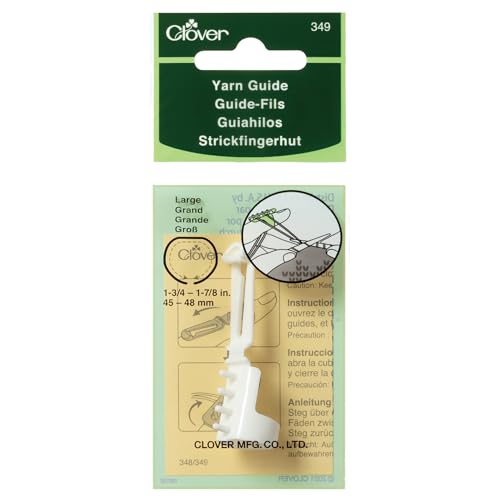

The Clover Adjustable Yarn Guide is the gold standard for many knitters because of its simple, effective design. It fits comfortably on your finger and provides a smooth, reliable path for your yarn to travel as you work.
This tool is particularly helpful when you are working with slippery yarns like silk or bamboo blends. Because these fibers lack natural "grab," they often slide off the needles or create uneven loops; the Clover guide provides just enough resistance to keep the yarn taut.
The primary benefit here is the adjustable band, which accommodates a wide range of finger sizes. If you find your hands swell during long knitting sessions, you can easily tweak the fit without needing to switch tools mid-project.
Prym Ergonomic Knitting Thimble: Best for Comfort
If you find that metal rings dig into your skin or cause irritation after a few rows, the Prym Ergonomic Knitting Thimble is your best bet. It is designed with a focus on ergonomics, featuring a soft, flexible material that sits gently against the finger.
This thimble is a lifesaver for knitters who suffer from arthritis or joint stiffness. By spreading the pressure of the yarn across a wider surface area, it prevents the localized pain often associated with standard, thin metal rings.
While it is incredibly comfortable, it does have a slightly bulkier profile than a simple wire ring. It may take a little practice to get used to the feel of it against your skin, but the long-term comfort gains are well worth the adjustment period.
Cocoknits Metal Tension Ring: Best for Durability
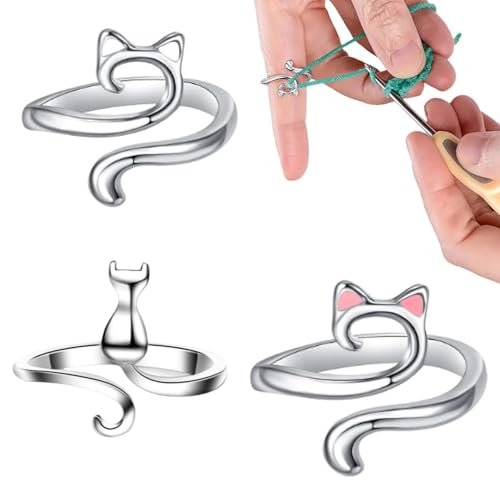
The Cocoknits Metal Tension Ring is built for the knitter who values longevity and a minimalist aesthetic. Made from high-quality metal, it is designed to withstand years of heavy use without bending or losing its shape.
This is an excellent choice for knitters who work primarily with wool or wool-blend yarns. The metal surface provides a consistent glide, which is essential for maintaining a steady gauge when working on large projects like sweaters or blankets.
Because it is a closed loop, you don’t have to worry about it snagging on your yarn or catching on your knitting bag. It is a "set it and forget it" tool that remains unobtrusive while you focus on your stitch patterns.
Yarn Lab Peacock Tension Ring: Best for Colorwork

The Yarn Lab Peacock Tension Ring is a masterpiece of function and design, specifically engineered for stranded colorwork. Its unique structure allows you to feed two separate strands of yarn simultaneously, keeping them perfectly separated and tensioned.
When you are carrying two colors across a row, the biggest challenge is preventing one strand from becoming tighter than the other. This ring acts as a mediator, ensuring that both colors are delivered to your needle with equal pressure.
It is a bit more complex to thread than a standard ring, so it is best suited for intermediate to advanced knitters. Once you master the threading process, however, your floats will be more uniform and your colorwork will look significantly more professional.
Tulip Etimo Yarn Guide: Best for Precision Work

Tulip is known for their exceptional attention to detail, and the Etimo Yarn Guide is no exception. It features a highly polished finish that minimizes friction, making it ideal for delicate lace work or fine-gauge projects.
If you are working with thin, lace-weight yarn, you know how easily it can get tangled or knotted. This guide directs the yarn with surgical precision, allowing you to focus entirely on your complex lace charts without fighting your yarn supply.
The trade-off for this precision is a more rigid design that requires a specific finger placement. It is a professional-grade tool that rewards the knitter who takes the time to refine their technique and yarn path.
KnitPal Adjustable Ring: Best for Beginners

The KnitPal Adjustable Ring is a fantastic entry point for anyone new to using tension tools. It is inexpensive, easy to adjust, and features a intuitive design that doesn’t require a steep learning curve.
Many beginners struggle with "tension shock," where their gauge changes drastically from the beginning of a project to the end. This ring provides a gentle, consistent feedback loop that helps new knitters develop a feel for the proper tension.
It is also a great tool for learning how to hold your yarn differently. If you are transitioning from English (throwing) to Continental (picking) knitting, this ring can provide the stability you need to build muscle memory.
How Tension Rings Improve Your Knitting Consistency

Tension rings work by creating a constant, controlled path for your yarn before it reaches your needles. By eliminating the "human factor" of fluctuating finger tension, they ensure that every stitch is formed with the same amount of yarn.
This is critical for projects that require a precise gauge, such as fitted garments or socks. If your tension is too loose, your fabric will lack structure; if it is too tight, the fabric will be stiff and uncomfortable to wear.
Ultimately, these tools help you achieve a more uniform "look" to your knitting. You will notice that your stockinette stitch looks flatter and more professional, and your cables will have a more defined, crisp appearance.
Choosing Between Open and Closed Tension Ring Styles
Open rings, which feature a gap in the band, are generally more versatile because they can be adjusted to fit different fingers. They are perfect for knitters who want a tool that can be shared or moved between different projects.
Closed rings, on the other hand, offer a more secure and stable fit. They are less likely to shift or rotate while you are knitting, which is a major advantage if you have a fast, energetic knitting style.
Consider your personal habits when choosing between the two. If you find yourself constantly adjusting your rings, an open style might be frustrating; if you have very specific finger sizing, a closed ring will likely provide a better experience.
Adjusting Your Ring for Different Yarn Weights
Not all yarn weights require the same amount of tension. When working with bulky yarn, you might need to loosen the ring to prevent the yarn from catching; with lace weight, you may need a tighter setting to keep the yarn from slipping.
The key is to test your gauge swatch with the ring in place. If your stitches look distorted or the yarn is dragging, adjust the tension guide slightly until you achieve a smooth, natural flow.
Remember that fiber content also plays a role. Superwash wool is naturally slicker than rustic, high-twist wool, meaning you might need slightly more tension on the ring to compensate for the yarn’s tendency to slide.
Troubleshooting Common Tension Ring Fitting Issues
If your ring feels uncomfortable, it is often a sign that it is either too tight or positioned incorrectly on your finger. Try moving it closer to your knuckle or further down toward the base of your finger to find the "sweet spot" of comfort.
If the yarn is snagging, check for any rough edges on the ring or ensure that you aren’t pulling the yarn at an extreme angle. A smooth, direct path from the yarn source to the needle is the best way to prevent friction.
Finally, don’t be afraid to take a break. Even with the best tools, long knitting sessions require hand stretches and movement to keep your muscles relaxed and your tension consistent.
Investing in a quality tension ring is a simple yet transformative step for any knitter looking to refine their craft. Whether you are battling uneven stitches in a complex cable pattern or simply want to reduce fatigue during a long project, these tools offer a practical solution to common tension woes. Experiment with different styles to see which fits your unique knitting rhythm best. With a little practice, you will find that these small rings make a massive difference in the quality and enjoyment of your knitting.