7 Best Knitting Journals For Record Keeping
Keep your projects organized with our top 7 knitting journals. Discover the best tools for tracking patterns, yarn stashes, and progress in one handy place.
Every knitter has experienced the frustration of finding a half-finished project in a project bag, only to realize they have no idea what needle size or yarn base they used. A dedicated knitting journal transforms these moments of panic into a structured, historical record of your craft. Whether you are tracking gauge swatches or documenting complex cable repeats, these tools ensure your hard work is never forgotten. Here are seven of the best journals to help you document your fiber journey with precision and care.


The Knit Note: Best Overall Knitting Journal
The Knit Note stands out because it balances structure with the freedom to let your creative process breathe. It provides enough guidance for beginners to know what to record, without feeling like a rigid school assignment.
For the knitter who juggles multiple projects, the layout is intuitive. You can easily track your needle size, yarn fiber content, and even the date you started. It is the perfect middle ground for someone who wants to be organized but doesn’t want to spend more time writing than knitting.
Ultimately, this is the most versatile choice for the average maker. If you want a clean, professional-looking archive of your work, start here.
Mindful Making: Best for Project Planning
Project planning is often where knitters stumble, especially when transitioning from following patterns to modifying them. This journal emphasizes the "why" behind your design choices rather than just the "what."
It includes dedicated sections for sketching modifications and calculating yardage adjustments. If you are the type of knitter who constantly swaps out yarn bases—say, moving from a rustic wool to a slippery silk blend—this journal helps you note how that impacts the final drape.
The focus here is on the evolution of your skills. It is an excellent tool for those moving into intermediate territory who need to document their design experiments.
The Knitter’s Life List: Best for Stash Tracking
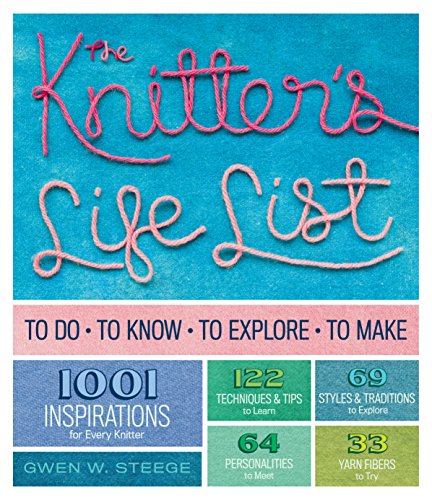
We all have that one bin of "mystery yarn" tucked away in the back of a closet. This journal is designed to turn your stash from an overwhelming pile into a curated library of potential projects.
It encourages you to record fiber content, yardage, and dye lots for every skein you own. By keeping this data handy, you will never again buy a sweater quantity of yarn only to realize you don’t have enough for the sleeves.
It is a practical, utilitarian tool for the stash-conscious knitter. Use it to keep your inventory in check so you can focus on the joy of picking your next project.
Fringe Association: Best for Detailed Records
If you are a knitter who loves the technical side of the craft, this is your home base. It offers deep, granular pages that invite you to record every detail of your process.
This journal is particularly useful when working with complex lace or stranded colorwork where keeping track of repeats is essential. You have ample space for notes on blocking—whether you steam-blocked or wet-blocked—which is vital for understanding how your finished garment will behave.
It is a more demanding journal, but the payoff is a rich, technical archive. It is best suited for advanced makers who want to replicate their successes later.
Cocoknits Maker’s Journal: Best for Organization
The Cocoknits method is legendary for its focus on modularity and efficiency. This journal reflects that, offering a system that keeps your project notes, swatches, and even small notions organized in one cohesive place.
It is designed for the knitter who views their craft as a professional endeavor. The layout is clean and minimalist, allowing your project data to shine without distraction.
If you appreciate a system that feels like a well-oiled machine, this is the one. It is highly effective for keeping your workspace tidy and your data accessible.
Kelbourne Woolens: Best for Pattern Swatching
Swatching is the most overlooked step in knitting, yet it is the only way to guarantee a garment fits properly. This journal is specifically tailored to help you document your gauge and tension.
It provides clear prompts for recording your stitch count per inch and the needle size used to achieve it. By comparing these swatches over time, you will learn how your personal tension changes depending on the yarn’s ply or fiber content.
It is a small, focused tool that delivers big results. If you struggle with fit, making this journal a part of your process will change your knitting life.
Making Magazine: Best for Creative Inspiration
Sometimes, a journal should be more than just a ledger; it should be a source of joy. Making Magazine offers a beautiful, high-quality space that blends project tracking with creative prompts.
It is less about strict data and more about capturing the spirit of your projects. You will find it easier to keep up with your journaling when the experience feels like a treat rather than a chore.
This is the best choice for the knitter who wants to keep a "scrapbook" style record. It captures the aesthetic beauty of your craft alongside the technical details.
Why You Should Keep a Detailed Knitting Journal
A journal acts as your personal "knitting memory." When you finish a beautiful sweater, you will inevitably forget the specific adjustments you made to the neckline or the exact needle size that saved your gauge.
Beyond memory, it is a diagnostic tool. If you notice your sweaters always end up too long, your past notes will reveal a recurring pattern in your row-gauge tracking.
It also builds confidence. Looking back at a journal filled with completed projects is the best way to see how far you have come. It turns isolated hours of knitting into a cumulative body of work.
Essential Data to Track in Your Knitting Diary
To make your journal truly useful, you need to capture the variables that actually impact the final fabric. Always record the following:
- Yarn details: Brand, colorway, dye lot, and fiber content.
- Needle specifications: Size, material (wood vs. metal), and cord length.
- Gauge: Stitches and rows per 4 inches, both before and after blocking.
- Modifications: Any changes to the pattern, such as sleeve length or body shaping.
Don’t forget to attach a small yarn label or a snippet of the yarn itself. This provides a tactile reference that digital files simply cannot match.
Digital vs. Paper: Choosing Your Logging Style
Paper journals offer a tactile, distraction-free experience that many knitters find meditative. There is something satisfying about writing down your progress after a long session of knitting.
Digital apps, conversely, are excellent for searching through your stash or linking directly to online patterns. They are portable, searchable, and often sync across multiple devices.
The best approach is often a hybrid one. Use a paper journal for your deep, thoughtful notes and a digital platform for quick inventory tracking. Ultimately, the best journal is the one you actually use consistently.
Keeping a knitting journal is the single most effective way to elevate your craft from a hobby to a refined skill. By documenting your choices, you transform every project into a lesson that informs your future work. Whether you choose a structured planner or a creative notebook, the act of recording your progress is an investment in your growth as a maker. Pick the method that feels natural to you, and start building your legacy one stitch at a time.