6 Best Sewing Threads For Attaching Knitted Buttons
Secure your knitted buttons with ease. We explore the six best sewing threads that offer the perfect balance of strength, flexibility, and aesthetic finish.
Attaching buttons to a hand-knitted garment is the final, high-stakes step that can either elevate your work or lead to premature sagging. Many knitters focus entirely on the yarn choice for the body of the sweater, only to let the project down with weak or inappropriate thread. Choosing the right thread ensures your buttons stay secure through years of wear and repeated washings. This guide breaks down the best options to ensure your hard work remains functional and beautiful.
Gutermann Extra Strong: Best Overall Strength


When you are attaching heavy wooden toggles or oversized statement buttons to a thick wool cardigan, standard thread simply won’t cut it. Gutermann Extra Strong is a bonded nylon thread that offers incredible tensile strength and abrasion resistance. It is specifically designed to handle the tension created by heavy closures.

Because this thread is synthetic, it does not stretch or snap under the weight of a chunky cable-knit sweater. It glides through thick fabric without fraying, which is a common frustration when using cotton-wrapped polyester. You will find it holds a knot exceptionally well, providing peace of mind for heavy-use garments.
The downside is that it is thicker than standard sewing thread, so it may require a slightly larger needle eye. Be careful not to pull too tightly on delicate, thin-gauge knits, as the thread is stronger than the yarn itself. For most projects, however, it remains the gold standard for durability.
Coats & Clark Button & Carpet: Heavy Duty Pick
If you need a thread that can withstand the rigors of a coat or a thick, felted wool accessory, this is your go-to. It is a heavy-duty, polyester-covered polyester thread that is engineered for high-tension applications. It is essentially the "workhorse" of the sewing world.
The structural integrity of this thread is its primary selling point. It is thick enough to fill the button shank properly, which prevents the button from wobbling or tearing through the knitted fabric. It provides a very rigid, secure anchor point that won’t give way over time.
Because it is so robust, it isn’t the best choice for lightweight lace or fine fingering-weight garments. Using it on delicate fabric can create an unsightly "puckering" effect where the thread is stronger than the surrounding stitches. Reserve this for your heavy-duty outerwear.
Sulky Cotton Thread: Best for Delicate Knits

When you are working with fine-gauge baby knits or delicate lace, you need a thread that is strong but doesn’t overpower the fabric. Sulky Cotton is a high-quality, long-staple cotton thread that offers a matte finish, making it nearly invisible against wool or cotton yarns.
This thread is much finer than the heavy-duty options, which is essential for projects where the buttonhole is small. It allows you to pass the thread through the button shank multiple times without clogging the hole. The matte texture also grips the yarn fibers, preventing the button from sliding around.
While it is strong, it is not as abrasion-resistant as synthetic alternatives. Avoid using this on garments that will see extreme daily wear, such as a heavy work jacket. It is, however, the perfect choice for garments that prioritize aesthetic detail and soft drape.
YLI Silk Buttonhole Thread: Luxury Finish
Silk thread is the secret weapon of the professional tailor and the discerning knitter. YLI Silk is exceptionally smooth, strong, and possesses a subtle sheen that looks beautiful against high-end fibers like cashmere or alpaca. It is thin, yet remarkably difficult to break.
The primary advantage of silk is its natural elasticity and its ability to knot tightly. It conforms to the shape of the button shank better than polyester, creating a very professional, clean finish. It is truly the "luxury" choice for heirloom-quality sweaters.
Be aware that silk thread is more expensive and requires a bit more care during the sewing process. Because it is so smooth, ensure your knots are secure by using a double or triple knot at the back of the work. If you are finishing a special project, this thread is worth the investment.
Coats & Clark Dual Duty: Best General Purpose
Most knitters have a spool of Dual Duty in their sewing kit for a reason. It is a polyester-wrapped cotton core thread that strikes a balance between strength and flexibility. It is the perfect middle-ground option for the majority of your everyday knitting projects.
This thread is incredibly versatile and works well with almost any yarn weight, from sport to worsted. It is thin enough to pass through small buttonholes but strong enough to hold a standard-sized button in place. It is a reliable, "set it and forget it" choice.
Because it is a blend, it offers the best of both worlds: the smooth handling of cotton and the durability of polyester. It won’t shrink or bleed color when washed, which is vital for hand-knitted items. It is the most practical choice for the knitter who wants one reliable thread for their stash.
Mettler Metrosene: Smooth and Reliable Choice
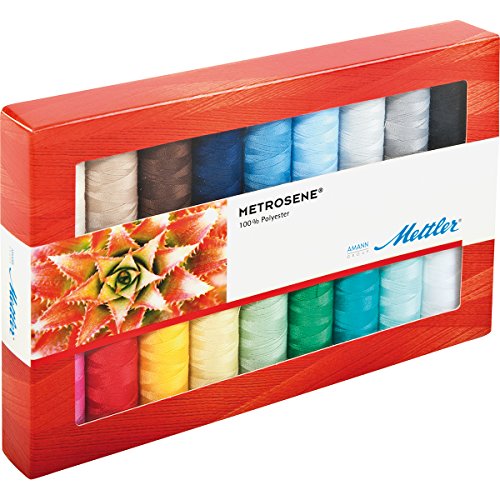
Mettler Metrosene is a high-quality polyester thread that is famous for its smooth, lint-free finish. If you have ever struggled with thread tangling or knotting while attaching a button, this is the solution. It feeds through the fabric with almost zero resistance.
The consistency of this thread is what sets it apart from cheaper alternatives. You won’t find weak spots or thick "slubs" that catch on your yarn. This smoothness protects your knitted stitches from being shredded during the attachment process.
It is an excellent choice for knitters who are sensitive to the "feel" of their sewing tools. It is strong enough for most medium-weight garments and provides a very clean, professional look. It is a dependable, high-performance thread that rarely disappoints.
Why Thread Strength Matters for Knitted Buttons
Knitted fabric is inherently dynamic; it moves, stretches, and breathes. When you attach a button, you are creating a fixed point on a mobile surface. If the thread is too weak, the constant pulling of the button will eventually snap the thread or pull the yarn fibers apart.
- Tension: Buttons act as levers; the further they stick out from the fabric, the more leverage they have to pull on your stitches.
- Abrasion: The buttonhole itself is often the most abrasive part of a sweater, constantly rubbing against the thread.
- Weight: Heavier buttons require stronger thread to prevent them from "drooping" or sagging away from the button band.
Always choose a thread that is slightly weaker than your yarn, or at least equal to it. You want the thread to fail before the yarn tears a hole in your sweater. A repairable button is much better than a ruined garment.
Matching Thread Fiber Content to Your Yarn Base
The golden rule of button attachment is to ensure your thread doesn’t conflict with your yarn’s properties. For natural fibers like wool or cotton, a cotton-covered or silk thread is ideal because it mimics the natural "grip" of the yarn. Synthetic threads can sometimes be too slick, causing the button to slide out of place.
If you are working with superwash wool, remember that it is slippery and prone to stretching. Using a slightly grippier thread, like a matte cotton, helps keep the button stationary. If you are working with a synthetic blend yarn, a polyester thread is a natural match that will age at the same rate as the garment.
Always consider the wash instructions of your yarn. If your sweater is hand-wash only, ensure your thread is colorfast. There is nothing worse than a beautiful button leaving a permanent dye stain on a light-colored wool cardigan after the first soak.
Techniques for Securing Buttons Without Sagging
The most common mistake knitters make is sewing the button flush against the fabric. This creates a "tight" buttonhole that is difficult to use and puts immense stress on the yarn. Always create a shank—a small bridge of thread between the button and the fabric—to allow the buttonhole fabric to sit comfortably underneath.
- The Matchstick Trick: Place a matchstick or a thick tapestry needle between the button and the fabric while sewing. Once the button is secure, remove the spacer and wrap the thread around the loose stitches to form a sturdy shank.
- Reinforcement: Always sew a small "anchor" button on the inside of the garment. This distributes the tension across a larger surface area of the knitted fabric, preventing the button from pulling through.
- Knotting: Use a surgeon’s knot when finishing your thread on the back of the work. This prevents the knot from slipping through the loose structure of the knitted stitches.
By creating a shank, you allow the button to sit at the correct height. This simple adjustment prevents the "puckering" effect and ensures your button band stays flat and professional.
Troubleshooting Common Button Attachment Issues
If your buttons are constantly falling off, check your needle size first. A needle that is too thick will enlarge the holes in your yarn, causing the button to lose its grip and eventually pull through. Use the smallest needle that can comfortably carry your chosen thread.
If your buttonhole keeps stretching out, you may need to reinforce the area with a piece of cotton twill tape on the inside. This provides a stable, non-stretching foundation for the buttons to sit against. It is a common technique in high-end knitwear design.

Finally, if the button is still sagging, it may be that your button band itself is too loose. Consider picking up fewer stitches when knitting the band or using a smaller needle size. A firm, tight button band is the best defense against sagging, regardless of the thread you use.
Attaching buttons is an essential skill that bridges the gap between a knitted piece and a finished, wearable garment. By selecting the right thread and paying attention to the mechanics of the button shank, you can ensure your hard work stands the test of time. Take your time with these final steps, as they are the details that define a professional result. May your buttons stay secure and your stitches remain perfectly intact.