6 Best Adjustable Tension Thimbles For Stranded Colorwork
Master stranded colorwork with our top 6 adjustable tension thimbles. Improve your knitting speed and yarn consistency with these essential ergonomic tools.
Stranded colorwork can feel like a daunting tangle of yarn until you discover the secret of consistent tension. Using a thimble allows you to guide multiple strands simultaneously, keeping your floats even and your stitches uniform. These tools act as a bridge between your hands and your needles, effectively eliminating the dreaded "puckered" or "loose" look in Fair Isle patterns. With the right guide, you can finally focus on the rhythm of the design rather than wrestling with your yarn balls.
Clover Adjustable Yarn Guide: Best Overall Pick
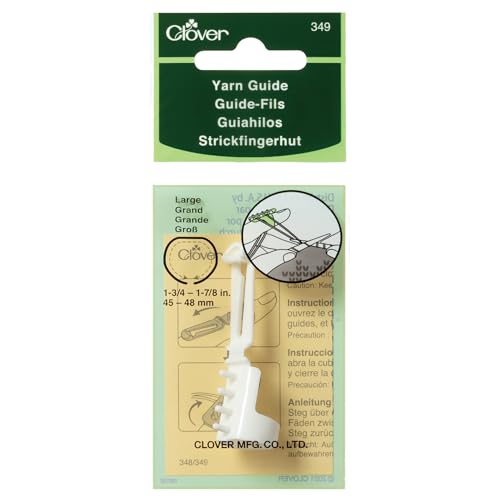

This plastic-style guide is a staple in many knitting bags for a reason. It features a simple, effective design that clips onto your finger and holds two strands of yarn in separate, smooth channels.
The primary advantage here is the lightweight, snag-free construction. Because it is made of smooth plastic, it won’t catch on delicate fibers like alpaca or high-twist merino, which are prone to fraying.
The adjustability is the real winner, as it fits a wide range of finger sizes comfortably. If you find metal guides too rigid or cold, this is the perfect middle ground for long sessions of knitting stranded sweaters.
Knitter’s Pride Yarn Guide: Best for Comfort

If you have ever dealt with the "knitter’s cramp" that comes from holding two strands of yarn tightly for hours, this guide is your best friend. It is designed with a focus on ergonomics, sitting naturally on the finger without digging into the skin.
The guide is particularly effective for those who knit with a "flicking" style, where you move the yarn with your index finger. It keeps the strands separated just enough to prevent them from twisting together, which is a common headache when working with high-contrast colors.
While it is exceptionally comfortable, keep in mind that the plastic can feel slightly bulky if you have very slender fingers. However, for most knitters, the cushioned feel and ease of yarn flow make it worth the slight adjustment period.
Pony Adjustable Knitting Thimble: Best Value
Sometimes, you don’t need all the bells and whistles; you just need a tool that gets the job done without breaking the bank. The Pony thimble is a classic, no-nonsense metal guide that has been around for decades.
It features a simple metal loop with two wire guides that you can bend slightly to accommodate different yarn weights. Whether you are working with a light fingering weight or a beefier DK wool, this thimble provides a consistent path for your yarn.

Because it is made of metal, it is incredibly slim and unobtrusive. It is an excellent choice if you prefer to feel your needles clearly without a bulky plastic tool getting in the way.
Clover Metal Yarn Guide: Best for Durability
If you are the type of knitter who keeps a project in your bag for months, you need a tool that won’t snap or deform. The Clover metal guide is built to last, offering a rigid structure that keeps your yarn channels exactly where you want them.
Metal guides are excellent for slippery yarns like silk or bamboo blends. The slight friction provided by the metal helps "catch" the yarn just enough to keep it from sliding off your finger, which is a common issue with super-slick fibers.
Be aware that because it is metal, it can be cold to the touch in drafty rooms. If you have sensitive joints, you might find that the sturdy, unyielding nature of the metal requires a bit of getting used to compared to softer plastics.
Susan Bates Yarn Feeder: Best for Beginners
When you are just starting your first colorwork hat or cowl, the last thing you want is a tool that requires a steep learning curve. The Susan Bates feeder is straightforward, intuitive, and very easy to set up.
Its design is open and accessible, making it simple to drop your yarn strands in and out as you change colors. This is a massive help for beginners who are still learning how to manage the "float" length on the back of their work.
If you find that your tension is inconsistent because you are pulling too hard on your yarn, this guide provides a gentle, steady feed that helps regulate your speed. It is a fantastic entry-level tool that bridges the gap between manual tensioning and more advanced equipment.
Tulip Yarn Guide Ring: Best Ergonomic Design
The Tulip guide is a beautiful piece of engineering that feels more like a piece of jewelry than a knitting tool. It is designed to sit perfectly on the finger, allowing for a natural hand position that mimics the way you would hold yarn without a tool.
The rotating ring mechanism is the standout feature here. It allows the guide to move with your finger as you knit, which significantly reduces the tension on your hand and wrist.
If you suffer from repetitive strain or just want a more fluid knitting experience, this is the gold standard. It’s an investment piece that prioritizes long-term comfort over a quick fix.
How Tension Thimbles Improve Colorwork Flow
Tension thimbles work by providing a consistent distance between your yarn and the needle tip. Without one, your dominant hand often does too much work, leading to tighter stitches and uneven floats that can ruin the drape of your garment.
By routing the yarn through a guide, you create a dedicated "pathway" for the fiber. This allows your brain to stop worrying about manual tensioning and start focusing on the pattern repeats, leading to a much faster, more rhythmic knitting pace.
You will notice that your floats on the back of the work become more uniform almost immediately. This is critical for colorwork, as uneven floats can cause the fabric to pucker when you wash and block your finished item.
Choosing the Right Material for Your Thimble
The material of your thimble should be chosen based on the yarn you use most often. Plastic is generally better for "sticky" wools like high-twist Highland or Shetland wool, as it provides a smooth, low-friction surface.
Metal thimbles are superior for slippery, high-sheen fibers like alpaca, silk, or superwash merino. The metal provides a tiny bit of "drag" that keeps the yarn from slipping off your finger and losing your desired tension.
Always consider your own body chemistry as well. Some knitters find that metal guides can cause skin irritation over long periods, while others find that plastic guides feel too "sweaty" during intense knitting sessions.
Tips for Mastering Two-Handed Fair Isle Work
Many knitters learn to hold one color in the left hand (the "continental" style) and one in the right (the "English" or "throwing" style). A thimble can actually help you transition to this method by keeping your "thrown" yarn perfectly positioned.
Practice with a simple two-color swatch before jumping into a complex sweater. Use a high-contrast, non-fuzzy yarn like a standard wool worsted to clearly see how the thimble affects your gauge.
Remember that tension is a skill, not a constant. You may need to adjust your thimble settings or your hand position as you move from a ribbing section to the main body of your project.
Troubleshooting Common Tension Thimble Issues
If you find that your yarn is snapping or fraying, check the edges of your thimble for burrs or sharp spots. Even a tiny imperfection in the metal can act like a knife against delicate fibers like cashmere or mohair.
If the thimble feels like it is constantly slipping off your finger, try wearing it over a thin knit glove or a finger cot. This adds a layer of grip and can also provide extra warmth if you are working with metal guides in a cold climate.
Finally, if your stitches are still too tight, do not blame the tool. It is likely that you are pulling the yarn too far away from the needle after each stitch; keep your yarn close to the needles to maintain a consistent, relaxed gauge.
Mastering stranded colorwork is a journey that rewards patience and the right choice of tools. While a tension thimble won’t do the knitting for you, it will certainly make the process more fluid and professional. Take the time to experiment with these guides to find the one that fits your unique hand shape and knitting style. With a little practice, your colorwork will soon look as precise and beautiful as you envisioned.