7 Best Craft Lamps For Low Light Knitting To Try
Struggling with low-light knitting? Discover 7 top-rated craft lamps that provide essential illumination to help you stitch comfortably and avoid errors.
Knitting in low light isn’t just a recipe for eye strain; it’s the quickest way to drop a stitch or misread a complex lace chart. When you’re working with dark-colored yarns or intricate cables, the right illumination changes everything about your stitch definition. Investing in a dedicated craft lamp is the single most effective way to extend your knitting hours without sacrificing your vision. Here are seven top-tier lighting solutions designed to keep your needles clicking long after the sun goes down.
OttLite 2-in-1 LED Magnifier Floor and Table Lamp


This lamp is a staple in many knitting circles because it solves the "two-tool" problem by combining light and magnification. If you are working on a complex brioche project where you need to track yarn-overs and slipped stitches simultaneously, having a lens right over your work is a game changer.
The 2-in-1 design means you can use it as a tall floor lamp while sitting in your favorite armchair, or convert it to a shorter table lamp for focused work at a desk. It offers a clean, flicker-free light that mimics natural daylight, which is essential when you’re trying to distinguish between navy blue and black wool.
However, the weight of the magnifier head can sometimes make the neck feel a bit top-heavy if it isn’t positioned carefully. If you are a knitter who likes to shift positions frequently, you might find yourself tightening the adjustment knobs more often than you’d like.
Brightech LightView Pro LED Magnifying Floor Lamp
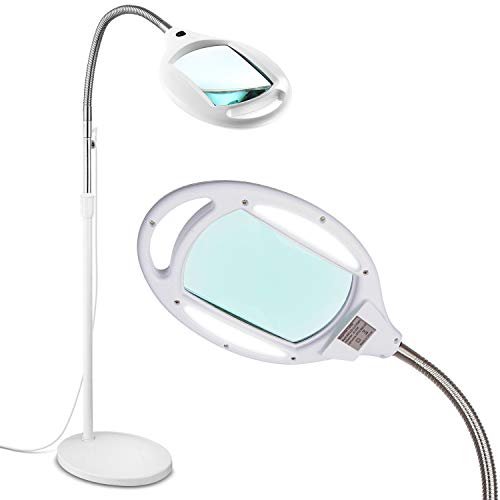
The Brightech LightView Pro is built for the knitter who demands stability and ease of movement. Its rolling base is particularly useful if you have a dedicated craft corner and need to move your light from your knitting chair to your blocking station.
The lens itself is high-quality glass, which prevents the distortion often found in cheaper plastic magnifiers. When you are counting stitches on a high-gauge project—like a pair of socks on 2.00mm needles—that clarity is the difference between catching a split ply and knitting right through it.
The trade-off here is the footprint; the wheeled base takes up more floor space than a standard tripod lamp. If you live in a smaller home, make sure you have enough clearance to maneuver it around your yarn stash.
Daylight Company Slimline 3 LED Floor Lamp Review

The Slimline 3 is the gold standard for many professional knitters because of its incredibly long, flexible arm. It provides a wide, even spread of light that covers your entire lap, which is perfect when you are managing a large-scale project like a cabled afghan.
The light quality is exceptionally high, with a focus on high-contrast output that makes it easy to see the texture of your yarn. This is vital when working with mohair or brushed alpaca, where the "halo" of the fiber can make it difficult to locate the actual stitch loop.
It is a more expensive investment, and it lacks a built-in magnifier. For the knitter who wants pure, high-quality illumination without the visual clutter of a lens, this is arguably the best choice on the market.
Lepower Metal Architect Swing Arm Desk Lamp Pick

If you prefer a classic, industrial aesthetic, the Lepower swing arm lamp is a reliable workhorse. It clamps directly to your side table, which saves precious floor space and keeps your knitting area feeling open and organized.
The primary benefit is the adjustability; you can swing the head into almost any position to eliminate shadows. This is particularly helpful if you are right-handed and find that your own hand is casting a shadow over your work while you knit.
Because it is a metal architect lamp, it is rugged and durable. Just be aware that it does not come with a high-end LED bulb included, so you will need to purchase a high-CRI (Color Rendering Index) bulb separately to get the best results for your colorwork.
Neatfi XL 2,200 Lumens LED Task Lamp Performance
The Neatfi XL is an absolute powerhouse for those who struggle with "dim" knitting sessions. With 2,200 lumens, it is significantly brighter than most standard craft lamps, making it ideal for knitters with aging eyes or those working with very dark, absorbent fibers.
The wide lamp head ensures that light hits your needles from multiple angles, effectively "washing out" the shadows that usually hide dropped stitches. If you are working on a stranded colorwork sweater where you need to keep your floats even, this level of brightness is a massive advantage.
Because it is so bright, it can be overwhelming if you aren’t using the dimming function. Spend some time adjusting the settings to find the "sweet spot" for your specific environment so you don’t end up with eye fatigue from too much glare.
Verilux SmartLight LED Floor Lamp for Crafters

Verilux has long been a leader in full-spectrum lighting, and this lamp is designed to reduce the blue-light strain that often comes with long knitting sessions. If you find yourself getting headaches after an hour of knitting, the "SmartLight" technology is worth the investment.
The lamp is slim, elegant, and fits well in a living room setting without looking like a piece of clinical medical equipment. It offers a very soft, diffused light that is easy on the eyes while still providing enough clarity to see every twist in a complex cable.
The base is sturdy but not adjustable in terms of height, so you need to be sure it aligns with your specific chair height. It’s a "set it and forget it" lamp that prioritizes long-term comfort over extreme high-intensity output.
TaoTronics LED Desk Lamp with USB Charging Port
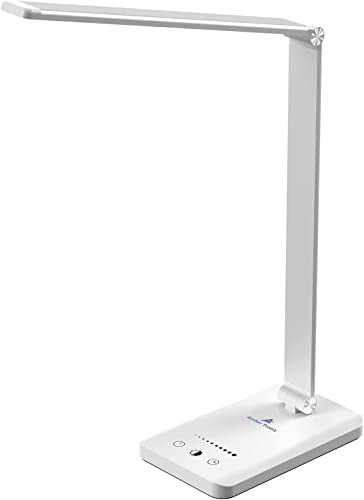
Sometimes the best tool is the simplest one, and this TaoTronics model is perfect for the minimalist knitter. It sits neatly on a side table and provides a focused beam of light right where your needles meet the yarn.
The built-in USB port is a surprisingly useful feature for knitters who use their phones to track rows or follow digital patterns. You can keep your phone charged and ready to go without having to run a separate cord across your knitting chair.
It is not as powerful as the dedicated floor lamps, so it works best for smaller projects like hats or mitts. If you are working on a massive project, you might find the reach of the lamp head a bit limiting.
Essential Features for Knitting Task Lighting
When shopping for a lamp, don’t just look at the price tag; look for features that directly impact your knitting mechanics. You need a lamp that offers adjustable brightness and a flexible neck to accommodate different seating positions.
- Adjustable Color Temperature: Being able to switch between "cool" (daylight) and "warm" (incandescent) tones helps with different yarn colors.
- Weighted Base or Sturdy Clamp: A lamp that tips over when you bump it is a nuisance that can ruin your rhythm.
- Flicker-Free Technology: Cheap LEDs can have a subtle flicker that causes eye strain over long periods.
Avoid lamps with overly complex touch controls that are hard to reach while your hands are full of yarn. You want something you can adjust with your chin or a quick tap of your elbow if your hands are occupied with a tricky bind-off.
Color Rendering Index: Why Spectrum Matters
The Color Rendering Index (CRI) measures how accurately a light source reveals colors compared to natural sunlight. For knitters, a high CRI (90 or above) is non-negotiable, especially when you are working on colorwork projects where subtle shades of blue and green might look identical under poor light.
Low-quality bulbs often skew toward yellow or blue, which can completely change the appearance of your yarn. If you are trying to match dye lots or choose a secondary color for a project, a low-CRI light will lead to disappointing results once you take your finished item outside.
Always check the packaging for the CRI rating. If the manufacturer doesn’t list it, assume it is low and look for a different product. Your eyes—and your finished projects—will thank you.
How to Position Your Lamp for Shadow-Free Work
Positioning is just as important as the lamp itself. The goal is to illuminate the "work zone" (where the needle tips are active) without creating glare on your needles or your eyes.
If you are right-handed, place the lamp slightly behind and to your left so the light shines over your left shoulder and onto your hands. This prevents your right hand from casting a shadow over the stitches you are currently working.
If you are using metal needles, be aware that they can create "hot spots" of glare under very bright LEDs. If this happens, try tilting the lamp head slightly to the side; you want the light to hit the yarn surface, not the reflective metal of the needle tips.
Finding the right light is a personal journey that depends as much on your eyesight as it does on your favorite knitting chair. Whether you choose a high-lumen floor lamp or a simple, adjustable desk light, prioritize CRI and adjustability above all else. Once you have a well-lit space, you’ll find that your speed increases and your mistakes decrease significantly. Happy knitting, and may your stitches always be clear and bright.