6 Best Cotton Yarns For Practice Swatches To Try
Mastering cotton yarn is essential for knitters. We explore six affordable, high-quality options perfect for practice swatches to refine your unique tension.
Learning to knit or mastering a complex new stitch requires a yarn that behaves predictably under your needles. Cotton is the gold standard for practice because it lacks the elasticity of wool, forcing you to develop consistent tension through muscle memory alone. The following six yarns offer distinct textures and finishes that will help you refine your craft. Choosing the right fiber is the first step toward turning a pile of practice swatches into a foundation of genuine skill.
Knit Picks Dishie: Best Overall for Beginners
Dishie is a workhorse yarn that feels sturdy and reliable in the hands, making it perfect for those early days of clumsy casting on. Because it is a worsted weight, it moves quickly enough to keep you motivated while being substantial enough to show every stitch clearly.
The matte finish is its greatest asset for a learner. Unlike slippery synthetics, Dishie grips your needles just enough to prevent stitches from sliding off accidentally, yet it doesn’t fight you when you need to move the yarn across the needle.
If you are prone to "rowing out"—where your purl rows look different than your knit rows—this yarn will show you exactly where your tension is inconsistent. It is the ultimate diagnostic tool for any knitter looking to tighten up their technique.
Lion Brand 24/7 Cotton: Best for Stitch Clarity


If you want your cables or lace motifs to pop, 24/7 Cotton is your best friend. This is a mercerized cotton, meaning it has been treated to increase its luster and strength, resulting in a smooth, cord-like structure that barely fuzzes.
Because the strand is so tightly plied, it resists splitting while you work. When you are learning to navigate complex cable crosses or intricate yarn-overs, you don’t want a yarn that frays every time your needle tip grazes it.
Be aware that this yarn has very little "give." If you have a death grip on your needles, you might find it hard on your wrists after an hour of knitting. Use bamboo or wooden needles to add a little friction and control the speed of your stitches.

Scheepjes Catona: Best for Vibrant Color Variety
Catona is a fingering-weight cotton that comes in a massive array of shades, making it ideal for practicing colorwork or intarsia. When you are learning to manage two strands of yarn at once, having high-contrast, distinct colors is essential for spotting your mistakes.
The yarn is tightly twisted, which keeps your color transitions crisp and clean. If you are practicing stranded colorwork, the non-elastic nature of this cotton prevents the "puckering" that often happens when beginners use wool, helping you learn to float your yarn evenly.
Since it is a finer weight, your progress will be slower, which is a blessing in disguise. It forces you to slow down and focus on the mechanics of each stitch rather than racing to finish the row.
Hobbii Rainbow Cotton 8/8: Best Softness Value
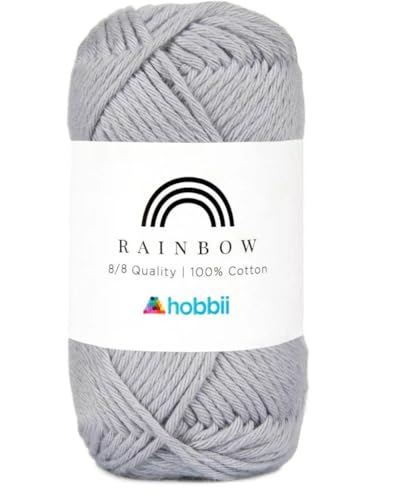
Many cottons feel stiff or "scratchy" during the learning process, but Rainbow Cotton 8/8 offers a surprisingly soft hand. This is a double-knit (DK) weight, which provides a beautiful balance between the speed of a worsted and the detail of a fingering weight.

The "8/8" designation means it is made of eight strands, resulting in a round, squishy yarn that feels luxurious for a practice swatch. It is an excellent choice if you plan on turning your practice squares into a functional project, like a dishcloth or a small market bag.
Because it is so soft, it can be slightly splitty if you use very sharp, pointed needles. If you find yourself piercing the yarn too often, switch to a needle with a more rounded, blunt tip to keep your stitches smooth.
Paintbox Yarns Cotton DK: Best Palette Selection

Paintbox Yarns is famous for its color range, offering a spectrum that is perfect for testing how different hues interact in a swatch. If you are learning to design your own patterns, having access to subtle tonal shifts allows you to see how light and shadow affect your fabric.
This yarn is consistent and reliable, lacking the variations in thickness that can frustrate a beginner. When you are trying to master a new stitch pattern, you want the yarn to be the constant variable so you can focus entirely on your needle movement.
It handles blocking exceptionally well, which is a key skill to learn early. Because it is a standard cotton, it responds predictably to water and heat, allowing you to see exactly how your fabric will behave once it is finished and washed.
Rowan Handknit Cotton: Best for Luxury Practice

Sometimes you want the experience of working with a premium fiber, even if it is just for a practice square. Rowan Handknit Cotton is a matte, slightly textured yarn that feels expensive and substantial, providing a tactile satisfaction that keeps you engaged during long practice sessions.
This yarn is slightly thicker and has a softer, more "lived-in" feel than mercerized options. It is excellent for practicing textures like moss stitch or seed stitch, where the yarn’s natural drape can really shine.
Because it is a luxury fiber, it is not the cheapest option for a pile of swatches. However, the quality of the stitch definition is unparalleled, making it a great choice for your "final" practice piece before you start a garment.
Why Cotton Is Ideal for Learning New Techniques
Cotton is a non-elastic fiber, which makes it the most honest teacher in your knitting bag. Unlike wool, which expands and contracts to hide uneven tension, cotton will show every single loose or tight stitch you make.
When you are learning a new technique—like a Kitchener stitch or a complex lace repeat—this lack of "memory" is a benefit. It forces you to maintain consistent tension throughout the entire row, which builds the muscle memory necessary for professional-looking results.
- Tension Control: It forces you to rely on your hands, not the yarn’s stretch.
- Stitch Definition: Every loop is clearly visible, making it easy to identify and fix errors.
- Durability: You can rip out and re-knit the same yarn multiple times without it losing its integrity.
Comparing Mercerized Versus Unmercerized Cotton
Mercerized cotton has been treated with a caustic solution to swell the fibers, which makes them stronger, smoother, and more receptive to dye. This process gives the yarn a slight sheen and makes it feel like a polished cord under your fingers.
Unmercerized cotton, by contrast, retains its natural, matte finish and has a softer, more "fuzzy" appearance. It is generally more absorbent and has a bit more grip, which can be helpful if you find that your needles are sliding around too much.
- Mercerized: Choose this for cables, lace, or projects where you want a crisp, defined look.
- Unmercerized: Choose this for garments where you want a softer drape and a more casual, rustic aesthetic.
How to Properly Wash and Block Cotton Swatches
Blocking is the process of wetting and shaping your finished piece to set the stitches, and with cotton, this step is non-negotiable. Cotton does not "spring back" like wool, so the shape you give it while wet is the shape it will keep once it dries.
To block, soak your swatch in cool water with a little wool wash, then gently squeeze out the excess moisture in a towel. Lay the swatch flat on a blocking mat or a clean towel, and pin it into a perfect square, pulling the edges just enough to open up the stitches.
Don’t be afraid to use a bit of steam from an iron if you want to flatten a stubborn curl, but always hover the iron above the fabric rather than pressing down. This prevents the fibers from becoming crushed or losing their natural texture.
Troubleshooting Common Cotton Knitting Tensions
If your cotton swatches look messy, the most common culprit is a transition in tension between your knit and purl stitches. This is often caused by the way you pull the yarn when moving it from the front to the back of the needle.
Try to keep your yarn movement as short and direct as possible. If you are a "flicker" or a "thrower," make sure you aren’t tugging the yarn taut every time you bring it to the front, as this creates a tighter purl row and a looser knit row.
If you find that your fabric is too stiff, your tension is likely too tight for the yarn weight. Don’t be afraid to go up one or even two needle sizes; a looser gauge often allows the cotton to drape more naturally and prevents hand fatigue.
Practice swatches are not just scraps; they are the laboratory where you develop your personal style and technical proficiency. By choosing the right cotton, you eliminate the guesswork and allow your hands to focus on the rhythm of the needles. Whether you prefer the crisp sheen of mercerized fiber or the soft, matte feel of natural cotton, these yarns will serve you well. Keep your swatches, label them, and let them serve as a record of your journey toward becoming a more confident knitter.