6 Best Swift Umbrellas For Holding Hanks To Try
Discover the 6 best swift umbrellas for yarn winding. Our guide compares features to help you choose a durable, efficient tool for managing your hanks easily.
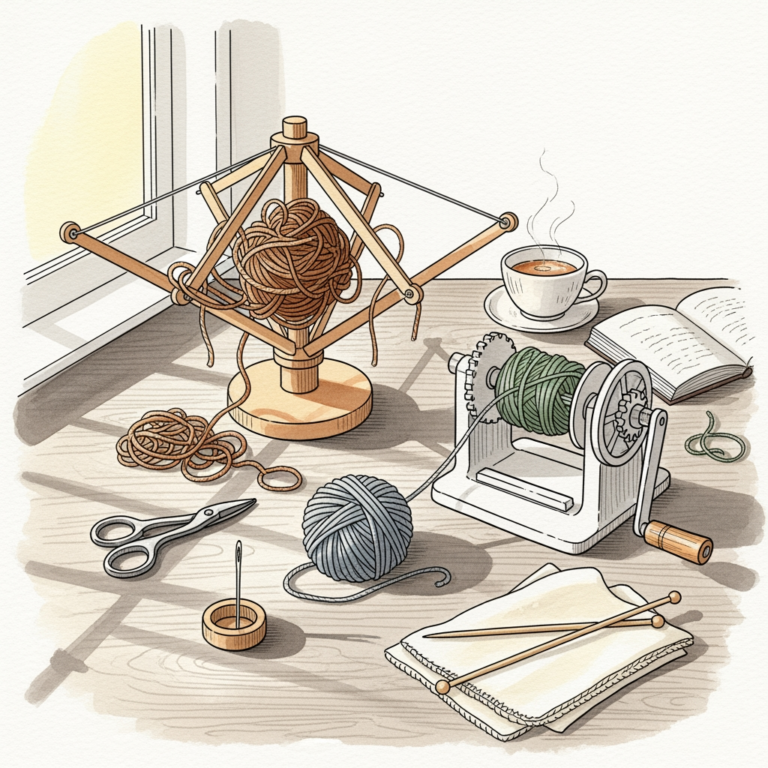
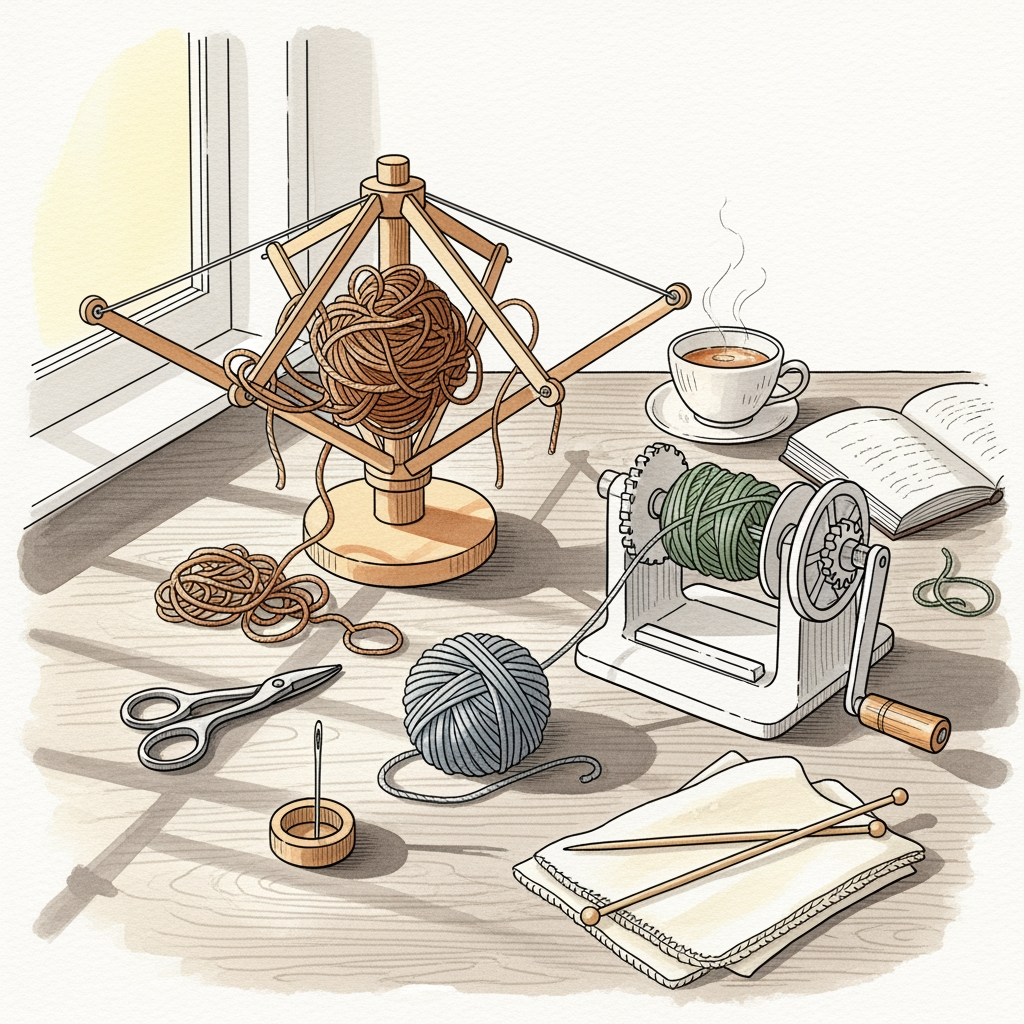
Transitioning from store-bought yarn cakes to hand-dyed hanks is a rite of passage for every knitter, but it quickly reveals the necessity of a reliable yarn swift. Without one, you are destined to spend hours untangling "yarn barf" or begging a family member to hold your skeins while your arms ache. A high-quality umbrella swift transforms this tedious chore into a seamless, meditative part of your project preparation. Here are the top six options to help you wind your stash with confidence and ease.


Stanwood Needlecraft Tabletop Swift: Best Overall
When you walk into a professional yarn shop, you will almost always see a Stanwood clamped to the counter. Its reputation is built on a rock-solid metal clamp and a smooth rotation that rarely catches, even with delicate lace-weight mohair.
The metal construction provides a level of durability that wooden swifts often lack over a decade of heavy use. Because it operates on a precise, adjustable umbrella mechanism, it handles a wide variety of skein circumferences without slipping.
If you frequently work with luxury fibers that are prone to snagging, the smooth, rounded edges of this model are a lifesaver. You won’t have to worry about a splinter catching a strand of silk and ruining your entire project before you even cast on.
Amish-Style Wooden Swift: Best for Portability
Unlike umbrella swifts that collapse into a stick, Amish-style swifts consist of wooden slats that assemble into a rotating cross. They are popular because they can be disassembled completely, making them perfect for knitters who lack dedicated craft space.

These swifts are incredibly stable, sitting directly on your table without the need for clamps. This makes them ideal for glass tables or surfaces where you don’t want to leave permanent marks or scratches.
However, they do require a bit more "knitter intuition" to set up correctly. You must ensure the pegs are adjusted for the exact circumference of your hank, or the yarn will sag and tangle during the winding process.
Lacis Wooden Umbrella Swift: The Classic Choice
There is something undeniably satisfying about the tactile nature of a wooden swift, and the Lacis model is a staple in the fiber arts community. It offers a traditional aesthetic that looks beautiful in a craft room while providing the mechanical reliability of an umbrella design.
The wood is typically finished to a high degree of smoothness, which is essential when working with sticky, high-wool-content yarns. If you find metal swifts too industrial, this provides the perfect balance of form and function.
Keep in mind that wooden tools require a bit of care. Over time, the wood can dry out, so keeping it away from extreme humidity or direct heat sources is vital to prevent the arms from warping.
KnitPicks Yarn Swift: The Best Budget Option
If you are just beginning your journey into dyeing your own yarn or buying independent hand-dyed hanks, you might not want to invest heavily in hardware. The KnitPicks swift is a workhorse that proves you don’t need to break the bank to wind a skein efficiently.
It functions exactly as you would expect an umbrella swift to, with a simple clamp and a rotating cage. While it may not feel as "heirloom-grade" as a solid wood or heavy metal model, it gets the job done reliably for the occasional project.
It is a fantastic entry point for the knitter who wants to save their budget for high-quality wool rather than tools. Just be sure to tighten the clamp securely to your table to avoid any wobbling during the winding process.
Strauch Jumbo Ball Winder and Swift: Best Heavy Duty
For the serious knitter who buys yarn by the pound or works on large-scale sweaters, the Strauch system is the gold standard. This is designed for high-volume use, handling massive skeins that would cause smaller swifts to buckle under the weight.
The mechanical precision here is unmatched; the rotation is fluid and requires very little force to start. If you are winding five or six skeins for a colorwork blanket, this tool will save you significant time and frustration.
It is an investment piece, certainly, but for those who value efficiency, it is worth every penny. You are paying for the engineering that ensures your yarn flows perfectly into your ball winder without a single hitch.
ChiaoGoo Yarn Swift: High Quality Metal Option
ChiaoGoo is a brand synonymous with quality knitting needles, and their foray into yarn accessories follows that same standard. Their metal swift is sleek, compact, and incredibly sturdy, making it a favorite for knitters who travel to retreats.
The metal components are resistant to the wear and tear that can plague cheaper plastic or wooden models. It operates with a very tight tolerance, meaning there is almost no "play" in the arms as they spin.
This is particularly helpful when winding high-twist yarns, which have a tendency to "jump" if the swift isn’t perfectly balanced. If you appreciate precision engineering in your needles, you will find that same satisfaction in this swift.
How to Properly Set Up Your Umbrella Yarn Swift
The secret to a successful wind is ensuring the swift is perfectly centered. If the swift is off-center, the tension will fluctuate, leading to a yarn cake that is either too loose or so tight it stretches the fiber.
- Secure the base: Ensure your clamp is tight against a sturdy, level surface.
- Expand slowly: Open the umbrella arms until they are just snug against the inside of the hank.
- Check for slack: If the yarn is drooping, expand the swift further; if the yarn is straining, shrink it slightly.
Always check the rotation before you start winding. A quick spin with your hand will tell you if the skein is balanced or if it’s going to wobble and collapse mid-wind.
Maintenance Tips for Keeping Your Swift Smooth
Even the best swift will eventually feel "gritty" if you don’t maintain the moving parts. Dust and loose fibers from your wool can accumulate in the pivot points, creating friction that leads to tangles.
Periodically wipe down the arms with a slightly damp, lint-free cloth to remove any debris. If your swift has metal joints, a tiny drop of sewing machine oil can work wonders, but be incredibly careful to wipe away any excess so it doesn’t touch your yarn.

Store your swift in its original box or a protective bag when not in use. This prevents the arms from being bumped or bent, which is the most common cause of a "wobbly" rotation.
Umbrella vs. Amish Style: Which Swift to Choose
The umbrella swift is essentially a "set it and forget it" tool. It is efficient, fast, and great for those who wind yarn frequently and want a quick, automated-feeling experience.
The Amish-style swift, however, offers a more controlled, manual pace. Because it doesn’t spin as freely as a weighted umbrella swift, you have more control over the tension, which can be helpful if your yarn is particularly prone to tangling.
- Choose Umbrella if: You value speed, convenience, and have a permanent spot to leave it clamped.
- Choose Amish if: You have limited storage space, prefer a non-clamped setup, or enjoy the tactile, manual process of winding.
Troubleshooting Common Swift Tangling Problems
The most common cause of tangling is not the swift itself, but the way the yarn was twisted when it was dyed. Always shake out your hank before putting it on the swift to ensure the strands are lying flat and not crossing over each other.
If you find the yarn is constantly falling off the arms, your swift is likely not expanded enough. On the flip side, if the yarn is snapping or catching, your swift is likely expanded too far, causing the fiber to stretch beyond its natural elasticity.
Lastly, ensure your ball winder is placed at the correct distance from the swift. If it’s too close, the yarn won’t have enough room to travel and will pull at an awkward angle, leading to uneven tension and potential snags.
Finding the right swift is about balancing your personal knitting habits with the reality of your workspace and budget. Whether you opt for the industrial reliability of a Stanwood or the space-saving design of an Amish-style swift, the goal remains the same: a smooth, tangle-free winding experience. Once you master the setup and maintenance, you will find that preparing your yarn is just as enjoyable as the knitting itself. Happy winding, and may your yarn cakes always be perfectly tensioned!