6 Best Tapestry Needle Threaders For Arthritic Hands
Struggling with thread? We review the 6 best tapestry needle threaders designed for arthritic hands to help you stitch comfortably and regain your precision.
Threading a tapestry needle is often the most frustrating part of finishing a project, especially when your hands are stiff or tired after a long day of knitting. For those of us living with arthritis, the tiny eye of a needle can feel like an impossible target to hit. Finding the right tool isn’t just about convenience; it’s about preserving your ability to keep creating the textiles you love. This guide highlights the best threading aids to help you weave in those ends without the pain.
Clover Desk Needle Threader: The Best Overall Pick


The Clover Desk Needle Threader is a game-changer for anyone who struggles with the fine motor control required for traditional threading. Because it sits stationary on your table, you don’t have to hold the needle and the thread simultaneously, which significantly reduces hand strain.
To use it, you simply drop your needle into the slot, lay your yarn across the guide, and press a button. It does the heavy lifting for you, making it perfect for those days when your joints feel particularly inflamed or unresponsive.
While it is a larger investment than a simple wire loop, the mechanical precision is unmatched. It is the gold standard for anyone who wants to eliminate the "fumble factor" entirely.
Dritz Deluxe Needle Threader: Ease for Large Eyes

Tapestry needles often have larger eyes, but that doesn’t always make them easier to thread when your vision or dexterity is compromised. The Dritz Deluxe model features a wider, more accessible guide that accommodates the thicker yarns we use for heavy-weight projects.
This tool is particularly helpful if you work with bulky wool or multi-ply yarns that tend to fray or split. The mechanism is designed to push the yarn through with a steady, controlled motion rather than relying on your own shaky hands to navigate the eye.
It is a sturdy, reliable choice for the workbench. If you find yourself frequently working with worsted or chunky weight fibers, this tool provides the extra clearance you need to get the job done quickly.
Bohin Extra Fine Threader: Precision for Fine Work

Sometimes you are finishing a delicate lace project or using a finer needle to weave ends into a tight gauge. The Bohin Extra Fine Threader is designed for those moments when a bulky tool would simply be too cumbersome to handle.
Despite its slim profile, it is built with high-quality materials that won’t snap under the slight pressure of a thick yarn. It bridges the gap between delicate jewelry-making tools and the rugged needs of a knitter.
While it requires a steadier hand than the desktop models, the precision is excellent. It’s an essential addition to your notions bag for those projects where you need to be surgical about your finishing work.
Singer Automatic Threader: Best for Tapestry Use
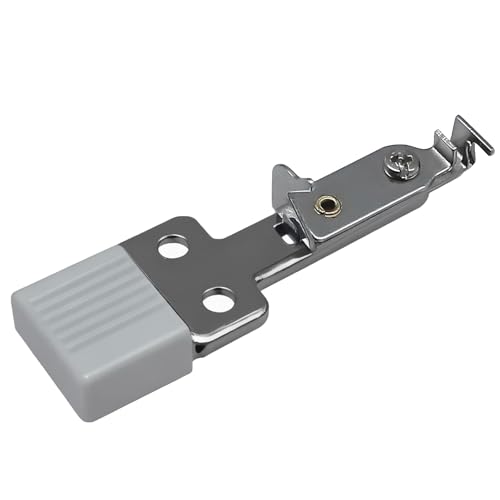
The Singer Automatic Threader is a classic for a reason, specifically because it handles the varied sizes of tapestry needles with ease. It takes the guesswork out of lining up the yarn with the eye, which is usually where the most hand fatigue occurs.
If you are working on a project with a lot of ends to weave in—like a colorwork sweater or a striped blanket—this tool saves your stamina. It allows you to focus on the weaving process rather than the frustration of getting the yarn onto the needle in the first place.
It is a mechanical solution that works consistently across different needle brands. Just be sure to align your needle correctly in the groove to ensure the hook catches the yarn every single time.
Susan Bates Wire Threader: Simple Budget Solution

For many knitters, the classic wire loop threader is the go-to because it is inexpensive and highly portable. While it may not look like an ergonomic marvel, it is incredibly lightweight and requires very little force to operate.
The key to using this with arthritic hands is to find a model with a wider, flatter handle. This provides more surface area for your thumb and forefinger to grip, preventing the "pinching" motion that often triggers joint pain.
These are essentially disposable, so keep a few in your project bags. They are perfect for travel knitting when you don’t want to carry bulky equipment but still need a helping hand to finish your seams.
Tulip Needle Threader: Ergonomic Design for Hands

Tulip is renowned in the fiber arts world for their commitment to ergonomic design, and their needle threader is no exception. It features a molded shape that fits naturally into the palm, allowing you to use the strength of your whole hand rather than just your fingertips.
This is a massive benefit for those who experience cramping during repetitive tasks. By shifting the effort away from the small joints of your fingers, you can finish your projects with significantly less discomfort.
The build quality is exceptional, making it a tool you will have for years. It is a thoughtful design that acknowledges the physical reality of a knitter’s hands after years of work.
Why Ergonomics Matter When Selecting Your Notions
Ergonomics in knitting isn’t just about the needles you use to form stitches; it is about the entire lifecycle of the garment. Every repetitive motion, from casting on to weaving in the final tail, adds up to cumulative stress on your tendons and joints.
When you choose tools that minimize strain, you are effectively extending your "knitting lifespan." If you ignore the signs of hand fatigue, you risk inflammation that can take weeks to heal, keeping you away from your yarn.
Always prioritize tools that allow for a neutral wrist position and a relaxed grip. If a tool feels awkward or requires a tight pinch, it is likely doing more harm than good over the long term.
How to Protect Your Joints While Finishing Projects
Finishing work, such as weaving in ends or seaming, is often more taxing on the hands than the actual knitting. To protect your joints, try to break these tasks into smaller segments rather than doing them all at once at the end of a project.
Consider using a needle gripper if you find that pulling a needle through thick fabric is causing your fingers to ache. This extra bit of traction allows you to pull the needle through with less force, protecting your grip strength.
- Take frequent breaks to stretch your hands and wrists.
- Use a desk light to reduce eye strain, which often leads to hunching and added tension.
- Keep your tools organized so you aren’t digging through a bag with cramped fingers.
Comparing Wire Loops Against Automatic Mechanisms
Wire loop threaders are simple and tactile, but they rely heavily on your ability to hold a steady, precise position. For those with significant arthritis, the "vibration" or shaking of the hand can make the wire loop feel like a test of patience.
Automatic mechanisms, on the other hand, provide a mechanical assist that bypasses the need for fine motor control. While they are larger and less portable, they provide a consistent, reliable result that is much kinder to the joints.
Ultimately, the choice depends on your current level of mobility. If you have good days and bad days, it is wise to keep both a simple wire loop for travel and an automatic threader for your home studio.
Essential Features to Look for in Threading Tools
When shopping for a threader, look for features that prioritize your physical comfort above all else. A wide, non-slip handle is the most important feature for anyone dealing with arthritis or limited grip strength.
Durability is also key; a tool that breaks frequently will only add to your frustration. Look for steel wires that are securely anchored and plastic housings that feel substantial in the hand.
- Handle Size: Larger, rubberized grips are easier to hold.
- Stability: Desktop models are better if you have tremors or limited dexterity.
- Versatility: Ensure the tool is compatible with the gauge of tapestry needles you use most often.
Investing in the right threading tool is a small act of self-care that pays off every time you finish a beautiful piece of knitwear. By reducing the physical strain of finishing, you ensure that your hobby remains a source of joy rather than a source of pain. Choose the tool that best fits your current needs, and don’t be afraid to switch it up as your requirements change. Your hands have done a lot of work for you; treat them with the kindness they deserve.