7 Best Squeeze Bottles For Variegated Yarn Painting
Elevate your yarn painting with these 7 top-rated squeeze bottles. We review flow control, durability, and tip precision to help you achieve perfect gradients.
Yarn painting is a transformative process that turns a blank canvas of undyed wool into a bespoke masterpiece ready for your needles. Achieving those sharp, intentional color transitions requires more than just high-quality acid dyes; it demands precise delivery systems. The right squeeze bottle acts as an extension of your hand, allowing you to paint with the same control you use when managing tension on a complex lace chart. Choosing the wrong tool can lead to muddy colors or uneven saturation, turning a dream project into a frustrating experiment.
Precision Applicator Bottles: Best for Fine Detail


When you are aiming for intricate, painterly effects—like mimicking the delicate gradients of a sunset or placing tiny pops of color on a single ply—standard bottles simply won’t cut it. Precision applicators feature a fine-gauge metal tip that allows for surgical placement of dye.
This level of control is invaluable when you are working with high-twist, fingering-weight yarns where you want to keep colors distinct without bleeding. Think of it like using a fine-tipped needle to pick up a dropped stitch; it’s all about targeted accuracy.
However, these tips can clog if your dye isn’t perfectly filtered or if you use thickened dyes. Always ensure your dye stock is free of sediment to keep the flow consistent. If you are painting fine details, these are your best bet for avoiding unwanted color migration.
Soft Squeeze LDPE Bottles: Best for Large Batches

If you are dyeing a full sweater’s worth of yarn—say, 1,000 yards of worsted weight—you don’t want to be stopping to refill constantly. Soft LDPE (low-density polyethylene) bottles are the workhorses of the dye studio.
They are pliable enough to allow for a steady, rhythmic flow without causing hand fatigue. When you are painting massive hanks, consistency in pressure is the secret to getting even coverage across the entire length of the yarn.
The trade-off here is that they aren’t meant for fine lines. These are for broad strokes, background colors, and saturating the core of thick, multi-ply yarns. Use these when you need volume and reliability over delicate precision.
Needle-Tip Dispenser Bottles: Best for Precision

Needle-tip bottles bridge the gap between broad application and fine-art detail. They are particularly useful for "spot dyeing," where you want to add a specific accent color to a pre-dyed hank without disturbing the surrounding hues.
Because the opening is so small, you have to apply pressure carefully. It’s much like working with a 2.00mm needle on a delicate silk-mohair blend; you need a light, controlled touch to prevent an accidental deluge of dye.
Be aware that these bottles are often smaller in capacity. They are best suited for finishing touches rather than the initial base-layer painting. Keep these on hand for when you need to add that final, intentional pop of color.
Chef’s Squeeze Bottles: Best for Dye Saturation
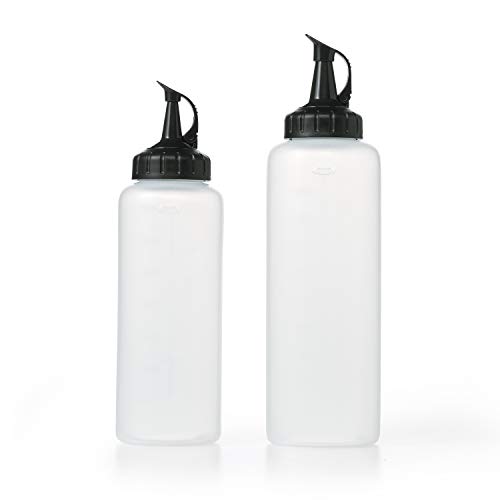
Borrowed from the culinary world, these heavy-duty squeeze bottles are designed for high-volume, repetitive use. They are perfect for when you need to "flood" a section of yarn to ensure the dye penetrates all the way to the center of the twist.
When you are working with thick, bulky-weight yarns, surface-level painting isn’t enough; you need deep saturation to prevent white spots in the final knit. These bottles provide the high-flow output necessary to soak the fibers thoroughly.
They are rugged and easy to clean, which is essential if you switch between high-intensity pigments. These are the most durable option for long-term studio use.
Wide-Mouth Applicator Bottles: Best for Ease of Use

Sometimes the simplest tool is the best, especially when you are mixing large quantities of dye stock. Wide-mouth bottles make the initial filling process mess-free, preventing the dye-stained fingers that plague many beginners.
They are also the easiest to clean, which is a major factor if you have limited space and need to reuse bottles frequently. If you are a beginner, starting with these will help you focus on the dyeing technique rather than struggling with equipment.
They lack the precision of a needle-tip, but they are incredibly versatile for general-purpose painting. Choose these if you prefer a low-maintenance setup that allows for quick color changes.
Silicone Squeeze Bottles: Best for Flow Control

Silicone offers a unique advantage: it is naturally grippy and highly responsive to pressure. Unlike rigid plastic, a silicone bottle allows you to modulate the flow of dye with very subtle changes in your grip strength.
This is a game-changer for those who find standard plastic bottles too stiff. If you have any hand strain from long hours of knitting, the ergonomic nature of silicone can make a noticeable difference in your comfort.
They are also highly durable and resistant to staining, which is a plus when working with potent dyes. These are the premium choice for those who value tactile feedback and ergonomic design.
Twist-Top Applicator Bottles: Best for Leak Proofing
There is nothing worse than reaching for a bottle and finding that a slow leak has ruined your workspace. Twist-top bottles feature a locking mechanism that ensures the dye stays inside the bottle until you are ready to use it.
These are essential if you frequently transport your supplies or store your dye stock between sessions. They provide peace of mind, much like using locking stitch markers to ensure your place in a complex lace pattern is secure.
The mechanism does require a quick twist before each use, which adds a tiny step to your workflow. For the organized dyer who values a tidy studio, these are an essential investment.
How to Choose the Right Bottle for Your Dye Style
Your choice of bottle should reflect the type of projects you typically knit. If you are a sock knitter who loves small-scale, variegated colorways, you need fine-tip precision bottles.
If you are a sweater knitter who prefers semi-solids or large-scale gradients, focus on volume and flow. Consider the yarn weight as well; thicker yarns require higher flow rates for saturation, while fine yarns benefit from controlled, slow-release applicators.
Don’t be afraid to mix and match. A professional studio usually contains a variety of bottle types, each serving a specific purpose in the creative process. Start with a mix of sizes and tips to discover which best complements your personal painting rhythm.
Essential Tips for Mixing Dyes for Yarn Painting
Always mix your dye stock using distilled water to prevent mineral interference, which can alter the final color. Use a small whisk or a dedicated stirring rod to ensure the powder is fully dissolved before adding it to your bottle.
If you are aiming for specific color palettes, keep a record of your "recipes"—how many teaspoons of dye per cup of water. Much like keeping a knitting journal, this allows you to replicate successful colorways for future projects.
Always strain your dye stock through a fine-mesh filter or a piece of nylon stocking before filling your bottles. This simple step prevents clogs and ensures a smooth, professional application every time. Consistency in your mixing process is the key to reproducible, beautiful results.
Maintaining Your Applicator Bottles for Longevity
After every dyeing session, rinse your bottles thoroughly with warm water until the runoff is completely clear. If you’ve used a thickened dye, use a small bottle brush to remove any residue from the inner walls.
For needle-tip bottles, use a thin wire or a specialized cleaning needle to ensure the tip remains clear. Leaving dye to dry inside the tip is a guaranteed way to ruin the bottle’s precision.
Store your bottles upright in a cool, dark place to prevent the plastic from degrading over time. With proper care, a high-quality set of bottles can last for years of creative exploration. Treat your tools with the same respect you give your needles, and they will serve you well.
Mastering the art of yarn painting is a journey, and your tools are your most trusted companions along the way. By selecting the right squeeze bottles for your specific needs, you gain the control necessary to bring your creative vision to life on every skein. Remember that the best tool is one that feels intuitive in your hand, allowing you to focus on the interplay of color and fiber. Happy dyeing, and may your next project be your most vibrant one yet.