6 Best pH Test Strips For Color Modification
Discover the 6 best pH test strips for precise color modification. Our guide evaluates accuracy and readability to help you achieve perfect results every time.
Achieving the perfect, saturated color on your hand-dyed yarn often comes down to the chemistry of your dye bath. Whether you are experimenting with natural botanical dyes or setting synthetic acid dyes, controlling the pH is the secret to color consistency. Using the right test strips allows you to move beyond guesswork and achieve professional-level results in your home studio. These six tools will help you master the science behind the art of dyeing.
Litmus pH Strips: Best Overall for Fiber Dyers


Litmus strips are the workhorses of the fiber arts studio, offering a straightforward way to monitor your bath. When you’re dipping a skein of wool into a simmering pot, you need a quick, reliable reading before the color sets permanently.
These strips provide a clear color change that is easy to read even in the dim lighting of a kitchen or garage. They are particularly effective for checking the acidity of a vinegar-based mordant bath.
The main tradeoff here is the lack of granular detail; you won’t get a precise numerical value. However, for most dyeing projects where you are simply ensuring a bath is "acidic enough," they are the most practical choice.
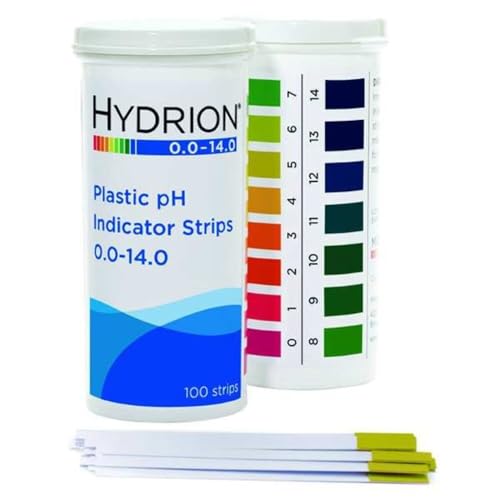
Hydrion 9300 pH Paper: Most Precise Results

If you are working on a precise color-matching project, such as recreating a specific shade of indigo or madder root, you need accuracy. The Hydrion 9300 series offers a much tighter range of sensitivity than standard strips.
These are essential when you are working with sensitive plant-based dyes that shift color dramatically with even minor pH fluctuations. By using these, you can document your process, making it possible to replicate a specific shade of blue or yellow months later.
Keep in mind that high precision requires a bit more patience during the reading process. You must match the color against the provided chart under good light, as the subtle variations can be tricky to interpret for the untrained eye.
MColor pH Test Strips: Best for Natural Dyes
Natural dyeing is an unpredictable, beautiful chemistry experiment. Because natural extracts from leaves, roots, and flowers are so sensitive to environmental factors, MColor strips are designed to handle the complexities of organic dye baths.
These strips are particularly helpful when you are shifting colors using modifiers like iron or cream of tartar. They allow you to see the exact moment the pH shifts, which is when the color of your fiber will undergo a dramatic transformation.

While they are excellent for natural materials, they might be overkill for simple acid-dyeing of superwash wool. Use these when your goal is to push the boundaries of color theory using botanical sources.
Micro Essential Lab Strips: Reliable Choice
Consistency is the hallmark of a good dyer, and Micro Essential Lab strips are a staple in scientific settings for a reason. They offer a balance between ease of use and professional-grade reliability.
If you are dyeing large batches of yarn for a sweater project, you cannot afford a pH drift mid-process. These strips ensure that your first skein matches your last, preventing the dreaded "color pooling" or uneven saturation that can ruin a large project.
The paper is sturdy and doesn’t dissolve quickly in hot water, which is a major plus when testing a simmering dye bath. They are a solid, no-nonsense tool that belongs in every dyer’s toolkit.
JNW Direct pH Test Strips: Best for Bulk Use

When you are dyeing a full sweater’s worth of yarn—perhaps 1,500 yards or more—you will find yourself testing your bath constantly. JNW Direct strips come in large quantities, making them the most economical choice for high-volume makers.
Because they are affordable, you won’t feel guilty about using multiple strips to double-check your reading. This is a huge advantage for beginners who are still learning how the pH of a bath changes as the fiber absorbs the dye.
The tradeoff is that they are slightly less sensitive than the high-end laboratory papers. If you are doing basic color work, this is perfectly fine, but for complex, multi-step dyeing, you might want a more precise secondary option.
GWD pH Test Strips: Most Affordable Option
Sometimes you just need a quick check to see if your bath is in the right ballpark. GWD strips are incredibly inexpensive and perfect for those just starting their journey into hand-dyeing.
Don’t let the low price tag fool you; they are perfectly adequate for most standard dyeing techniques, such as using acid dyes on protein fibers like wool or silk. They provide a quick visual confirmation that your water is acidic enough to exhaust the dye.
Use these for your "practice runs" or when you are teaching a friend how to dye. They are excellent for learning the basics without the financial pressure of using expensive, high-precision laboratory supplies.
Why pH Levels Matter for Natural Fiber Dyeing
At its core, dyeing is a chemical bond between the fiber and the dye molecule. If the pH is too high or too low, the bond won’t form, and your color will wash out the moment you rinse your yarn.
For protein fibers like wool, alpaca, or silk, an acidic environment is almost always required to "open" the fiber scales. Without this, the dye sits on the surface rather than penetrating the core, leading to poor wash-fastness.
Think of it like blocking a lace shawl; if you don’t use the right tools and tension, the final shape won’t hold. pH control is the foundation of your color-fastness, ensuring your hard work doesn’t fade after the first wash.
How to Calibrate Your Dye Bath Using pH Strips
Calibration is the process of adjusting your bath until it reaches the specific pH required for your chosen dye. Start by taking a baseline reading of your water, as local tap water varies wildly in hardness and acidity.
Add your acid—usually white vinegar or citric acid—in small, incremental amounts. Test the bath after each addition, stirring well to ensure the acid is fully distributed before dipping your strip.
- Add slowly: It is much easier to add more acid than it is to neutralize an overly acidic bath.
- Stir thoroughly: Uneven pH creates uneven color.
- Record your findings: Keep a notebook with your pH readings and the resulting color intensity.
Understanding Acidic vs. Alkaline Dye Reactions
Most commercial dyes used by knitters are acid dyes, which require a low pH (acidic) to bond to the fiber. However, some natural dyes, like indigo, require an alkaline (high pH) environment to work properly.
If you try to dye indigo in an acidic bath, the dye will not dissolve, and you will end up with a muddy, ineffective mess. Conversely, putting wool in a highly alkaline bath can actually damage the fiber, making it brittle and prone to breaking.
Understanding this spectrum is the difference between an amateur and a master dyer. Always check the requirements for your specific dye type before you even turn on the stove.
Essential Safety Tips for Dyeing With Chemicals
Even when using "safe" household acids like vinegar, you are working with chemicals that can irritate your skin and lungs. Always work in a well-ventilated area, especially if you are using heat, which can release fumes from the dye bath.
Never use your dyeing pots or spoons for food preparation. Once a tool has touched dye or chemical mordants, it should be permanently retired from the kitchen.
- Wear gloves: Even non-toxic dyes can stain your skin for days.
- Use dedicated tools: Keep your dye-ware separate from your dinnerware.
- Protect your surfaces: Dye splashes are notoriously difficult to remove from wooden counters.
Mastering pH is a journey that transforms your dyeing from a guessing game into a repeatable, professional craft. By choosing the right test strips for your specific project, you gain the confidence to experiment with bold new colors. Remember to keep good notes, prioritize your safety, and enjoy the magical transformation of your fiber. Happy dyeing!