6 Best Needle Grips For Hand Fatigue To Try Today
Struggling with hand fatigue? Discover six ergonomic needle grips designed to improve comfort, precision, and endurance for your next sewing project today.
Knitting should be a rhythmic, meditative practice rather than a source of physical strain. When your hands ache after just a few rows, the culprit is often a mismatch between your grip, your needles, and your project. Choosing the right tool can transform an agonizing session into hours of effortless creativity. Here are the best needle options to help you knit pain-free.
Addi Ergonomic Turbo Needles: Best Overall Choice
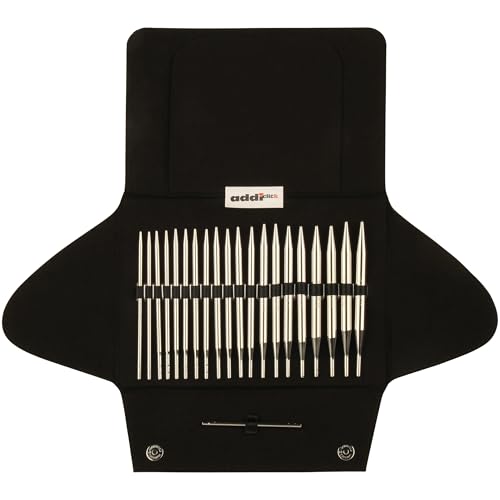

Addi Turbo needles are legendary for their unique, slightly triangular shape that fits naturally into the contours of your fingers. This subtle geometry provides a secure, relaxed grip that requires less tension to hold the needle steady.
If you find yourself white-knuckling your needles during complex cable work, this shape is a game-changer. It prevents the needle from rolling in your hand, reducing the micro-adjustments your muscles make every single stitch.
The trade-off is the slick, nickel-plated finish, which can be too fast for slippery yarns like silk or mohair. However, for most wool-based projects, they offer the perfect balance of speed and ergonomic support.
ChiaoGoo Twist Red Lace: Precision and Comfort
These needles are the gold standard for precision, featuring a sharp tip that makes picking up stitches in intricate lace patterns effortless. The stainless steel construction is incredibly durable, meaning the surface won’t chip or snag your yarn over time.
For knitters who suffer from hand fatigue due to "tight" knitting, the surgical-grade steel provides a smooth glide that reduces the physical effort needed to move yarn across the needle. The join between the cable and the needle is remarkably seamless, preventing the dreaded "snag and pull" that often forces knitters to tighten their grip.
While the tips are sharp enough to pierce your skin if you push on them, they are unmatched for accuracy. If you are working with fine, multi-ply yarns, these are your best bet for maintaining consistent tension without extra strain.
Clover Takumi Bamboo: Lightweight for Long Knits
Clover Takumi needles are the quintessential choice for knitters who need a bit of "grab" to keep their stitches in place. Because bamboo is a natural, porous material, it provides a slight friction that prevents stitches from sliding off unexpectedly.

This natural grip is ideal for beginners or those working with slippery synthetic fibers that tend to "run" on metal needles. By reducing the need to constantly monitor your stitches, you can relax your hand muscles and focus on your rhythm.
The needles are exceptionally lightweight, which significantly reduces the load on your wrists during long knitting sessions. They are not the fastest needles on the market, but they are arguably the most forgiving on your joints.
KnitPro Ginger Interchangeable: Warm Wood Grip

KnitPro Ginger needles are crafted from high-quality, laminated birch wood, offering a warm, tactile feel that is much gentler on the hands than cold metal. The smooth, polished surface allows for a decent stitch speed without being overly slick.
The ergonomic design focuses on the transition between the needle and the cable, which is tapered to ensure the yarn moves smoothly without catching. This is particularly helpful for those who use a "flicking" or "lever" knitting style, as the wood provides a comfortable, non-slip surface for your fingertips.
Because they are made of wood, they are slightly more flexible than metal, which can provide a subtle "give" that feels better for some knitters. Just be aware that they can be prone to snapping if you are a very tight knitter using small diameters.
Lykke Driftwood Circulars: Smooth Ergonomics
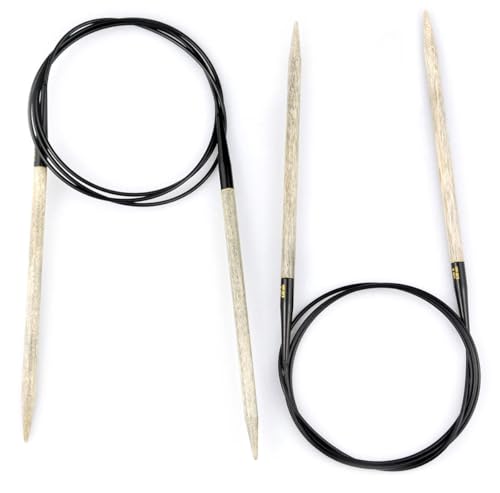
Lykke needles are renowned for their beautiful driftwood finish, which is smooth to the touch but retains the natural warmth of wood. They are designed to be extremely lightweight, making them a top choice for large projects like heavy blankets or sweaters.
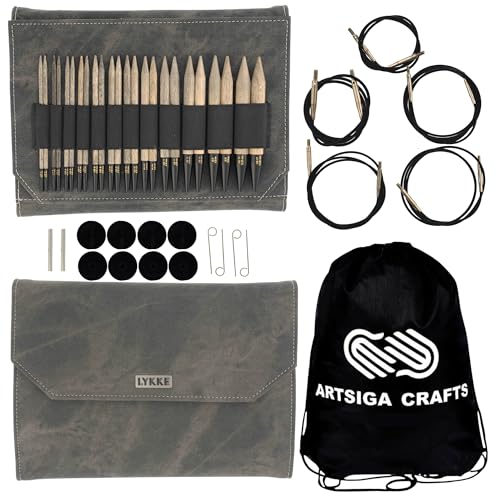
The surface is treated to be snag-free, providing a consistent glide that helps maintain even gauge throughout your project. If you find that metal needles make your hands feel cold and stiff after an hour of knitting, the thermal properties of these wooden needles will provide immediate relief.
They are a fantastic middle ground for those who want the warmth of bamboo but the durability and finish of a higher-end wood. They are reliable, sturdy, and aesthetically pleasing, making them a joy to use for extended periods.
Signature Needle Arts: Sturdy Metal Precision
Signature Needle Arts needles are a premium investment, known for their perfectly balanced weight and distinct, high-quality manufacturing. They are crafted from aluminum, giving them a substantial feel that many knitters find helps them maintain a consistent, relaxed tension.
The tips are uniquely shaped—not too sharp and not too blunt—which makes them versatile for almost any fiber type. Because the needles are so precisely machined, you don’t have to fight the tool to get the stitch off the needle, which is a major factor in reducing repetitive strain.
While the price point is higher, the ergonomic benefit of having a perfectly weighted tool cannot be overstated. If you are a lifelong knitter, these needles are an investment in your long-term hand health.
How to Choose the Right Needle Grip for Your Hand
Selecting the right needle is as much about your personal knitting style as it is about the yarn. If you are a "flicker" who uses the tips of your fingers to move the needles, you need a material that provides enough friction to prevent slipping.
- Slick (Metal): Best for fast knitters or sticky yarns like wool.
- Grippy (Bamboo/Wood): Best for beginners or slippery yarns like cotton and acrylic.
- Weighted (High-end Metal): Best for knitters who need feedback to maintain even tension.
Consider your gauge as well. If you are a tight knitter, avoid bamboo, as the friction will only increase your tension and lead to faster fatigue. Instead, opt for a smooth, coated metal needle to help the yarn move with less effort.
Ergonomic Knitting Tips to Reduce Wrist Fatigue
Ergonomics isn’t just about the tools; it’s about your posture. Always ensure your elbows are supported by a pillow or chair armrest to take the weight of the project off your wrists.
Try to consciously "drop your shoulders" every few rows, as tension in the neck often travels down into the hands. If you find yourself gripping the needles tightly, try to consciously loosen your hold; the needles should do the work, not your muscles.
Take frequent "micro-breaks" every 20 minutes to stretch your fingers and wrists. A simple stretch—extending your arm and gently pulling your fingers back—can prevent the buildup of tension that leads to long-term pain.
Understanding Needle Material and Tension Control
Your tension is directly influenced by the surface of your needle. A slick needle allows for faster movement, which can lead to looser stitches if you aren’t careful, while a grippy needle can cause you to pull the yarn tighter to compensate for the friction.
- Metal: Reduces drag, increases speed, can be cold to the touch.
- Wood/Bamboo: Adds friction, slows speed, provides warmth, reduces hand fatigue.
- Plastic/Resin: Often a middle ground, but can be "grabby" depending on the finish.
If you are struggling with uneven stitches, try switching to a material that offers more resistance. Sometimes, the "work" of knitting is actually what helps you maintain the control necessary for a beautiful, even fabric.
Troubleshooting Hand Pain During Long Knit Sessions
If you experience persistent pain, don’t ignore it. Start by evaluating your "death grip" on the needles; most knitters hold their tools much tighter than is actually necessary to keep the stitches on the needle.
If the pain persists, try switching to a different needle material or a slightly larger needle size to reduce the strain on your hands. Sometimes, using a circular needle even for flat projects can help, as the weight of the fabric rests on your lap rather than on your wrists.
Finally, remember that knitting is a marathon, not a sprint. If your hands are hurting, put the project down and come back to it later; your hands will thank you for the rest, and your knitting will be more consistent for it.
Finding the perfect needle is a personal journey that evolves as your knitting skills and project preferences change. By paying attention to how your hands feel after a session, you can make informed adjustments to your tools and technique. Prioritize your comfort, and you will find that your knitting becomes a source of joy for years to come. Happy knitting!