6 Best Display Boards For Finished Designs To Try
Elevate your creative projects with our guide to the 6 best display boards. Discover durable, versatile options to showcase your finished designs effectively.
Blocking is the final, transformative step that turns a collection of stitches into a professional-grade garment. Without the right surface, your hard work can end up lopsided, uneven, or improperly shaped. Choosing a dedicated display board ensures your tension evens out and your edges remain crisp. Here are the top tools to help you achieve that polished, store-bought finish.
Knitter’s Pride Wool Board: Best Overall Choice
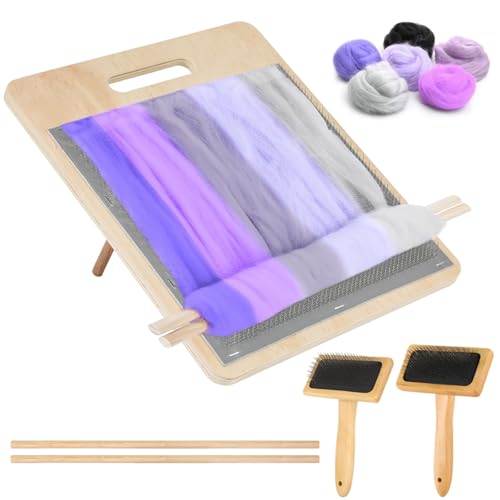

This board is a favorite because it combines the natural grip of wool with a sturdy, reliable structure. Unlike synthetic foam mats that can feel slippery, the wool surface provides a gentle resistance that holds your knitting in place while you pin.
It is particularly effective for delicate fibers like cashmere or merino that can be easily distorted by overly aggressive pinning. The natural material allows for better airflow, which is crucial for drying projects evenly without trapping moisture.
The trade-off here is maintenance; wool surfaces require more care than plastic or foam alternatives to prevent pilling or fiber buildup. However, for the knitter who values a tactile, premium experience, this board is the gold standard for consistent results.
Clover Blocking Board: Best for Precision Work

When you are working on lace shawls or intricate geometric patterns, the Clover board offers unparalleled accuracy. It often features a grid system that helps you visualize symmetry, ensuring your points are perfectly aligned.
The surface is designed to be firm, which is essential for projects that require aggressive stretching to open up the lace. If you are working with a high-twist wool or a linen blend, this firmness helps lock the stitch pattern into its intended shape.
Be mindful that these boards are often smaller in scale, making them ideal for accessories rather than full-sized sweaters. If you prioritize geometric precision over raw surface area, this is your best investment.
KnitIQ Blocking Mats: Best for Large Projects
If you find yourself knitting sweaters or large blankets, interlocking foam mats are a non-negotiable tool. KnitIQ mats are praised for their thickness and density, which allows you to insert pins at an angle to hold heavy, wet weight.
The grid markings are printed directly onto the mats, which saves you from needing a tape measure every time you set up. Because they are modular, you can expand your workspace to fit the specific dimensions of a cardigan or a massive heirloom throw.
Keep in mind that these mats take up a significant amount of floor space once assembled. Ensure you have a dedicated corner where your project can rest undisturbed for 24 to 48 hours while it dries.
Cocoknits Maker’s Board: Best for Organization
The Cocoknits board is less of a traditional blocking mat and more of a command center for your knitting life. It is magnetized, allowing you to use magnets to hold your charts and patterns directly alongside your work-in-progress.
This is a game-changer for knitters who struggle with keeping track of complex colorwork charts or row counts. While it isn’t designed for heavy-duty wet blocking, it is the perfect surface for "steam blocking" or shaping small swatches.
If you are a process-driven knitter who loves to stay organized, this tool will streamline your workflow significantly. It bridges the gap between a project board and a functional workstation.
Boye Grid Blocking Board: Best Budget Option

For the beginner knitter who isn’t ready to invest in high-end equipment, the Boye grid board offers essential functionality at a lower price point. It provides a clear, reliable grid that is perfect for learning the basics of shaping.
It is lightweight and easy to store, making it a great choice for knitters with limited space. While it may not have the premium density of more expensive mats, it handles standard acrylics and wool blends perfectly well.
The primary drawback is durability; with heavy use, the grid lines may fade or the surface may show pin marks over time. Treat this as your "workhorse" board that gets the job done without unnecessary frills.
HiyaHiya Blocking Board: Best for Lace Designs
HiyaHiya boards are engineered with the lace knitter in mind, often featuring specialized pin placements that cater to intricate points. The surface is designed to withstand the tension required to stretch lace until the yarn "blooms."
This board is particularly useful when working with slippery fibers like silk or bamboo. These materials can be notoriously difficult to manage, but the texture of the HiyaHiya surface provides just enough friction to keep your stitches from migrating.
If your knitting repertoire consists mostly of complex shawls, this board is a specialized tool that will pay for itself in saved frustration. It is a precise instrument for a precise craft.
Why Proper Blocking Elevates Your Finished Work
Blocking is not just about making things look pretty; it is about relaxing the fibers. When you knit, the yarn is under constant tension; blocking allows the yarn to settle into its final, relaxed state.
- Evens out tension: Minor variations in your knitting gauge disappear once the fabric is properly shaped.
- Defines stitch patterns: Cables pop, lace opens up, and colorwork becomes sharper.
- Corrects size: You can gently nudge a garment to meet your intended measurements.
Understand that blocking is a form of "finishing" that dictates how your garment will drape on the body. A well-blocked sweater will hang gracefully, while an unblocked one may look stiff or misshapen.
Essential Tools for Pinning and Shaping Knits
Your board is only as good as the pins you use. I always recommend using T-pins or stainless steel blocking wires to ensure your project doesn’t rust or sag.
- T-Pins: These are sturdy and easy to grip, making them perfect for thick wool.
- Blocking Wires: These are essential for straight edges on scarves or shawls.
- Rust-proof pins: Always check that your pins are stainless steel to avoid permanent staining on your yarn.
Avoid using standard sewing pins, as they are too flimsy to hold the weight of a wet garment. Invest in quality pins once, and they will last you a lifetime of projects.
How to Choose the Right Surface for Your Needs
Choosing the right board comes down to the types of projects you tackle most often. If you knit mostly socks and hats, a smaller, high-precision board is better than a massive set of foam mats.
- Project Size: Do you knit sweaters or only accessories?
- Fiber Type: Does your yarn need aggressive stretching (lace) or gentle shaping (sweaters)?
- Space: Do you have a permanent area to leave your blocking setup, or do you need to pack it away?
If you are unsure, start with a modular foam mat set. It is the most versatile option that can grow alongside your knitting skills.
Maintaining Your Blocking Mats and Accessories
To keep your mats in top condition, always ensure your knitting is damp, not dripping wet, before pinning. Excess water can cause mold or mildew if the mats are stored while still slightly moist.
After use, wipe down your mats with a damp cloth to remove any yarn debris or dye transfer. Store them flat in a cool, dry place to prevent warping or bending over time.
Proper care ensures that your tools remain reliable for years. Treat your blocking setup with the same respect you give your needles, and your finished projects will thank you for it.
Investing in a quality blocking board is the hallmark of a knitter who cares about the longevity of their craft. Whether you choose the precision of a Clover board or the versatility of modular mats, the result will be a noticeable upgrade in your finished pieces. Take your time, experiment with these surfaces, and watch your stitches transform. Happy knitting to all of you, and may your edges always be perfectly straight.