6 Best Wooden Wall Pegs For Crochet Thread Storage
Organize your craft space with our top 6 wooden wall pegs for crochet thread. Discover durable, stylish storage solutions to keep your yarn tidy and accessible.
Every fiber artist knows the frustration of a tangled thread stash hiding in a dark drawer. Crochet thread, especially delicate mercerized cotton, requires specific care to maintain its structural integrity and sheen. Moving your collection from bins to the walls isn’t just about aesthetics; it’s about accessibility and preservation. These six wooden wall peg solutions offer the perfect balance of form and function for your craft room.
IKEA Skådis Pegboard: The Best Modular System
The Skådis is the gold standard for those of us who like to rearrange our workspace as our project list changes. While it is technically a composite material, the available wooden accessories allow you to integrate that warmth into your studio.
Its true strength lies in its versatility. You can move hooks and shelves around in seconds, which is a lifesaver when you finish a large lace project and need to swap out your thread weights.
The downside is the initial setup time. You have to be precise with your wall mounting, or the board will wobble under the weight of a heavy thread stash.
Muumoo Wooden Wall Pegs: Best for Thread Spools


Muumoo pegs are designed specifically for the cylindrical shape of thread spools. Because they are often individual units, you can mount them in custom patterns that fit the awkward corners of your craft room.
These are excellent for keeping thread spools from rolling away. If you have ever chased a runaway ball of size 10 thread across the floor, you know that keeping them upright is a priority.
Be aware that individual pegs require individual wall anchors. If you have a massive collection, you’ll be doing a lot of drilling and measuring to keep them perfectly level.
Creative Co-op Wall Hooks: Best Vintage Aesthetic

If your craft room doubles as a living space, you want storage that looks like decor. These hooks offer a charming, artisanal look that hides the "utility" aspect of your thread stash.
They work best for displaying your favorite hand-dyed threads or vintage finds. Seeing your colors on display often sparks inspiration for your next colorwork project or thread-crochet motif.
However, they aren’t the most efficient use of space for a high-volume stash. They are better suited for the "treasures" you want to keep within arm’s reach rather than your entire inventory.
Knaid Decorative Peg Rack: Best for Small Spaces

A peg rack is a classic for a reason: it provides a linear, organized solution that fits behind doors or in tight nooks. Knaid’s version is lightweight and easy to mount, making it ideal for renters.
This is perfect for the crocheter who works with a rotation of 5–10 colors at a time. It keeps your current project threads from getting buried under the rest of your supply.
The trade-off is the depth of the pegs. If the pegs are too short, your thread spools might slip off if the rack is bumped, so ensure you check the peg angle before mounting.
Wallniture Wood Peg Rail: Best for Large Collections

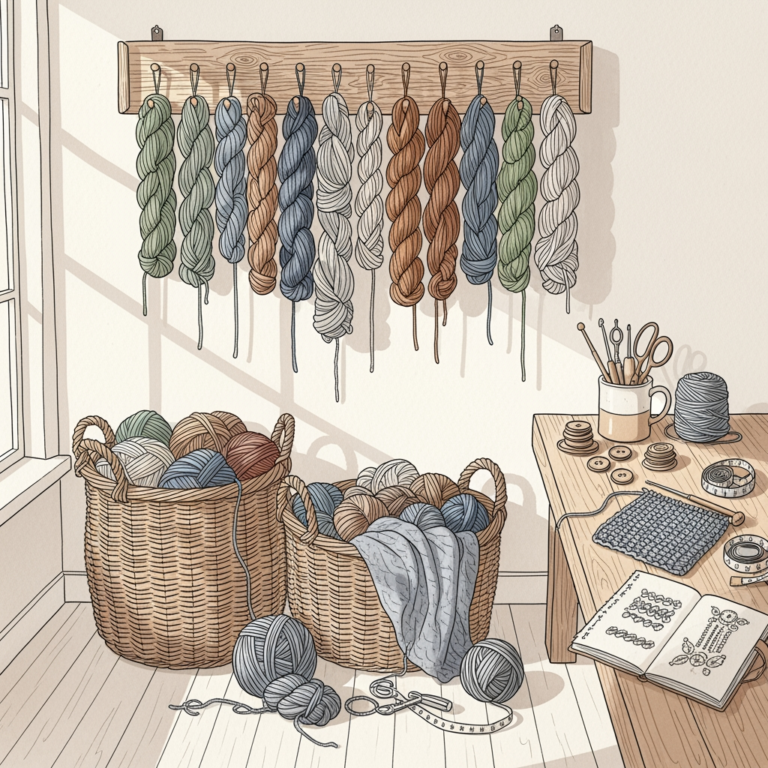
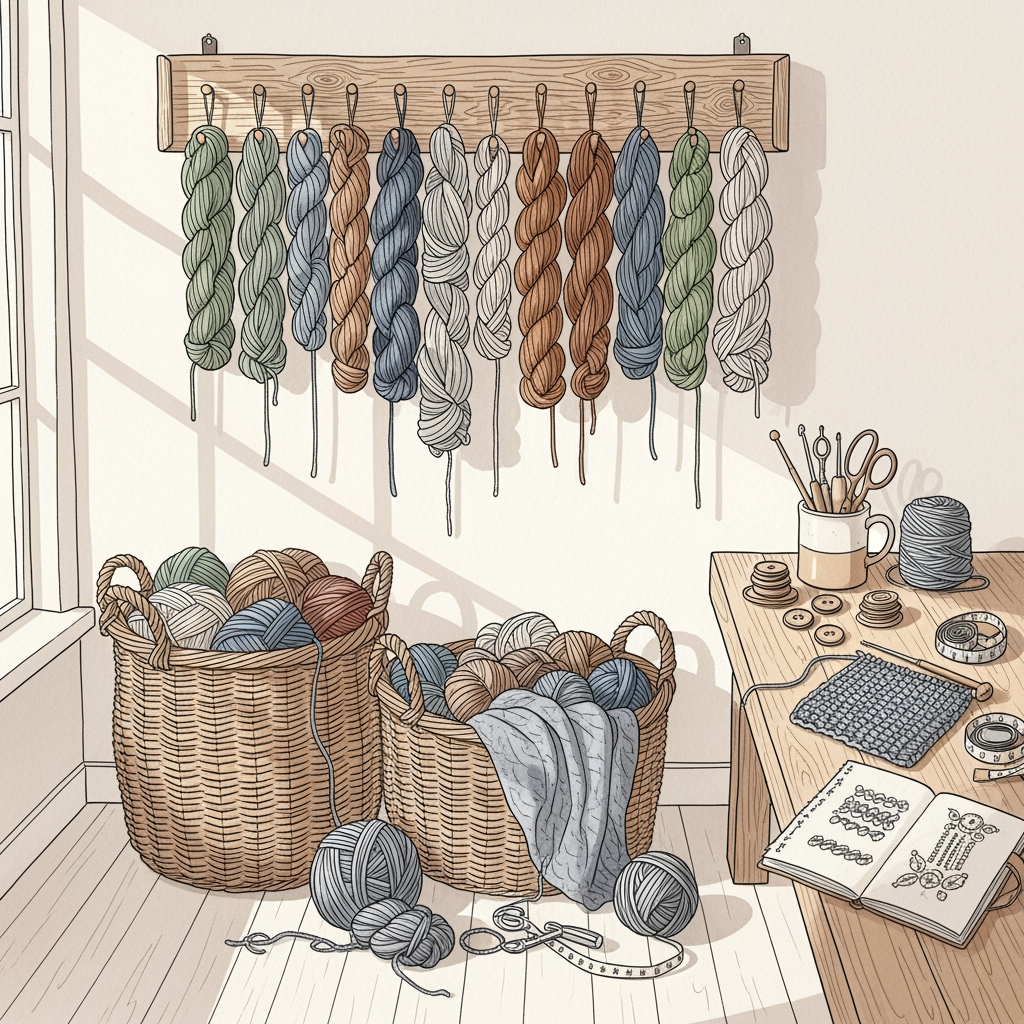
When you reach the point where you have hundreds of yards of thread, you need a high-capacity solution. A long, sturdy peg rail allows you to hang dozens of spools in a single, clean line.
This creates a "yarn shop" feel in your home. It’s incredibly satisfying to look at your thread organized by color gradient, which helps immensely when you are planning a multi-colored project.
Ensure you mount these into wall studs. A full rail of wooden spools is heavier than it looks, and you don’t want your hard work pulling away from the drywall.
H&H Natural Beech Pegs: Best Minimalist Solution
Beechwood is a fantastic material for fiber storage because it is smooth and splinter-free. You never want a rough edge catching on your delicate cotton or silk-blend threads.
These individual pegs offer a clean, Scandinavian aesthetic. They are the ultimate choice for the knitter or crocheter who values a clutter-free environment to focus on their gauge and stitch tension.
The main consideration here is spacing. You have to plan your layout carefully so that your spools don’t crowd each other, which can make it difficult to grab one thread without knocking over its neighbor.
Key Factors for Storing Delicate Crochet Thread
Crochet thread is often mercerized, which gives it that beautiful luster but can make it prone to snapping if stored improperly. Avoid plastic bags, which can trap moisture and lead to mildew.
Always look for smooth, finished woods. If a peg has a rough patch, it can snag the fine plies of your thread, causing fraying that will be painfully obvious in your finished work.
- Weight: Ensure the peg diameter is smaller than the spool core.
- Texture: Opt for polished wood to prevent snagging.
- Capacity: Don’t overload a single peg; it stresses the spool core.
Protecting Your Thread From Dust and Sunlight
Sunlight is the enemy of natural fibers. UV rays will bleach your thread over time, causing your perfectly color-matched stash to shift in hue.
Avoid placing your wall pegs directly across from a sunny window. If you must use wall storage in a bright room, consider a light, breathable curtain to cover your stash when you aren’t crafting.
Dust is another silent killer. It settles into the fibers and can be difficult to remove, potentially dulling the crisp finish of your thread. Regular, light dusting with a soft cloth is essential.
Why Vertical Storage Saves Your Crafting Space
Vertical storage is the secret to a professional-feeling studio. By getting your thread off the table, you reclaim precious surface area for your blocking mats, pattern books, and current projects.
When your thread is vertical, you can see every color at once. This visibility is crucial when you are trying to match a specific shade for a repair or a complex color-work pattern.
It also prevents the "tangle effect." When spools are stacked in a box, they inevitably become a bird’s nest of loose ends; on a peg, each spool remains independent and ready to use.
Essential Tips for Organizing Thread by Weight
Organizing by weight is just as important as organizing by color. You don’t want to reach for a size 3 thread when your project calls for a size 20.
Group your threads by their WPI (Wraps Per Inch) or standard size numbering. Keeping them physically separated by weight prevents you from accidentally grabbing the wrong thickness mid-project.
- Labeling: Use small tags on the pegs if you have many similar colors.
- Grouping: Place your most-used weights at eye level.
- Rotation: Keep your "workhorse" threads in the most accessible spots.
Investing in quality wooden wall pegs is a small change that yields massive benefits for your fiber arts practice. By keeping your threads visible, protected, and accessible, you remove the barriers between you and your next beautiful project. Take the time to mount your storage securely, and your thread stash will remain a source of joy for years to come.