6 Best Pattern Keepers For Hands Free Reading
Discover the top 6 hands-free pattern keepers. Our guide evaluates essential tools to help crafters maintain focus and efficiency while following complex charts.
We have all been there: squinting at a crumpled paper pattern while trying to manage a complex lace repeat and a set of double-pointed needles. A dedicated pattern keeper transforms your knitting station from a chaotic mess into a professional workspace. By keeping your instructions at eye level, you reduce neck strain and significantly cut down on those frustrating "lost my place" errors. These six tools are the gold standard for keeping your focus exactly where it belongs—on your stitches.
KnitIQ Magnetic Pattern Holder: Best Overall Pick


The KnitIQ Magnetic Pattern Holder is a staple for a reason: it balances durability with a sleek, functional design. It acts as a sturdy easel, holding your pattern upright so you don’t have to hunch over your work.
The magnetic strips are exceptionally strong, ensuring that even thick cardstock or laminated pages stay firmly in place. Whether you are working on a stranded colorwork sweater or a simple garter stitch scarf, this holder keeps your row-by-row instructions perfectly visible.

The folding mechanism is intuitive, making it easy to store in your project bag when you aren’t using it. It is a reliable, no-nonsense tool that solves the fundamental problem of pattern visibility.
Cocoknits Maker’s Board: Best Modular System
If you are the type of knitter who loves to customize their workspace, the Cocoknits Maker’s Board is a game-changer. It is essentially a magnetic whiteboard that allows you to attach various accessories, such as magnetic rulers, stitch markers, and pattern sheets, exactly where you need them.
This system is particularly brilliant for complex lace charts where you need to track both row numbers and stitch repeats simultaneously. You can use the included magnets to "block" off sections of the chart, ensuring you don’t accidentally skip a yarn-over or a decrease.
Because it is modular, you can transition from a large shawl project to a small sock project without rearranging your entire setup. It is an investment, but for those who juggle multiple WIPs (Works In Progress), the organization it provides is unmatched.
Knitter’s Pride Pattern Holder: Best Value Option

You don’t need to spend a fortune to get a high-quality pattern keeper, and the Knitter’s Pride model proves this perfectly. It features a simple, effective magnetic board that folds into a convenient stand for tabletop use.
It is lightweight and portable, making it an excellent choice for knitters who take their projects to local meetups or on vacation. While it lacks the bells and whistles of more expensive systems, it performs the essential task of holding your pattern securely at the perfect angle.
If you are a beginner who is just starting to tackle patterns beyond a basic scarf, this is the perfect entry-level tool. It is functional, affordable, and built to withstand years of regular use.
Della Q Pattern Clutch: Best for Travel Knitting

Traveling with knitting patterns often leads to torn edges and coffee spills, which is why the Della Q Pattern Clutch is a favorite among nomadic makers. This isn’t just a holder; it is a high-quality folio designed to protect your charts while you are on the go.
The interior is lined with a magnetic surface, allowing you to secure your pattern and keep your place with a magnetic strip. It zips shut, ensuring that your pattern, needles, and a few essential notions stay safe inside your carry-on or tote.
It is ideal for knitters who work on intricate projects during commutes or flights. You can tuck your pattern away instantly when you reach your destination, keeping your instructions pristine and ready for the next session.
Magma Pattern Keeper: Best for Complex Charts

The Magma Pattern Keeper is widely considered the gold standard for knitters who live and breathe complex, multi-page charts. Its unique design uses a strong magnetic backing and a long magnetic strip that acts as a "line guide," sliding down the page as you progress.
This is invaluable for patterns with long, repeating sections where losing your place can result in a catastrophic error in your cable or lace work. The board itself is rigid and provides a stable surface for marking up your charts with a dry-erase marker.
It is particularly useful for those working on fine-gauge projects where the stitch count is high and the margin for error is low. If you find yourself constantly highlighting lines on a printed chart, this tool will save your sanity.
Loome Pattern Stand: Best Ergonomic Design
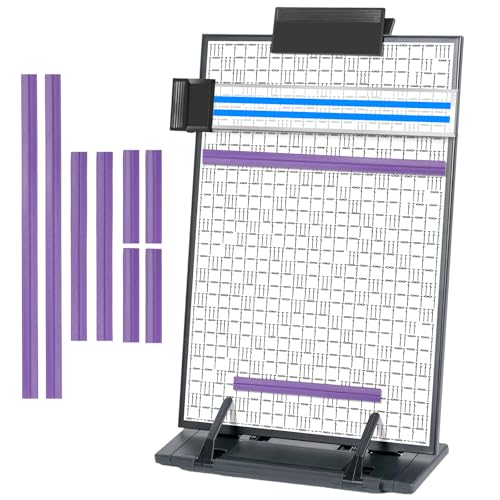
Sometimes the best tool is one that keeps your posture in mind, and the Loome Pattern Stand excels at ergonomic positioning. It is designed to hold your pattern at a comfortable eye level, which is a massive relief for those long, marathon knitting sessions.
By preventing "knitter’s neck," this stand allows you to knit for longer periods without the physical fatigue that often sets in after a few hours. It is lightweight, minimalist, and doesn’t clutter your knitting space.
This stand is perfect for knitters who prefer to sit in a comfortable armchair and want their pattern to mirror their line of sight. It is a simple, effective solution that prioritizes your physical comfort as much as your project’s success.
Why You Need a Hands-Free Pattern Keeper Today
Holding a pattern in your lap while trying to manage yarn tension and needles is a recipe for dropped stitches. A hands-free keeper allows you to maintain consistent tension because your hands are solely focused on the yarn and needles, not on wrestling with a piece of paper.
Beyond the physical benefits, these tools improve your mental flow. When you aren’t constantly looking down or re-reading instructions, you can enter that meditative state that makes knitting so rewarding.
Furthermore, keeping your pattern off the table prevents accidental spills or yarn snagging. It turns your knitting area into a dedicated, professional space that respects the effort you put into your craft.
Key Features to Consider Before You Make a Purchase
When choosing a keeper, consider the size of the projects you usually tackle. A small, portable holder is great for socks, but it will be frustratingly small for a large, cabled sweater chart.
Magnetic strength is another critical factor; cheap magnets will slide down or fail to hold thick paper, leading to frustration. Look for boards that offer a "line guide" feature, as this is the single most effective way to track your progress through a complex pattern.
Think about your storage habits as well. If you have a dedicated craft room, a large standing board is fine, but if you knit on the couch, look for something that folds flat or fits into your existing project bag.
Magnetic vs. Clip-Style Holders: Pros and Cons
Magnetic holders are generally the industry favorite because they allow for precise, incremental movement of your line guide. They are clean, easy to use, and don’t damage your paper patterns.
Clip-style holders, by contrast, are often more affordable and can hold thicker items like pattern books or magazines. However, clips can occasionally snag your yarn if they are positioned too close to your work area.
Ultimately, magnetic boards offer a more seamless experience for chart-reading, while clip-style holders are better for those who prefer working from books rather than individual printed sheets.
How to Organize Your Patterns for Better Workflow
The best way to organize your patterns is to use a consistent system of page protectors or lamination. Even if you have a great pattern keeper, protecting your paper from the oils on your hands will ensure your patterns last for years.
Try to keep your current chart on the magnetic board and store the rest of the pattern in a nearby folder. This keeps your workspace clear and prevents you from getting overwhelmed by the sheer volume of instructions for a large project.
Finally, don’t be afraid to write on your patterns or use colored pencils to mark specific repeats. A well-annotated pattern is a map of your progress, and keeping it organized ensures you can pick up a project months later and know exactly where you left off.
Investing in a pattern keeper is one of the most practical upgrades you can make to your knitting practice. By removing the physical burden of managing your instructions, you free yourself to focus entirely on the rhythm of your stitches. Choose the tool that best fits your specific project needs and watch your knitting efficiency soar. Happy making, and may your rows always stay perfectly aligned.