6 Best Tabletop Task Lights For Colorwork To Try
Achieve perfect color accuracy with these 6 top-rated task lights. Discover essential features for crafters that ensure vibrant, true-to-life results today.
When you are deep into a complex stranded colorwork project, poor lighting is the fastest way to lose your place in a chart or misread a stitch. I have spent two decades squinting at dark navy and charcoal wool, and I can tell you that the right lamp is just as important as your favorite set of needles. A quality task light doesn’t just illuminate your stitches; it saves your eyesight and prevents those frustrating dropped stitches that hide in the shadows. Here are my top picks to help you keep your tension even and your color transitions crisp.
Brightech LightView Pro: The Best Overall Choice
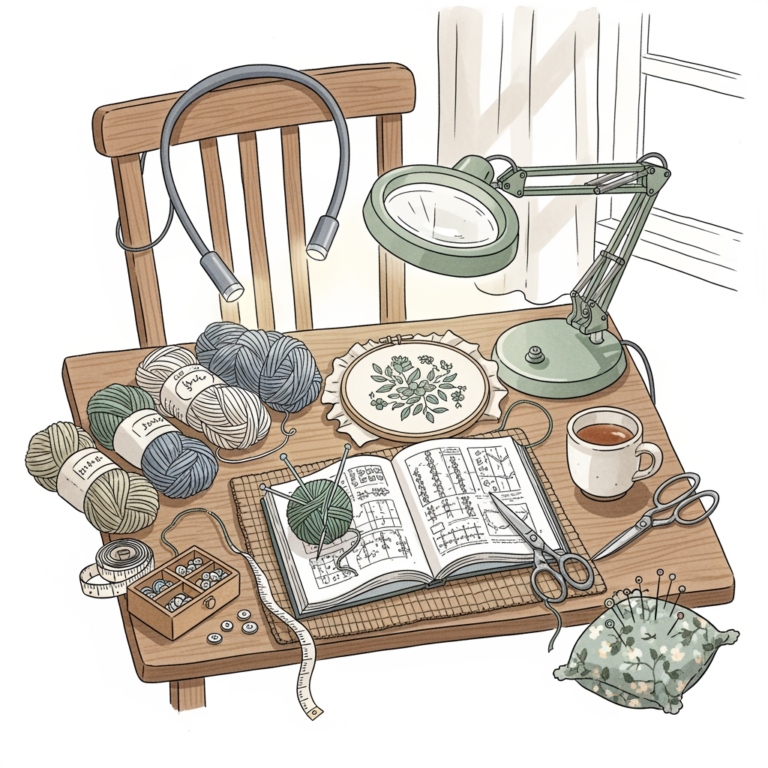
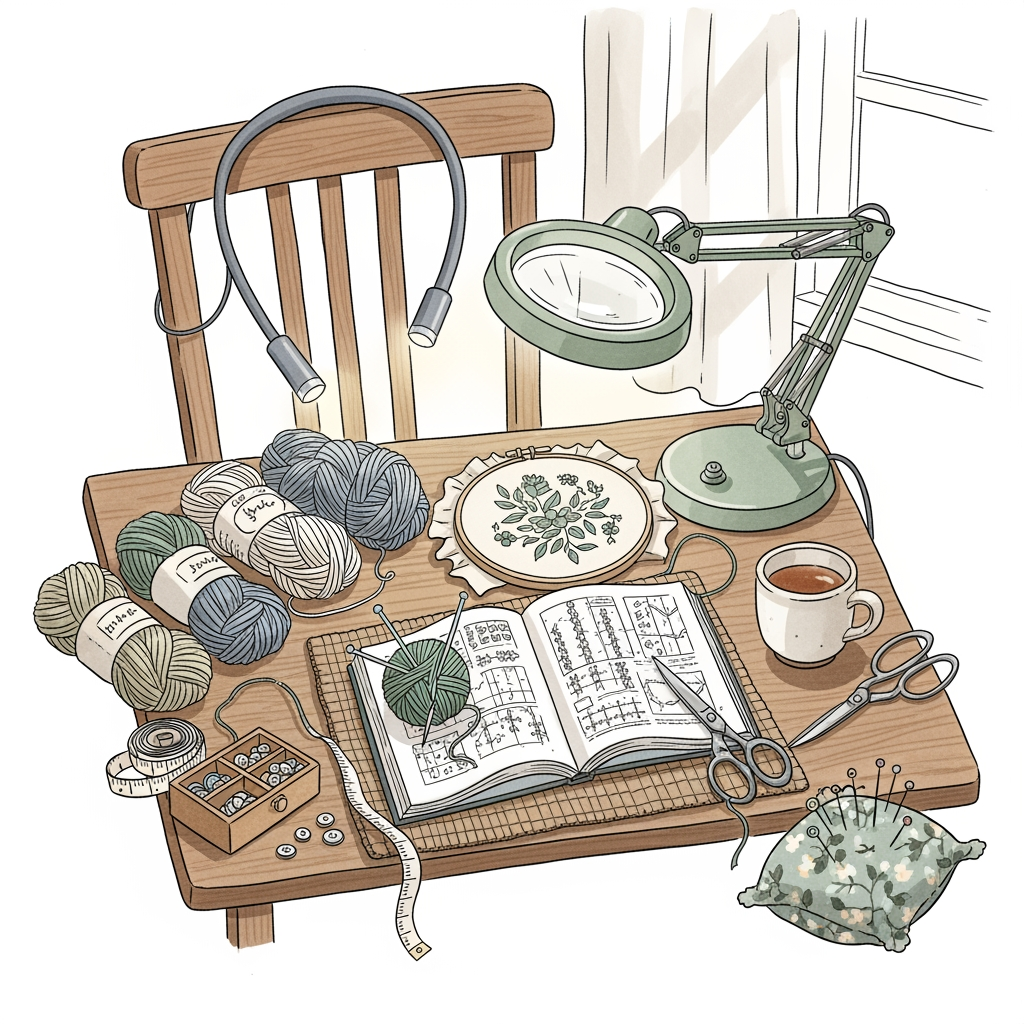
If you are working with dark, high-twist yarns, the Brightech LightView Pro is a game-changer. It combines a high-quality LED array with a 2.25x magnification lens, which is incredibly helpful when you are trying to pick up a dropped stitch in a complex lace pattern or check your gauge on fine-weight yarn.
The real strength here is the flexible gooseneck, which allows you to hover the light directly over your needles without the lamp base getting in the way of your elbows. Because the lens is large, you can see a significant portion of your work at once, which is vital when you are managing two colors of yarn in one hand.
However, the magnification can take some getting used to if you aren’t accustomed to it. Some knitters find that it distorts their depth perception if they try to use it for the entire duration of a project. Use the magnifier for checking your tension or reading charts, then flip it up when you are just cruising through a plain stockinette section.
OttLite 2-in-1 LED Magnifier: Best for Precision
OttLite has long been the gold standard for "true-to-life" color rendering, which is non-negotiable for colorwork. When you are working with subtle shifts in heathered wool, you need a light that shows the difference between a forest green and a deep teal accurately.
This 2-in-1 model is particularly clever because it converts from a floor lamp to a tabletop version. If you are knitting a large blanket on the sofa, you can use the floor stand; if you move to your desk to chart out a new motif, it sits perfectly on the table.
The downside is that the base is quite heavy, which makes it stable but difficult to move around a crowded craft room. If you have a dedicated knitting corner, this is a permanent, reliable investment that will make your color choices much more accurate.
BenQ ScreenBar Halo: Best for Desk Space Saving
If your knitting desk is already cluttered with project bags, stitch markers, and pattern binders, the BenQ ScreenBar is a brilliant solution. It clips onto the top of your computer monitor, casting a wide, even glow across your workspace without taking up a single inch of table surface.
For knitters who follow digital patterns on a tablet or laptop, this light is ideal because it eliminates screen glare. It provides a wide, "asymmetric" light beam that hits your knitting needles but avoids reflecting off your digital screen, keeping your eyes fresh for longer sessions.
Because it is mounted at a height, it doesn’t provide the same focused, "surgical" light as a dedicated desk lamp. It is better for general knitting visibility than for detailed darning or fixing a complex cable error, but for everyday colorwork, it is remarkably efficient.
TaoTronics LED Desk Lamp: Best Budget Option
You do not need to spend a fortune to get decent lighting for your fiber arts. The TaoTronics lamp offers a surprising range of color temperatures and brightness levels, allowing you to switch from a cool, crisp light for white-on-white work to a warmer, softer light for evening knitting.
The touch-sensitive controls are sleek, though they can be a bit sensitive if you accidentally brush them with your yarn while adjusting your position. It is lightweight and portable, making it a great companion to toss in your project bag if you are heading to a knitting group or a retreat.
While it lacks the heavy-duty build of more expensive lamps, it is more than sufficient for most hobbyists. If you are a casual knitter who needs a reliable light that won’t break the bank, this is the most practical entry point.
Lepower Metal Architect Lamp: Best Versatility


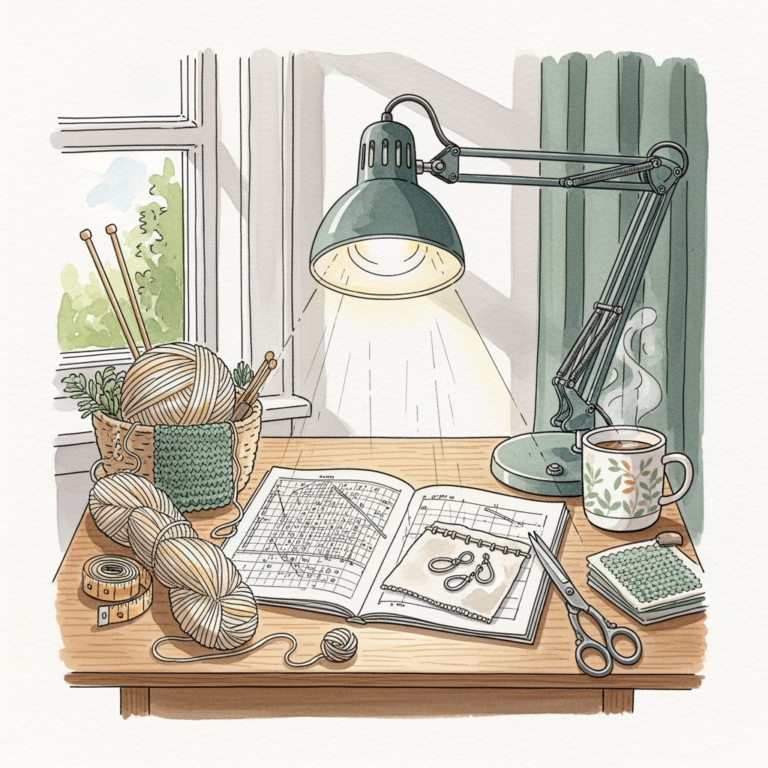
There is something classic about the architect-style lamp that fits the aesthetic of a traditional knitting nook perfectly. The Lepower Metal Architect Lamp features a multi-pivot arm that allows you to swing the light head into virtually any position, which is essential if you tend to shift your posture frequently.
This lamp is excellent for knitters who like to "sweep" their light across their work. If you are working on a wide shawl and need the light to cover a large wingspan, you can easily adjust the height and angle to ensure every stitch is illuminated.
The main tradeoff is that you will need to provide your own bulb. This is actually a hidden benefit, as it allows you to choose a high-CRI (Color Rendering Index) LED bulb to ensure your yarn colors look exactly as they do in natural daylight.
Verilux SmartLight: Best for Eye Comfort Levels
Verilux is famous for its "HappyLight" technology, which is designed to mimic the spectrum of natural sunlight. For those of us who live in northern climates where the winter days are short, this lamp provides a significant boost to both your visibility and your mood while you knit.
The light is incredibly soft and diffused, which means it reduces the harsh shadows that can make it difficult to see the definition of dark-colored mohair or alpaca fibers. By reducing the "flicker" common in cheaper LEDs, it significantly cuts down on the eye fatigue that sets in after a few hours of stranded colorwork.
It is a bit pricier than other options, and the design is more functional than stylish. However, if your primary goal is to knit for long periods without getting a headache, the investment in your eye health is well worth it.
Why Proper Lighting Is Vital for Colorwork Projects
Colorwork requires you to constantly monitor your tension between two different strands of yarn. If your lighting is uneven, you might accidentally pull one color tighter than the other, leading to a "puckered" fabric that won’t block out flat later.
Good lighting also helps you distinguish between similar shades in low-contrast patterns. It is incredibly easy to mistake a dark navy for a black in dim, yellow-tinted residential lighting, which can ruin the intended design of your stranded yoke or fair isle pattern.
- Shadow reduction: Prevents "ghost" stitches where you think you have a stitch but it is actually a shadow.
- Color accuracy: Ensures you aren’t accidentally swapping colors mid-row.
- Eye strain: Reduces the need to squint, which keeps your neck and shoulders relaxed.
Key Features to Consider When Buying Task Lighting
When shopping for a lamp, don’t just look at the wattage. Look for the Color Rendering Index (CRI), which should be 90 or higher to ensure colors appear true. If you are knitting with luxury fibers like hand-dyed silk or variegated wool, a low CRI will make your beautiful yarn look dull and muddy.
Also, consider the color temperature, measured in Kelvins. Aim for a range between 4000K and 5000K; this provides a "daylight" feel that is bright enough to see your stitches clearly without being so harsh that it feels clinical.
- Adjustability: Can the arm reach over your project without you having to hunch?
- Dimming options: Useful for transitioning from afternoon light to evening darkness.
- Base stability: A heavy base is better for preventing the lamp from toppling over onto your delicate lace project.
LED vs. Incandescent: Choosing the Right Bulb Type
In the world of fiber arts, the choice between LED and incandescent is clear: LED is the winner. Incandescent bulbs generate significant heat, which can actually dry out natural fibers like wool and silk if the lamp is positioned too close for too long.
LEDs remain cool to the touch, meaning you can safely position them inches away from your project without fear of damaging the yarn. They also last for thousands of hours, so you won’t be scrambling for a replacement bulb in the middle of a row.
The only caveat is to ensure you are buying "full-spectrum" LEDs. Some cheaper LEDs have a blue-tinted cast that can make your knitting look washed out, so always check the packaging for "natural" or "daylight" designations.
How to Position Your Lamp to Reduce Eye Strain
The most common mistake is placing the light directly in front of you, which causes glare to bounce off your needles and back into your eyes. Instead, position your lamp to the side of your dominant hand, slightly behind your shoulder.
This creates a "side-lighting" effect that highlights the texture of your stitches, making it much easier to see the difference between a knit and a purl stitch. It also prevents the shadow of your hands or your needles from falling directly over the area you are currently working on.
If you find yourself still squinting, try adjusting the height of your chair rather than the lamp. Bringing your work closer to your eyes while keeping the lamp at a fixed, stable distance is the secret to maintaining good posture and avoiding the dreaded "knitter’s neck."
Investing in your workspace is just as important as investing in high-quality needles or luxury yarn bases. By choosing a task light that prioritizes color accuracy and adjustable ergonomics, you are setting yourself up for years of comfortable, frustration-free knitting. Don’t settle for the dim lighting of a standard living room lamp; give your eyes the support they need to handle your most intricate colorwork designs. Happy knitting, and may your stitches always be perfectly illuminated.