6 Best Wool Core Fibers for Building Solid Shapes
Master needle felting with our guide to the 6 best wool core fibers. Learn which materials provide the firmest base for creating durable, solid 3D shapes.
Needle felting is the sculptural cousin to knitting, demanding the same eye for fiber structure and tension as a complex lace project. Choosing the right core wool is the difference between a sculpture that holds its shape for years and one that sags after a week. These six core wool options provide the foundation you need to build solid, professional-grade shapes. Think of these fibers as the "yarn base" for your three-dimensional art.
Living Felt Core Wool: The Industry Gold Standard


Living Felt Core Wool is widely considered the gold standard for a reason: it is incredibly consistent. When you are working on a large-scale project, having a fiber that behaves predictably from one handful to the next is a relief.
This wool is processed to be exceptionally clean and free of vegetable matter. If you have ever struggled with bits of hay or debris while felting, you know how frustrating it is to have those imperfections poke through your final color layer.
The fiber length here is ideal for locking together quickly under your needle. It creates a dense, rock-solid core that won’t lose its shape, much like choosing a high-twist wool for a pair of durable hiking socks. It is the safest bet for beginners who are still learning how much pressure to apply.
Bear Creek Felting Core Wool: Best for Firmness

If you find that your needle-felted shapes feel "squishy" or lose their form when squeezed, Bear Creek is your solution. This wool is specifically processed to achieve maximum density with minimal effort.
It acts much like a high-ply, tightly spun yarn; it provides structural integrity that resists deformation. When you are building the armature or the main body of a figure, you want a fiber that fights back against the needle.
This is not the softest wool, but that is a feature, not a bug. The coarser texture allows the barbs on your felting needle to grab hold of the fibers instantly. Use this for the inner skeleton of your projects to ensure they remain firm for years to come.
Woolpets Batting: Ideal for Smooth Sculpting

Woolpets batting is a joy to work with because it is carded into a light, airy, yet manageable sheet. It is less like a tangled mass and more like a structured layer, making it perfect for building up smooth, rounded shapes.
If you are sculpting faces or delicate curves, this is the fiber to reach for. Its consistency allows you to wrap it around itself to create even, symmetrical layers without the lumpy transitions that plague lower-quality wools.
Think of this like working with a smooth, worsted-spun merino; it creates a refined, polished finish. Because the fibers are so well-aligned, you spend less time sculpting and more time refining the details of your piece.
Sarafina Fiber Co. Core Wool: Texture and Grip
Sarafina Fiber Co. understands that core wool needs to do more than just exist—it needs to hold onto the top coat of wool you layer over it. This core wool has a distinct "grab" that makes it superior for layering.
When you add your decorative, colored wool on top, it locks into the core like a yarn joining a colorwork pattern. You won’t find the top layer sliding around or peeling off, which is a common headache for those new to the craft.
It offers a perfect balance between loft and density. It is firm enough to build a solid base but open enough to accept surface fibers easily. It is an excellent choice for intermediate makers who are moving into more complex, multi-layered designs.
Felted Sky Core Wool: Best for Large Projects

When you are tackling a large-scale sculpture, the cost and efficiency of your core wool become critical factors. Felted Sky offers a product that is both economical and highly effective for building volume quickly.
Because the fibers are slightly longer and more voluminous, you can build up bulk without needing to use an exorbitant amount of wool. It functions like a bulky-weight yarn—it covers ground fast and provides a sturdy, lightweight internal structure.
It is particularly good for projects that require a large, uniform interior. If you are making a life-sized animal or a large decorative piece, this will save you both time and money without sacrificing the structural integrity of the finished work.
Howard Brush Core Wool: Best for Precision Work

Precision work requires a fiber that doesn’t fight you when you are trying to make tiny, intricate shapes. Howard Brush provides a core wool that is exceptionally clean and fine, allowing for detailed, sharp edges.
If you are felting miniatures or small, articulated parts, you need a fiber that responds to the smallest movements of your needle. This wool is less prone to "fuzzing" out, which is essential when you are trying to maintain a crisp, clean silhouette.
Think of this as your lace-weight fiber; it is delicate, precise, and perfect for the final stages of shaping. Use it when you need to add small, structural details that require a high level of control and minimal bulk.
Why Core Wool is Essential for Needle Felting
Core wool serves the same purpose as a structural frame in a building or a sturdy foundation in a knitted garment. Without a solid, dense core, your needle-felted pieces will eventually compress and lose their intended shape.
Using expensive, decorative wool for the entire project is a common mistake that leads to waste and poor structural results. Decorative wools are often too soft or too slippery to hold a tight shape on their own.
By using a dedicated core wool, you create an internal "anchor" that holds your work together. It provides the necessary density to support the surface layers, ensuring your hard work remains as beautiful as the day you finished it.
How to Select the Right Density for Your Shapes
Density is the most important factor in the longevity of your sculpture. A loose core will lead to a sagging, misshapen final product, while a core that is too tight can be difficult to needle into later.
For large, structural shapes, always aim for a firm, hard-packed core. You want the piece to feel solid, like a stress ball, rather than spongy or soft.
If you are working on a piece with many small, delicate parts, choose a core wool that is slightly more pliable. You need to be able to needle through it easily to attach smaller components without breaking your needles or hurting your wrists.
Techniques for Efficient Core Wool Shaping
Efficiency in felting is all about how you prepare the wool before the needle touches it. Always pre-roll or fold your core wool into the desired shape before starting to needle.
This technique is similar to "blocking" in knitting; it sets the foundation for the final shape. By creating a tight, pre-formed ball or cylinder, you reduce the amount of stabbing required to reach your desired firmness.
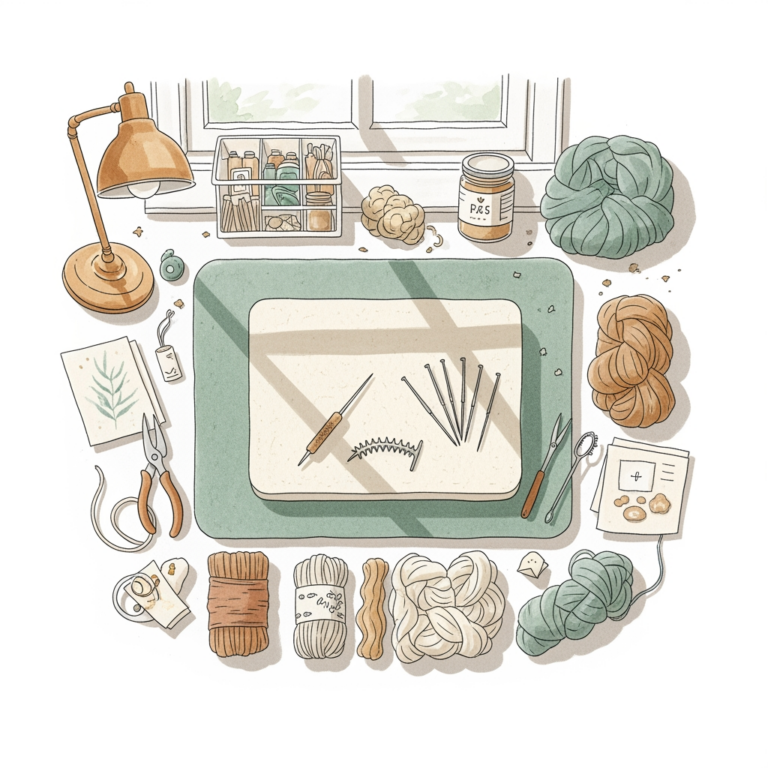
Avoid "stabbing into the void." Always work on a dense foam pad and rotate your piece constantly to ensure even felting. This prevents flat spots and ensures that the core density remains consistent throughout the entire shape.
Caring for Your Finished Needle Felted Pieces
Needle-felted art is durable, but it does require some basic care to keep it looking sharp. Because the wool is not spun into a yarn, it can attract dust and lint over time.
If your piece gets dusty, a gentle tap or a quick pass with a soft-bristled brush is usually sufficient. Avoid washing your pieces, as the agitation and water can cause the wool to shrink or lose its carefully crafted shape.

If you notice loose fibers appearing on the surface, use a fine-gauge felting needle to gently tuck them back into the core. Think of this as "darning" your work—a little bit of maintenance keeps your fiber art looking pristine for years.
Selecting the right core wool is a foundational step that transforms a pile of loose fiber into a permanent sculpture. Whether you prioritize extreme firmness or smooth, detailed sculpting, there is a fiber here that will suit your specific project needs. Take the time to understand the density and grip of your materials before you begin your next piece. With the right foundation, your needle-felted creations will maintain their integrity and beauty for a lifetime.