6 Best Tabletop Lightings For Color Accuracy Reviewed
Achieve perfect color fidelity with our top 6 tabletop light picks. We evaluate brightness, CRI, and versatility to help you find the best setup for your work.
Choosing the right lighting is just as critical as selecting the perfect yarn weight for your project. Poor illumination hides dropped stitches and distorts subtle color shifts, leading to costly mistakes in stranded colorwork or lace. These six lighting solutions offer the clarity needed to ensure your tension and color choices remain accurate. Investing in your eyes is the smartest upgrade you can make for your knitting practice.
Daylight Wafer 3 Lightbox: Best for Color Matching


If you have ever struggled to tell the difference between a deep navy and a charcoal grey yarn, you know the frustration of poor lighting. The Daylight Wafer 3 is a game-changer for high-contrast colorwork because it provides a perfectly even, backlit surface. By placing your work over this light pad, you can spot subtle stitch definition that would otherwise disappear in shadows.
This tool is particularly helpful for those working with dark, matte fibers like black wool, where stitch visibility is notoriously difficult. It acts as a neutral canvas, allowing you to check your gauge and identify potential dropped stitches with surgical precision. Because it is ultra-thin, it won’t clutter your workspace or interfere with your knitting posture.
However, consider that this is a surface-based light, not an overhead one. It is best used for inspection or when you need to see the "anatomy" of your knitting rather than as your primary room light. For the best experience, pair it with an adjustable lamp to balance your workspace illumination.
OttLite Creative Curves LED Desk Lamp Review

The OttLite Creative Curves lamp is a staple in many knitting circles because of its proprietary bulb technology. It mimics natural daylight, which is the gold standard for seeing the true saturation of hand-dyed yarns. When you are working on a project with complex color transitions, this lamp prevents the "yellowing" effect often caused by standard incandescent bulbs.

The flexible neck allows you to direct light exactly where your needles meet the yarn. If you are knitting socks on 2.25mm needles, having that focused beam prevents eye strain during those long, repetitive rounds. You will find that you can knit for hours without the typical fatigue that comes from squinting at dark stitches.
The trade-off here is the footprint; the base is somewhat large and takes up space on a crowded side table. If your knitting station is already packed with pattern binders and project bags, you may need to clear some room. Ultimately, it is a reliable workhorse that prioritizes color accuracy above all else.
BenQ ScreenBar Halo for Wide Knitting Spaces
The BenQ ScreenBar Halo is a unique solution that mounts directly to your monitor, making it perfect if you knit while watching tutorials or following digital patterns. It illuminates your entire desk area without taking up any precious table space. For knitters who keep their reference materials on a screen, this keeps the light focused exactly where you need it.
Because it casts light downward in a controlled arc, it eliminates the glare that often reflects off tablet screens or metal needles. This is a massive benefit if you prefer using slick nickel-plated needles, which are notorious for catching harsh light and causing glare. It provides a clean, professional environment for even the most intricate cable work.
Be aware that this lamp requires a monitor to function as a mount. If you prefer to knit in a comfy chair away from your desk, this will not be the right choice for you. It is a specialized tool for the tech-savvy knitter who wants a clutter-free, high-performance workspace.
Lavish Home LED Magnifying Lamp for Fine Detail

When you reach the point where you are working with lace weight mohair or intricate chart reading, a magnifying lamp becomes an essential companion. The Lavish Home LED Magnifying Lamp combines a clear lens with bright, color-accurate light. It allows you to inspect your work for tiny imperfections, like a split ply or a missed yarn-over, without straining your eyes.
The magnification is particularly useful for identifying the structure of complex stitches. If you are a beginner struggling to see the difference between a knit and a purl stitch in dark yarn, this lens provides the clarity you need to build muscle memory. It turns a frustrating process into a much more manageable one.
The downside is that the magnification can be disorienting if you aren’t used to it. It takes a few minutes to adjust your depth perception while knitting through the lens. Use it for spot-checking your progress rather than keeping it in place for every single stitch.
Phive Architect LED Desk Lamp for Consistency

The Phive Architect lamp offers a wide range of motion, which is vital for knitters who move around their workspace. Its long, adjustable arm means you can position the light head high above your knitting for broad coverage or low for intense, localized focus. It is built to last, offering a sturdy construction that handles the accidental bumps common in a busy craft room.
Consistency is the main selling point here; the light output remains steady without flickering, which is essential for maintaining a steady rhythm. When you are working on a long-term project like a sweater, you want your lighting to be the same on Tuesday as it is on Saturday. This lamp provides that reliable, uniform glow.
Its industrial design might feel a bit utilitarian for some home decor styles. However, if you prioritize function and durability, this is a top-tier choice. It is a "set it and forget it" piece of equipment that keeps your focus on your yarn.
Brightech Litespan LED Floor and Table Lamp
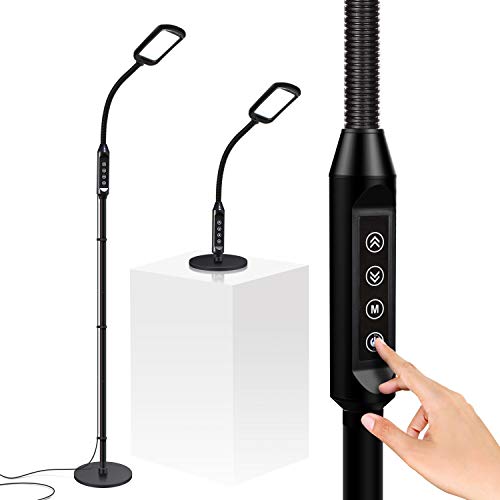
The Brightech Litespan is perhaps the most versatile option because it can be configured as either a floor or table lamp. If you like to move your knitting between a recliner and a desk, this flexibility is invaluable. It provides a bright, crisp light that makes it easy to see the contrast between different yarn colors in a stranded colorwork project.
The lamp is dimmable, which is a feature I highly recommend for evening knitting. You can dial back the intensity as the room gets darker, preventing the light from feeling too harsh or clinical. It strikes a balance between professional-grade clarity and homey comfort.
One thing to note is that the base, while stable, can be a bit bulky in floor-lamp mode. Ensure you have the floor space to accommodate it without creating a tripping hazard. It is a fantastic all-in-one solution for knitters who value adaptability.
Understanding Color Rendering Index for Crafters
The Color Rendering Index (CRI) is a scale from 0 to 100 that measures how accurately a light source reveals true colors. For fiber artists, a CRI of 90 or higher is non-negotiable. If your light has a low CRI, a vibrant teal yarn might look muddy or grey, leading to poor color combinations in your projects.
- CRI 90+: Recommended for all knitting, especially colorwork.
- CRI 80-90: Acceptable for basic knitting with neutral colors.
- Below 80: Avoid; this will distort colors and increase eye strain.
Always check the packaging for the CRI rating before purchasing a lamp. High CRI lighting ensures that the beautiful, hand-dyed variegated yarn you bought actually looks the same in your finished garment as it did in the skein. It is the secret to professional-looking results.
Why Color Temperature Matters for Fiber Arts
Color temperature is measured in Kelvins (K) and describes the "warmth" or "coolness" of the light. For knitting, you want a light in the 4000K to 5000K range, which mimics natural daylight. This range provides the best visibility for seeing the texture of your yarn and the definition of your stitches.
Warm light (below 3000K) can make it difficult to distinguish between similar colors and often casts a yellow tint on your work. Conversely, light that is too cool (above 6000K) can feel harsh and blue, causing eye fatigue over long sessions. Aim for a neutral, daylight-balanced light to keep your colors true and your eyes comfortable.
Finding the right temperature is a matter of preference, but starting at 4000K is a safe bet for most knitters. If you find your eyes are tired after an hour, try adjusting the temperature setting if your lamp allows it. Your goal is a light that feels natural, not one that draws attention to itself.
How to Position Lighting to Reduce Eye Strain
Positioning is just as important as the quality of the bulb. You should aim to place your light source to the side and slightly behind your non-dominant shoulder. This prevents your hands and needles from casting shadows directly over your work, which is where most mistakes occur.
If you are a right-handed knitter, place the lamp on your left side to minimize shadow interference. The goal is to create a pool of light that covers your needles and the yarn in your lap without creating glare on your needles. If you find yourself leaning forward constantly, your light is likely too far away or not bright enough.
Consider the angle of the light head as well. You want the light to hit the surface of your knitting at an angle that highlights the stitch definition. Experiment with different heights and angles until you find the "sweet spot" where your stitches are clearly visible and your posture remains upright.
Essential Features for Knitting Workstation Lamps
When shopping for a lamp, look for features that specifically address the realities of knitting. A dimmable switch is essential for transitioning from bright daylight to evening sessions. A flexible, stay-put neck is another must-have, as you will constantly be adjusting the angle as your project grows.
- Adjustable Brightness: Essential for different times of the day.
- Flicker-Free Technology: Reduces eye strain during long sessions.
- Sturdy Base: Prevents the lamp from tipping over during heavy use.
- High CRI (90+): Ensures accurate color perception.
Avoid lamps with overly complex touch-sensitive buttons that can be accidentally triggered by your yarn. Simple, tactile switches are often more reliable in a craft environment. Focus on build quality and light output; everything else is just a bonus.
Investing in quality lighting is an investment in your craft and your long-term eye health. By prioritizing high CRI ratings and adjustable, flicker-free light, you ensure that every stitch is placed with intention and accuracy. Whether you choose a versatile floor lamp or a precision desk light, the right illumination will transform your knitting experience. Choose the tool that best fits your unique workspace and watch your projects shine.