6 Best Wooden Yarn Winders For Hand-dyed Hanks
Discover the 6 best wooden yarn winders for hand-dyed hanks. We compare durability, design, and performance to help you protect your delicate fiber stash.
There is nothing quite as satisfying as transforming a tangled, hand-dyed hank into a pristine, center-pull cake ready for your needles. When you invest in premium, artisanal yarn, the tool you use to wind it becomes just as important as the needles you choose for your project. A quality wooden winder isn’t just a luxury; it’s a safeguard for your fiber’s structural integrity. Here are the top six wooden options to ensure your stash remains in perfect working order.
Amish Style Wooden Yarn Swift: The Classic Choice
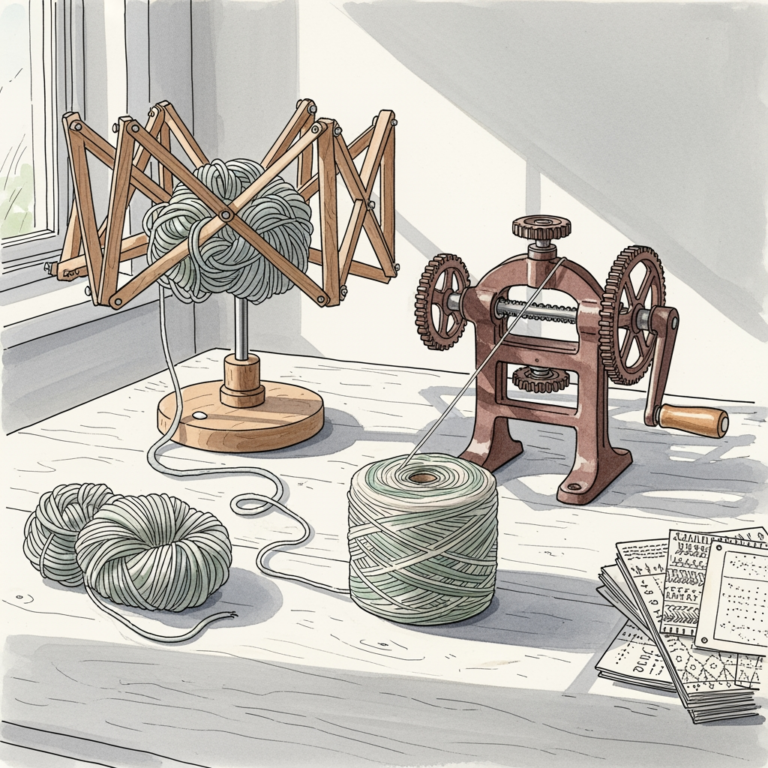
The Amish-style swift is a staple in every serious fiber artist’s studio for a reason: it is elegantly simple and incredibly reliable. Unlike umbrella swifts that rely on plastic tensioners, this wooden design uses adjustable pegs to accommodate hanks of varying circumferences.


When you are dealing with delicate, hand-dyed silk or high-twist merino, the smooth, sanded wood prevents snagging. Because it sits horizontally, it allows the yarn to release with minimal resistance, which is critical for preventing the uneven tension that leads to "yarn barf" or tangles mid-project.
Just remember that this style requires a bit more floor or table space than vertical models. If you frequently wind large, 200-gram hanks of bulky wool, ensure your swift has enough peg positions to keep the hank taut without stretching the fibers.
Stanwood Needlecraft Large Metal and Wood Winder

While often categorized by its metal gears, the Stanwood winder features a robust wooden base that provides the stability needed for high-volume winding. It is the workhorse of the knitting world, capable of handling everything from cobweb-weight lace to heavy, rustic wools.

The gear system is remarkably smooth, which is the most important factor for protecting the twist of your yarn. If you wind too aggressively on a cheap, jerky winder, you can actually untwist the yarn, leading to a loss of stitch definition in your finished fabric.
This model is a fantastic middle-ground choice for those who want the aesthetic of wood but the mechanical precision of a high-end gear system. It’s a reliable investment that will likely last you a lifetime of sweater-knitting marathons.
Lacis Wooden Yarn Winder: Precision for Fine Fiber

If your knitting life revolves around fine lace weight and delicate fingering yarns, the Lacis wooden winder is a standout. It is designed with a focus on precision, ensuring that the yarn is guided onto the bobbin with consistent, gentle tension.
The beauty of this winder lies in its minimalist design, which reduces the number of points where yarn can snag or catch. When you are working with expensive, hand-painted cashmere or mohair, you want a tool that treats the fiber like silk.
Keep in mind that this winder is best suited for smaller to medium-sized cakes. If you try to force a massive, 400-yard hank of worsted weight onto it, you may find the cake becomes unstable and prone to collapsing.
Nancy’s Knit Knacks Heavy Duty Wooden Winder

Nancy’s Knit Knacks has built a reputation on durability, and their heavy-duty wooden winder is no exception. This tool is designed for the knitter who buys yarn by the pound and needs a machine that won’t wobble or slide during long winding sessions.
The construction is solid, offering a weighted feel that stays put on your table without needing constant adjustments. It handles the tension of varying yarn weights exceptionally well, making it a versatile choice for someone who jumps between delicate socks and chunky blankets.
The main tradeoff here is the footprint; this is not a compact, portable tool. It is a dedicated piece of studio equipment meant to stay in one place, ready to handle your next big project at a moment’s notice.
Strauch Jumbo Wooden Yarn Winder: The Pro Standard
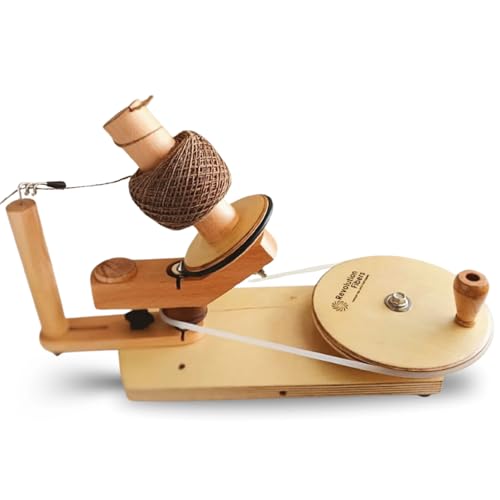
For the serious stash-builder, the Strauch Jumbo is the gold standard. It is built to handle massive, 16-ounce hanks without breaking a sweat, making it the preferred choice for knitters who dye their own yarn or buy in bulk.
The wooden construction is not just for show; it offers a level of vibration dampening that plastic winders simply cannot match. This results in a cleaner, more uniform cake that won’t collapse when you pull from the center.
While it is a significant financial investment, the precision of the winding mechanism is unmatched. If you are a prolific knitter who goes through dozens of hanks a year, the time saved and the protection afforded to your yarn make it worth every penny.
Fiber Artist Supply Co. Maple Yarn Winder
This winder is a beautiful example of form meeting function, crafted from high-quality maple that is as pleasing to touch as it is to use. It is a favorite for those who appreciate handmade tools that look as good on a shelf as they do on a workbench.
Beyond its appearance, the mechanics are smooth and responsive. It is particularly effective for hand-dyed yarns that may have slight variations in thickness, as the tensioning system is sensitive enough to adjust without snapping a delicate ply.
Because it is made of natural wood, it is essential to keep it in a climate-controlled environment. Avoid storing it in damp basements, as wood can expand and contract, which might eventually affect the alignment of the gears.
Why Wooden Winders Protect Delicate Hand-dyed Yarn
Hand-dyed yarn often undergoes a rigorous process of soaking, dyeing, and drying, which can leave the fibers more vulnerable than commercial, mill-spun yarn. Wooden winders offer a "warm" surface that is less likely to create static electricity compared to plastic.
Static is the enemy of fine fibers; it causes them to cling to themselves, leading to knots and tangles. Wood also provides a natural, smooth guide that doesn’t "grab" the yarn, ensuring that the twist—the very DNA of your yarn—remains intact throughout the winding process.
By using a wooden tool, you are choosing a material that is gentle on the hands and the fiber. It turns the chore of winding into a tactile experience that helps you get to know the texture and quality of your yarn before it ever touches your needles.
How to Properly Set Up Your Winder for Best Results
The biggest mistake knitters make is rushing the setup. Always ensure your swift is positioned at the correct distance from the winder—usually about two to three feet—to allow for a smooth, gentle flow of yarn.
If the yarn is too tight, you risk stretching the fiber, which will ruin your gauge later. If it is too loose, you will end up with a messy cake that tangles easily. Aim for a "taut but relaxed" tension, where the yarn feels firm but not strained.
- Check the alignment: Ensure the yarn is feeding straight into the winder’s guide.
- Start slow: Use a steady, rhythmic pace rather than trying to power through the hank as fast as possible.
- Watch the twist: If you see the yarn bunching up or twisting on itself, stop and adjust your tension.
Maintaining Your Wooden Winder for Long-term Use
Wood is a living material, and it requires a little bit of love to stay in top shape. Periodically wipe your winder down with a soft, lint-free cloth to remove dust and fiber debris that can accumulate in the gears.
If the movement starts to feel sluggish, a tiny drop of food-grade mineral oil on the moving parts can work wonders. Never use harsh chemical cleaners, as these can strip the wood and leave a residue that might transfer to your yarn.
Store your winder in a place where it won’t be exposed to extreme heat or direct sunlight. Over time, these conditions can cause the wood to warp, which will throw off the alignment of the winding arm and cause your cakes to lean or wobble.
Troubleshooting Common Yarn Winding Tension Issues
If your center-pull cake keeps collapsing, it is almost always a sign that your tension was too loose during the winding process. Try holding the yarn slightly more firmly as it feeds into the winder, or check that your swift is spinning freely without catching.
Conversely, if your yarn feels "bouncy" or stretched after winding, you are winding too tightly. This is particularly dangerous for wool, which has natural memory; if you stretch it while winding, it will eventually snap back to its original state, potentially distorting your knitted fabric.
If you find that your yarn is snapping, check the guide for any small burrs or rough spots in the wood. A quick, gentle sanding with a very fine-grit sandpaper can smooth out any imperfections that might be snagging your precious hand-dyed fibers.
Investing in a quality wooden yarn winder is a commitment to the longevity of your hand-dyed stash and the quality of your finished garments. By choosing the right tool and maintaining it with care, you eliminate the frustration of tangled hanks and uneven tension. Take your time with the setup, respect the fiber’s properties, and let your winder do the heavy lifting so you can focus on the joy of the stitch. Happy winding, and may your cakes always pull from the center with ease.