6 Best Spinning Instruction Dvds For Visual Learners
Master spinning with these 6 top-rated DVDs. Perfect for visual learners, these guides offer step-by-step techniques to improve your yarn-crafting skills fast.
Spinning your own yarn is the ultimate way to achieve total control over your final knitting projects, from the loft of your sweaters to the drape of your lace. While books offer great diagrams, visual learners often need to see the fluid motion of fiber drafting to truly grasp the mechanics. These six instructional DVDs provide the high-definition guidance necessary to bridge the gap between theory and practice. Mastering these techniques will transform how you view every skein of yarn you pick up.
Respect the Spindle with Abby Franquemont
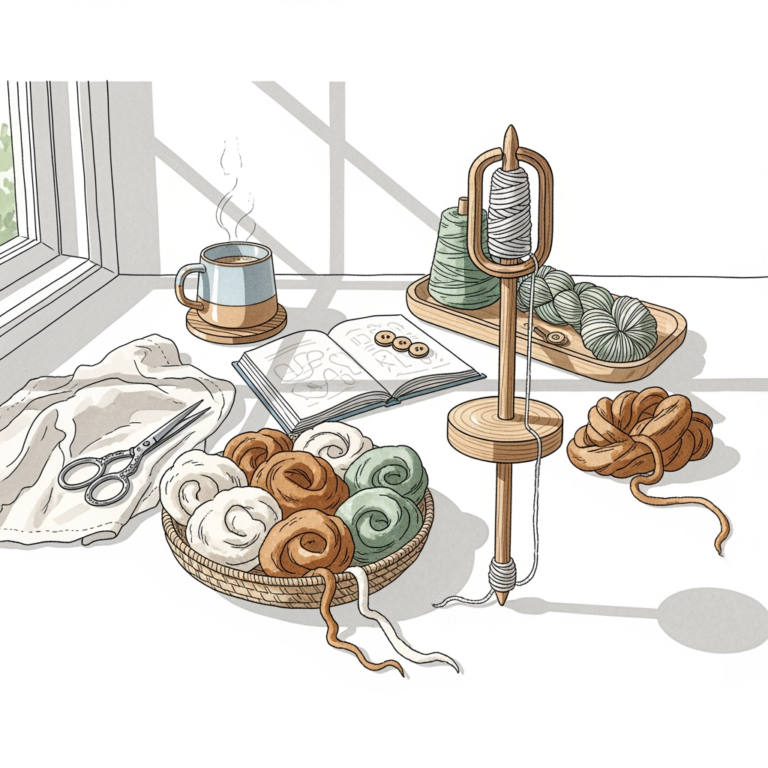
Abby Franquemont’s approach to the drop spindle is nothing short of revolutionary for those who feel intimidated by complex wheels. She demystifies the physics of the spindle, focusing on the rhythm and momentum rather than just the mechanics of the tool.
If you have ever struggled to keep your spindle spinning without it clattering to the floor, this video is your antidote. Abby breaks down the "park and draft" method, which allows you to separate the act of spinning twist from the act of drawing out fiber. It is the single most effective way to build confidence before moving to a spinning wheel.
The tradeoff here is patience; spindle spinning is a meditative, slower process than wheel spinning. However, it builds a foundational understanding of fiber twist that will make you a much better spinner in the long run. Focus on your hand position to avoid over-twisting your singles.
The Spinner’s Toolkit with Maggie Casey
Maggie Casey is a master of the "everything you need to know" instructional style. This DVD acts as a comprehensive reference guide, covering the essential mechanics of how a spinning wheel actually functions.
For a knitter who just bought their first wheel, the sheer number of knobs, whorls, and tension adjustments can be overwhelming. Maggie explains how these adjustments affect your yarn’s twist angle and consistency. Understanding this is vital if you want to spin specific yarn weights, like a consistent fingering weight for a pair of socks.


Don’t be fooled into thinking you can learn everything in one sitting. Treat this as a manual you return to whenever you switch from a long-draw technique to a short-draw technique. Mastering your tension settings is the secret to moving from "lumpy art yarn" to professional-quality, even-plied yarn.
Handspinning Rare Wools with Beth Smith
When you finally get your hands on a breed-specific fleece, you want to ensure you are treating that fiber with the respect it deserves. Beth Smith’s guide is essential for understanding how different wool structures—like the crimp in Merino versus the slickness of Border Leicester—dictate your spinning approach.
If you are accustomed to spinning generic "wool top" from a craft store, working with raw or semi-processed rare fleeces will be a revelation. Beth shows you how to prep these fibers to maximize their inherent qualities, such as bounce or luster. This is the difference between a sweater that pills immediately and one that lasts for decades.
Remember that fiber preparation is 80% of the spinning process. If your fiber isn’t prepped correctly for the wool type, no amount of wheel control will save your yarn. Always swatch your handspun before committing to a large garment to check for density and twist stability.
Spinning Luxury Fibers with Judith MacKenzie
Judith MacKenzie is a legend for a reason; she approaches luxury fibers like silk, angora, and cashmere with a reverence that is infectious. These fibers are expensive and often unforgiving, making this DVD a must-watch before you invest in high-end rovings.
Luxury fibers require a delicate touch because they lack the "grip" of traditional sheep’s wool. If you use too much tension, you will snap your singles; too little, and you will have a cloud of fiber rather than a yarn. Judith teaches you how to adjust your drafting style to accommodate these slippery, delicate materials.
The biggest mistake beginners make is trying to spin luxury fibers exactly like they spin Corriedale or Romney. Adapt your drafting speed and keep your hands light. This DVD is your best insurance policy against wasting expensive fiber.
Drafting and Plying Basics with Rita Buchanan
Rita Buchanan focuses on the core of all spinning: the drafting triangle and the plying process. If your yarn is currently coming out uneven or "cabled" when you don’t want it to be, this is the resource you need.
Plying is the process of twisting two or more singles together to create a balanced yarn that won’t bias your knitting. Rita explains how to manage your tension during plying so your finished yarn doesn’t twist back on itself. This is critical for anyone knitting stockinette stitch, where an unbalanced yarn will cause the fabric to skew diagonally.
Do not rush the plying stage. It is the final opportunity to correct the structural integrity of your yarn. Consistency in your plying tension is what creates that beautiful, rounded professional look in your finished knitting projects.
Spinning Wool: Basics and Beyond by Patsy Sue
Patsy Sue offers a broad, welcoming entry point for anyone who wants to see the full spectrum of what is possible with a spinning wheel. She covers everything from basic drafting to managing different wool textures, making this a great "all-in-one" starter guide.
This DVD is particularly useful for the knitter who wants to understand how to spin for specific projects, like a worsted-weight yarn for a cabled sweater or a fine lace-weight for a shawl. She emphasizes the importance of the "woolen" versus "worsted" drafting styles. These aren’t just technical terms; they dictate whether your final fabric will be airy and warm or dense and durable.

If you are confused by the terminology, let this video be your guide. Understanding drafting styles will allow you to manipulate your yarn to match the gauge and drape requirements of your knitting patterns.
Why Visual Learning Enhances Spinning Skills
Spinning is a kinetic art form that relies on muscle memory and visual cues. You cannot "read" the tension of a fiber; you have to see how it flows through your fingers and feels against your skin.
Watching a master spinner allows you to observe subtle details like hand position, the angle of the drafting triangle, and the rhythm of the treadling. These details are often lost in written descriptions. When you see a professional adjust their hands, you learn to mimic that fluidity, which reduces fatigue during long sessions.
Visual learning also helps you identify errors in real-time. If your yarn is breaking, you can compare your technique to the video and spot the exact moment you are applying too much force. Observation is the bridge between frustration and flow.
Choosing the Right Wheel for Your Skill Level
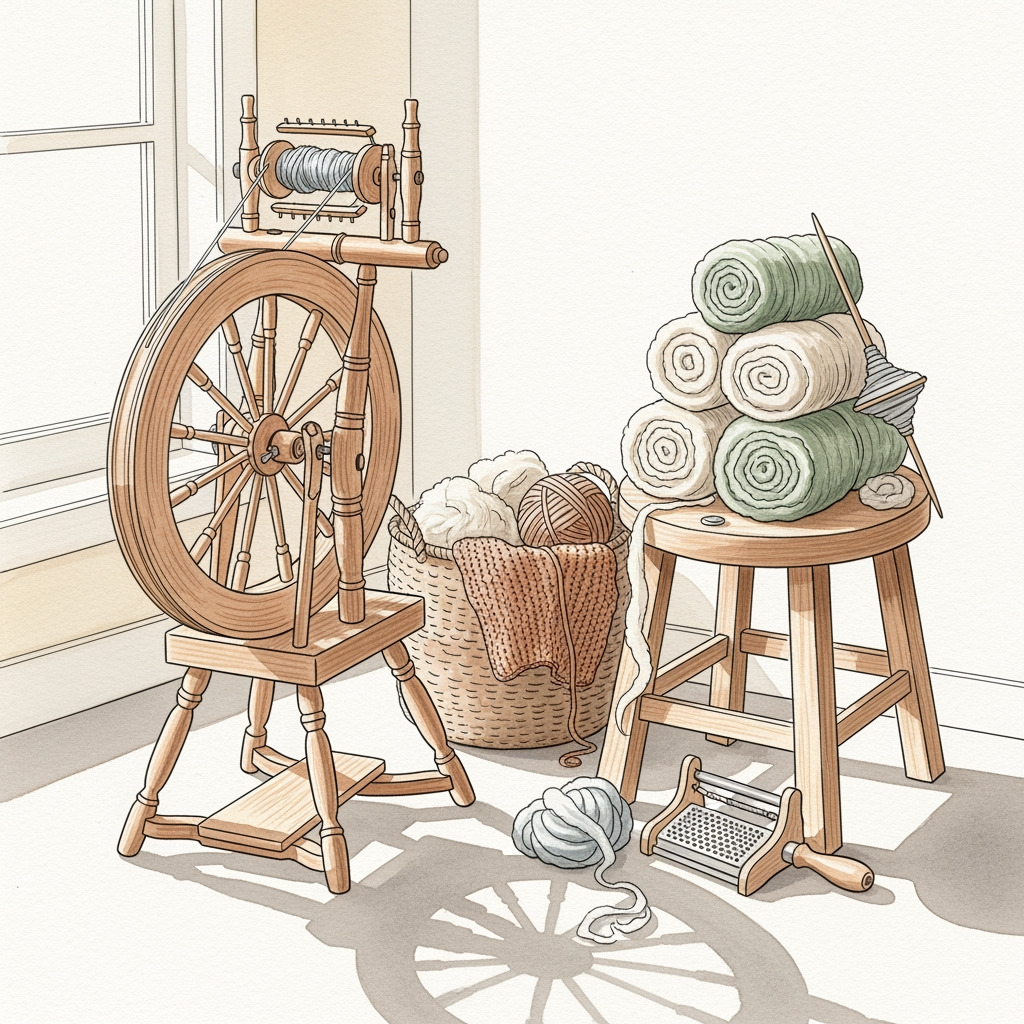
Not every wheel is right for every spinner, and choosing the wrong one can make learning feel like an uphill battle. Beginners often benefit from a double-treadle wheel, which provides a more consistent, rhythmic drive.
If you are interested in spinning fine, delicate yarns, look for a wheel with a high ratio, which provides more twist per treadle. Conversely, if you want to spin thick, chunky wool, a wheel with a larger orifice is essential to accommodate the bulk of the fiber.
Don’t buy the most expensive wheel you can find just because it looks beautiful. Function must always follow your project goals. Start by renting or taking a class on a few different wheels before committing to a purchase.
Essential Fiber Prep Tools for New Spinners
Fiber preparation is the unsung hero of the spinning world. You cannot spin a smooth yarn from a tangled, matted mess of fiber. Investing in a set of hand carders or a blending board is just as important as buying a wheel.
Hand carders are excellent for aligning fibers and blending colors or textures. If you are working with raw fleece, you will also need a pair of wool combs to remove debris and align the fibers for a smooth, worsted-style yarn.
The quality of your prep determines the quality of your yarn. If you start with poorly prepped fiber, you will spend your entire spinning time fighting tangles. Good tools save time and frustration in the long run.
Troubleshooting Common Spinning Techniques
Every spinner encounters the same hurdles: over-twisted yarn, uneven singles, and the dreaded "breakage." The key is to stay calm and analyze the mechanics of the failure rather than blaming the fiber.
If your yarn is constantly breaking, you are likely drafting too thin or applying too much tension to the fiber before the twist has set. If your yarn is lumpy, you are likely drafting inconsistently. Use your eyes to watch the twist travel up the fiber; if it isn’t reaching your fingers, you need to slow down your drafting.
Remember that every "mistake" is just a lesson in fiber behavior. Keep a sample of your "bad" yarn to compare against your "good" yarn; seeing the physical difference is the best way to train your eyes.
Spinning is a journey that rewards patience, observation, and a willingness to learn from your hands. By utilizing these visual resources, you can accelerate your progress and move past the common hurdles that often discourage new spinners. Remember that your goal is not perfection, but rather the creation of a yarn that brings you joy in your knitting. Pick up your spindle or wheel, trust your eyes, and enjoy the process of turning raw fiber into your next favorite project.