6 Best Crochet Hook Sets For Picking Up Dropped Stitches
Struggling with dropped stitches? We’ve reviewed the 6 best crochet hook sets to help you repair your knitting projects quickly, efficiently, and with ease.
Every knitter knows the heart-stopping moment a stitch slips off the needle and begins to ladder down your fabric. Having the right crochet hook on hand is the difference between a quick, stress-free repair and a ruined project. These tools are the essential "emergency responders" of your knitting bag, designed to catch and re-knit those runaway loops. This guide explores the best hooks for rescue missions, ensuring you are prepared for every snag and dropped stitch.
Clover Amour Crochet Hook Set: The Best Overall Pick


The Clover Amour set is widely considered the gold standard for a reason: the smooth, rounded throat of the hook catches yarn without splitting fibers. When you are working on a delicate lace project, you need a hook that glides through the laddered loops without snagging the surrounding yarn.
The elastomer rubber handle provides just enough grip to keep your hands steady during a repair. This is especially helpful if you are fixing a dropped stitch in a complex cable where the tension is tight and your fingers are already fatigued.
Because the head is made of high-quality aluminum, it offers the perfect balance of slickness and control. It works beautifully with everything from rustic wools to slippery silks, making it the most versatile tool for your repair kit.

ChiaoGoo Bamboo Hooks: Best for Slippery Yarns
If you are working with silk, bamboo, or high-twist superwash yarns, metal hooks can sometimes feel too fast, causing the loop to slide off before you have secured it. ChiaoGoo bamboo hooks provide that essential "bite" that prevents the yarn from skating away during a repair.
The natural surface of the bamboo grips the yarn fibers gently, allowing you to manipulate the stitch with greater precision. This is particularly useful when you are working on a multi-stitch ladder where losing one loop could trigger a cascade of further drops.
While they are not as slick as aluminum, their warmth and tactile feel are unmatched. If you find yourself constantly battling "runaway" stitches in your mohair or silk projects, these are your best defense.
Tulip Etimo Rose Set: Best for Ergonomic Comfort

The Tulip Etimo Rose hooks are famous for their incredibly smooth, polished finish that feels like butter against the yarn. For a knitter dealing with a complex repair, this lack of friction means you can pull the yarn through the stitch loop with minimal effort.
The cushioned grip is designed to fit perfectly in the palm, reducing the tension in your hand as you work. When you are hunched over a sweater trying to fix a dropped stitch in a stranded colorwork pattern, this ergonomic design prevents cramping.
These hooks are an investment, but the quality of the finish ensures they will never snag your yarn. They are the ideal choice for knitters who find that cheaper, stamped-metal hooks leave tiny burrs that catch on delicate fibers.
Addi Swing Crochet Hooks: Best for Hand Strain

The unique, angled design of the Addi Swing is engineered specifically to alleviate the pressure on your thumb and wrist. When you are performing a repair on a heavy, worsted-weight garment, the weight of the project can strain your joints; these hooks take that load off.
The handle is shaped to encourage a more relaxed grip, which is vital when you are meticulously re-knitting a ladder. If you suffer from arthritis or repetitive strain, the ergonomic shape allows you to maintain control without needing a tight, painful grip.
Keep in mind that the shape is unconventional and may take a few minutes of practice to get used to. Once you master the hold, however, you will find it is far more comfortable for long repair sessions than a standard, straight-handled hook.
Susan Bates Silvalume Set: Best Budget Option

Susan Bates hooks are iconic for their "inline" head design, which is distinct from the tapered heads found on most other brands. The deep throat of the inline hook is exceptionally good at holding onto the yarn loop, making it less likely that the stitch will slip off during the repair.
Because they are lightweight and inexpensive, they are the perfect "beater" hooks to leave in your project bags. You don’t have to worry about losing them, and they perform the job of picking up stitches as well as any high-end alternative.
They are made of anodized aluminum, which provides a smooth, snag-free surface. They are a fantastic entry point for knitters who want a reliable set of tools without committing to a premium price tag.
Boye Aluminum Crochet Set: Best for Travel Use
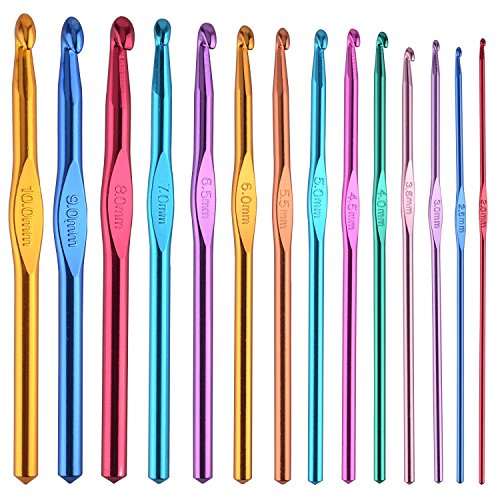
Boye hooks are the classic choice for a reason: they are durable, simple, and virtually indestructible. If you are a traveling knitter who needs a repair tool that can survive being tossed into a suitcase or a crowded project bag, these are the ones to choose.
The tapered head design makes it very easy to slide into tight knitting stitches, especially if your gauge is firm. While they lack the fancy ergonomic handles of other sets, their slim profile makes them easy to tuck into a small notions pouch.
They are the ultimate "grab-and-go" solution for the knitter who values utility over frills. When you are on a plane or at a cafe and notice a dropped stitch, you will be grateful for the simplicity and reliability of a Boye hook.
How to Match Hook Sizes to Your Knitting Weight
Matching your hook size to your needle size is the golden rule of stitch repair. As a general guide, you should aim for a crochet hook that is the same size, or slightly smaller, than the needles you used to knit the project.
- Lace/Fingering weight: Use a 1.5mm to 2.25mm hook.
- DK/Sport weight: Use a 3.0mm to 3.5mm hook.
- Worsted/Aran weight: Use a 4.0mm to 5.0mm hook.
- Bulky weight: Use a 6.0mm or larger hook.
If the hook is too large, it will stretch the surrounding stitches, leaving a visible "gap" in your fabric after the repair. If it is too small, you will struggle to grab the yarn, potentially splitting the plies and causing even more damage.
Why Ergonomic Handles Help With Delicate Repairs
Fixing a dropped stitch requires a level of focus and fine motor control that can quickly lead to hand fatigue. Ergonomic handles are not just about comfort; they are about maintaining the steady hand necessary to navigate the vertical ladder of a stitch.
When your hand is cramped, your movements become jerky, which increases the risk of snagging your yarn or pulling a stitch too tight. A thicker, cushioned handle allows you to maintain a light, fluid grip, which is essential for delicate work.
If you are working with high-friction fibers like wool or alpaca, the extra control provided by a soft-touch handle is invaluable. It allows you to feel the tension of the yarn, giving you tactile feedback on whether your repair is matching the original stitch gauge.
Essential Tips for Fixing Dropped Stitch Ladders
The most important rule when fixing a dropped stitch is to remain calm and secure the "ladder" immediately. Use a stitch marker or a safety pin to catch the lowest loop of the ladder so it doesn’t travel any further down your fabric.
When you begin to re-knit, work from the back side of the fabric if possible, as it is often easier to see the orientation of the loops. Always ensure that the loop you are pulling through is not twisted, or it will create a permanent, visible knot in your work.
If you are working in a pattern like ribbing or cables, remember that you may need to "purl" the stitch back up if the ladder is on the purl side. Don’t be afraid to use a spare needle to hold the neighboring stitches out of the way while you work your hook into the gap.
How to Properly Store and Maintain Your Hook Set
Hooks should be stored in a way that protects the tips and prevents them from bending. A dedicated roll-up case or a hard-shell notions box is ideal for keeping your set organized and preventing the aluminum from getting scratched or nicked.
If your hooks are made of aluminum, occasionally wipe them down with a soft cloth to remove hand oils and debris. For bamboo hooks, avoid storing them in extremely dry or humid environments, as wood can warp or crack if the moisture levels are not stable.
Never use a damaged hook with a burr or a rough patch; it will catch your yarn and potentially ruin your repair. If you notice a rough spot on a metal hook, you can often smooth it out with a very fine-grit emery board, but if the damage is deep, it is better to replace the hook.
Mastering the art of picking up dropped stitches is a rite of passage for every knitter, and your choice of hook is your most valuable ally. Whether you prefer the ergonomic support of a Tulip or the reliable simplicity of a Boye, the right tool will make you feel confident in your ability to fix any mistake. Keep your chosen set organized, practice your technique on a swatch, and you will never fear a dropped stitch again. Happy knitting, and may your needles—and hooks—always stay sharp.