6 Best Felted Wool Mats For Needle Felting Worth Using
Discover the 6 best felted wool mats for needle felting. Our guide evaluates durability and density to help you choose the perfect surface for your projects.
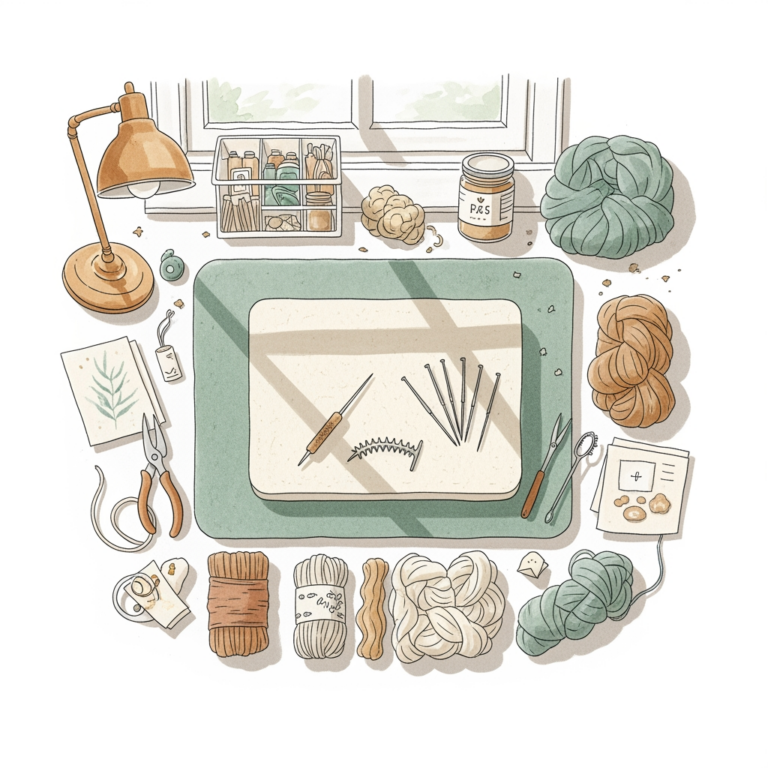
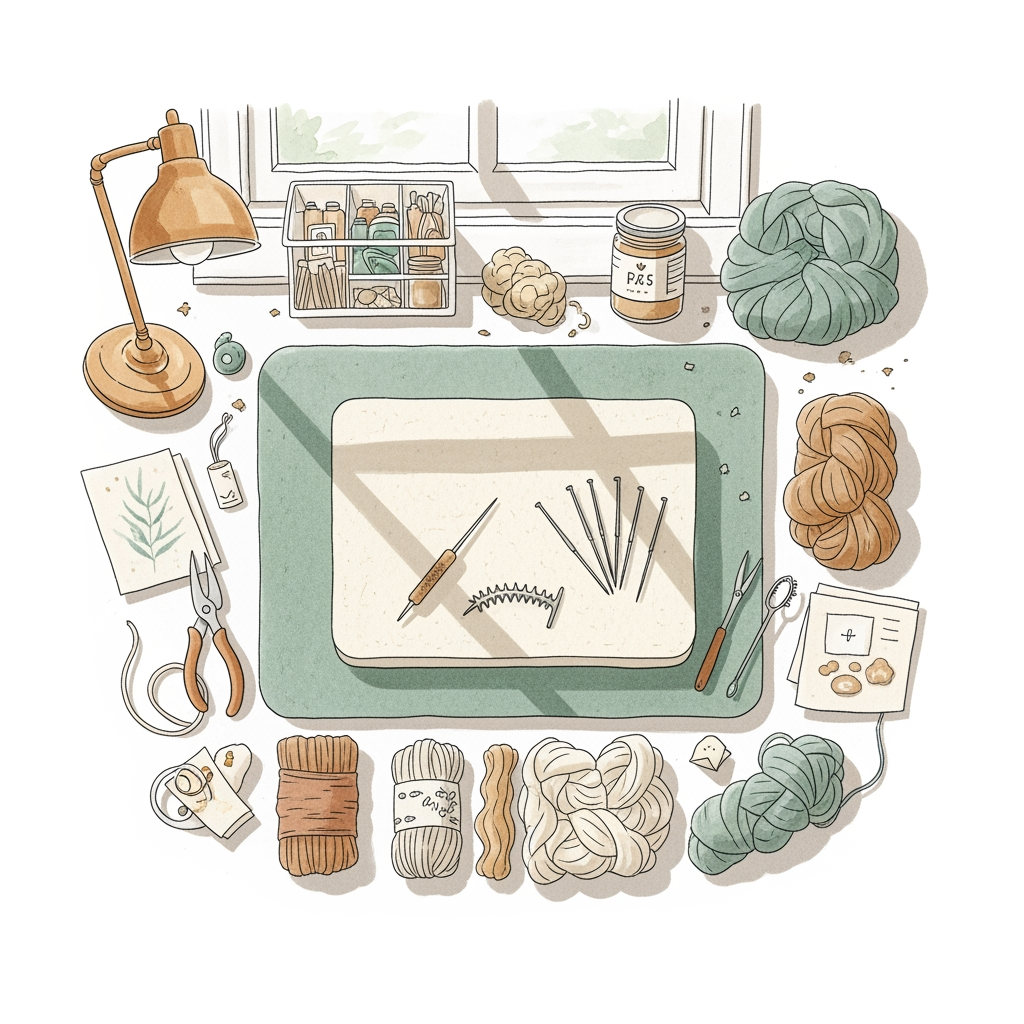
Needle felting is a meditative craft that relies as much on your workspace as it does on your technique. Just as selecting the wrong needle size can ruin the tension of a delicate lace shawl, choosing an inadequate felting mat will leave you frustrated with broken needles and uneven sculptures. This guide explores the essential tools that provide the perfect resistance for your wool fibers. Finding the right surface is the secret to achieving professional-grade results in your fiber arts projects.
Woolbuddy Needle Felting Mat: Best Overall Choice


The Woolbuddy mat is a staple for a reason: it strikes the perfect balance between firmness and give. When you are working on a dense 3D sculpture, you need a surface that holds the wool in place while allowing your needle to penetrate deeply without hitting a hard bottom.
This mat is essentially a thick, compressed block of wool felt. Unlike foam, it doesn’t leave little synthetic bits in your work, which is a massive relief when you’re working with light-colored, delicate roving.
If you are someone who tends to felt with a heavy hand, this mat will save your needles from premature snapping. It provides enough resistance to catch the fibers, yet it is forgiving enough to keep your tools intact during long sessions.
Sarafina Fiber Art Felting Pad: The Pro Standard

If you have ever watched a master sculptor create hyper-realistic animals, you have likely seen a Sarafina pad on their table. These pads are renowned for their incredible density and longevity.
They are designed for the serious maker who spends hours at a time refining small details. Because the surface is so tightly packed, it offers a consistent "snap" back, which helps the needles glide in and out smoothly.
For those of us who obsess over the finish of our work, this mat is a game changer. It doesn’t develop deep craters quickly, meaning your project stays level even after hours of repetitive stabbing.
Clover Large Needle Felting Mat: Best for Stability

The Clover mat is a reliable workhorse that feels as familiar as a pair of trusty bamboo needles. It features a unique, brush-like surface that allows your needles to pass through easily while holding the wool firmly in place.
The beauty of this design is that it minimizes resistance on the needle. If you are prone to hand fatigue or have arthritis, this surface requires significantly less force to penetrate the fibers.
However, keep in mind that the bristles can occasionally trap small fibers. It’s best suited for larger, flatter projects or quick embellishments rather than tiny, intricate 3D work where you need to move the wool around constantly.
Dimensions Needle Felting Foam: Best for Beginners

When you are just starting out, you don’t want to invest in professional-grade gear until you know you love the craft. Dimensions foam mats are the "starter needles" of the felting world—accessible, effective, and easy to find.
They provide a soft, forgiving base that is perfect for learning the basics of fiber entanglement. Because they are inexpensive, you won’t feel guilty if you accidentally poke through them or make a mess while learning your technique.
The tradeoff is longevity. These foam mats will eventually shred and lose their integrity, leaving tiny foam particles in your wool. Think of them as a great training ground, but be prepared to upgrade once you start tackling complex, long-term projects.
Bear Creek Felting Wool Mat: Durable Natural Base
Bear Creek mats are for the maker who prefers natural materials over synthetic alternatives. These wool-based mats are incredibly robust and offer a tactile experience that mimics the wool you are actually sculpting.
Because they are made of natural fibers, they provide a very stable base that doesn’t "creep" or shift while you work. This is essential when you are trying to attach small limbs or ears to a larger body and need absolute precision.
They are an investment, but they last significantly longer than any foam product. If you are committed to the craft, the cost-per-hour of use makes this a very economical choice in the long run.
Felted Sky Wool Felting Pad: Best Eco-Friendly Pick
Felted Sky offers a high-quality wool pad that aligns perfectly with the ethos of many fiber artists who prioritize sustainability. It is a dense, hand-felted surface that feels substantial and professional under your hands.
This pad is particularly excellent for maintaining a clean workspace. Because it is made of high-quality wool, it doesn’t shed or break down into your project, keeping your finished work pristine and free of debris.
It is also incredibly portable. If you take your felting projects to knitting circles or on trips, this mat is lightweight and won’t lose its shape in your project bag.
Why Density Matters in Your Needle Felting Surface
Density is the most critical variable in your felting surface, much like the tension of your yarn affects your stitch size. If your mat is too soft, the wool sinks too deep, and you lose control over the shape of your project.
If your mat is too hard, you risk breaking your needles with every stroke. A high-quality mat should be dense enough to support the fibers at the surface level, allowing the needle to do the work of interlocking the scales without the wool being pushed away from the point of impact.
- Low Density: Leads to "mushy" sculptures and uneven felting.
- High Density: Provides crisp edges and faster, more accurate results.
Foam vs. Wool Mats: Which Surface Is Right for You?
Choosing between foam and wool is a classic debate in the fiber arts community. Foam is cheap and lightweight, but it is a consumable product that will eventually end up in the trash.
Wool mats are a permanent tool. They offer a better "feel" for the needle, providing a natural resistance that mimics the density of the wool itself.
- Choose Foam if: You are a beginner, working on a tight budget, or doing occasional, small-scale projects.
- Choose Wool if: You are a dedicated artist, sensitive to synthetic debris, or looking for a long-term, eco-friendly tool.
Essential Tips for Extending Your Felting Mat Life
Just as you wouldn’t leave your favorite needles in a damp basement, you need to treat your mat with care. Always try to move your project around the surface of the mat rather than working in the exact same spot for hours.
This prevents the formation of deep holes and "tunnels" that can ruin the structural integrity of the mat. If you are working on a large piece, rotate it frequently to distribute the impact across the entire surface area.
Also, be mindful of your needle depth. You only need to go deep enough to catch the fibers in the mat; pushing the needle all the way through to the base of the mat is unnecessary and wears out your tools faster.
How to Properly Clean and Maintain Your Felting Mat
Cleaning your mat is simple but requires a gentle touch. For foam mats, you can occasionally use a piece of tape to lift off surface fibers, but eventually, they will need to be replaced.
For wool mats, you can gently pull away excess fiber buildup with your fingers or a stiff brush. If the mat becomes overly compressed, some makers suggest a light steam to help the fibers "fluff" back up, though you should always test this on a corner first.
Never submerge a wool mat in water unless you are prepared for it to shrink or change shape. Keep it dry, keep it clean, and it will serve you for years of creative projects.
Investing in a quality felting mat is one of the smartest decisions you can make to improve your craft. Whether you choose the longevity of a wool pad or the accessibility of foam, the right surface will make your process smoother and your results more refined. Take your time to select the tool that matches your current skill level and project goals. Happy felting, and enjoy the process of turning loose wool into beautiful, tangible art.