6 Best Yarn Guides For Consistent Tension To Try
Master consistent tension with our top 6 yarn guide picks. Learn how these essential tools improve stitch uniformity and elevate your knitting project quality.
Achieving perfectly uniform stitches is the hallmark of a seasoned knitter, yet it remains one of the most elusive skills to master. Whether you are battling uneven stockinette or struggling to maintain control during complex stranded colorwork, the right tool can fundamentally change your process. Yarn guides act as a mechanical anchor, ensuring your fiber feeds at a consistent rate regardless of how tired your hands become. Here are six essential guides designed to transform your tension from erratic to professional.
Clover Yarn Guide Ring: Best for Beginners
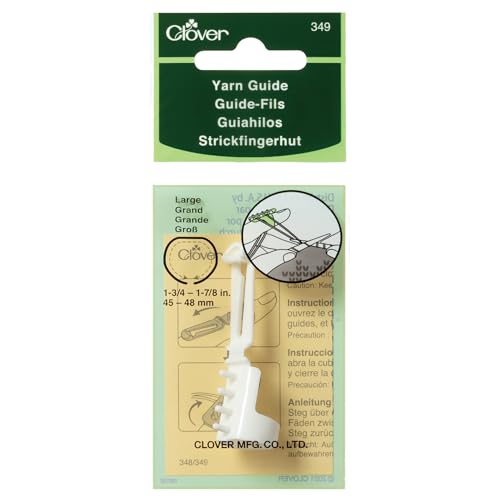

If you are just starting your knitting journey, the Clover Yarn Guide Ring is a gentle introduction to mechanical tensioning. It sits comfortably on the finger, acting as a physical barrier that prevents your yarn from slipping too loosely or tightening up during a long session.
For those who struggle with "death-gripping" their needles, this ring provides a necessary buffer. By routing the yarn through the small coil, you create a dedicated path that forces a more rhythmic, steady flow. It is particularly helpful when you are still developing the muscle memory required to hold your yarn and needles simultaneously.
The trade-off here is the adjustability; it is a one-size-fits-most solution that may feel bulky if you have slender fingers. However, for a beginner learning to manage a ball of yarn while focusing on the knit-purl transition, it is an invaluable training wheel.
Tulip Knitting Yarn Guide: Best for Comfort

The Tulip Knitting Yarn Guide is designed with an ergonomic sensibility that prioritizes long-term wearability. If you find that metal rings dig into your skin during marathon knitting sessions, the smooth, rounded edges of this guide will be a welcome relief.
This tool is exceptionally lightweight, making it ideal for those who suffer from hand fatigue or joint stiffness. Because it doesn’t add unnecessary weight to your finger, you can maintain your natural knitting rhythm without feeling like you are wearing a piece of heavy machinery.
Keep in mind that comfort sometimes comes at the expense of grip. If you are working with slippery materials like silk or bamboo yarn, you might find the yarn sliding through the guide a bit too easily. It is best suited for wools and blends that have a bit of natural "tooth" or friction.
Prym Ergonomics Yarn Guide: Best for Tension

The Prym Ergonomics guide is a standout because it offers a unique, flexible design that adapts to the way your finger naturally moves. It is engineered specifically to solve the problem of inconsistent tension caused by fluctuating hand pressure.
This guide excels when you are working on projects that require absolute precision, such as socks or fitted garments. By providing a fixed, stable eyelet for the yarn to pass through, it eliminates the micro-variations that occur when your index finger gets tired or sweaty.
I often recommend this to knitters who have mastered the basics but find that their gauge shifts noticeably between the beginning and end of a row. It is a robust tool that feels secure, though it may take a few rows to get used to the slightly different angle of yarn delivery.
Cocoknits Leather Tension Ring: Best Style
For the knitter who wants functionality without sacrificing aesthetic, the Cocoknits Leather Tension Ring is a sophisticated choice. It is a refreshing departure from the industrial look of plastic or metal guides, using natural materials that soften and conform to your skin over time.
Beyond its appearance, the leather provides a subtle, natural grip that synthetic materials often lack. This makes it a fantastic choice for working with high-twist yarns or slippery superwash wools that tend to "zip" off your needles if you aren’t careful.
Do note that because it is leather, it will stretch slightly with extended use. It is a premium tool that rewards those who take care of their gear, but it requires a bit more maintenance than a simple snap-on plastic guide.
Pony Knitting Yarn Guide: Best Budget Option
The Pony Knitting Yarn Guide is a no-frills, highly effective tool that proves you don’t need to spend much to improve your craft. It is a simple, lightweight plastic hoop that gets the job done without any unnecessary bells or whistles.
It is an excellent "test" tool for knitters who aren’t sure if a guide will actually help them. Because it is so affordable, you can toss one in your project bag and keep it there for when you encounter a particularly tricky yarn that requires extra tension management.
The limitation here is durability; plastic can eventually snap or wear down at the yarn contact point. However, at this price point, it is easy to keep a spare on hand, making it a low-risk investment for any knitter’s kit.
ChiaoGoo Tension Regulator: Best for Colorwork
When you are juggling two or more strands of yarn for stranded colorwork, the ChiaoGoo Tension Regulator is a total game-changer. It allows you to keep multiple strands separated and tensioned perfectly, preventing the dreaded "puckering" that ruins the drape of a colorwork sweater.
This tool is designed for the serious maker who wants to achieve a professional finish on complicated patterns. By keeping the strands at a consistent distance from each other, it prevents them from tangling and ensures that each color is pulled to the same degree of tightness.
It does have a steeper learning curve than a single-strand ring, requiring you to adjust how you hold your yarn. Once you get the hang of it, however, your floats will be neater and your colorwork will look significantly more polished.
Why Consistent Tension Matters for Your Stitches
Consistent tension is the difference between a garment that looks handmade and one that looks "homemade." When your tension varies, your stitches vary in size, which creates an uneven fabric surface and can lead to structural weaknesses in your knitting.
If you are knitting a sweater, inconsistent tension can cause the fabric to grow or shrink in unintended ways after blocking. Blocking—the process of washing and shaping your finished piece—can fix minor issues, but it cannot hide a fundamental lack of stitch uniformity.
Ultimately, tension is the foundation of your gauge. When your gauge is erratic, your finished item may not fit the intended measurements, leading to frustration after hours of labor.
How Yarn Guides Improve Your Knitting Technique
Yarn guides act as a mechanical "third hand," taking the burden of tension control off your fingers. When you are knitting, your fingers are responsible for needle manipulation, yarn tension, and stitch formation all at once; a guide simplifies this workload.
By delegating the tensioning to a tool, you can focus your mental energy on your pattern, cable crossings, or increases. This often leads to a faster, more meditative knitting experience where you aren’t constantly checking your yarn flow.
Over time, using a guide can help you develop a more natural, relaxed grip. Once your muscles learn the feeling of consistent tension through the guide, you may eventually find you don’t need it as often, though many knitters choose to keep using them for the sheer reliability.
Adjusting Tension for Different Fiber Types
Not all yarns behave the same way, and your tension guide should be adjusted accordingly. Slippery fibers like silk, bamboo, or high-twist merino require more friction to prevent them from sliding off the needle.
Conversely, "sticky" fibers like mohair or rustic, unspun wool naturally hold their place better. You might find that you need to loosen your grip or adjust the path of the yarn through your guide when working with these fibers to avoid over-tensioning.
Always perform a gauge swatch with your chosen yarn and guide combination. If your stitches look tight and distorted, your tension is too high; if they look loose and gappy, you need to increase the friction or move to a smaller needle size.
Troubleshooting Common Yarn Guide Issues
The most common issue with yarn guides is the yarn "catching" or snagging, which usually happens if the guide is made of low-quality plastic with rough seams. If you notice this, use a fine-grit sandpaper to smooth out the eyelet, or simply replace the tool.

If the guide feels uncomfortable, you are likely wearing it too tight or in the wrong position on your finger. Experiment with moving it from the base of your finger to the first knuckle to find the spot that aligns best with your needle angle.
Finally, if your yarn keeps popping out of the guide, check the gauge of your yarn against the guide’s opening. A guide that is too large for your yarn will be ineffective, while one that is too small will cause unnecessary friction and potentially damage the fiber.
Investing in a yarn guide is not a sign of weakness, but a commitment to the quality of your craft. Whether you choose a simple plastic hoop or an elegant leather ring, the goal remains the same: a consistent, beautiful fabric that reflects your skill. Take the time to experiment with these options to see which mechanics best suit your unique knitting style. Happy knitting, and may your tension always be as steady as your hands.