7 Best Task Lights For Evening Knitting To Try
Illuminate your evening knitting with our top 7 task lights. We analyze brightness, portability, and comfort to help you find the perfect glow for your craft.
Knitting by firelight or dim lamp might feel romantic, but your eyes will pay the price when you’re navigating dark mohair or complex lace charts. Proper illumination is as essential to your toolkit as a good set of interchangeable needles or a reliable row counter. Without the right light, you risk dropped stitches, uneven tension, and the dreaded midnight frogging session. Let’s look at the best lighting solutions to keep your hands moving comfortably well into the evening.
OttLite 2-in-1 LED Floor Lamp: Best Overall Choice


This lamp is a staple in many dedicated craft rooms because it offers incredible versatility for different seating arrangements. Whether you are perched on a sofa or tucked into a deep armchair, the ability to switch between a floor stand and a tabletop base is a game changer.
The true value here lies in the "ClearSun" LED technology, which mimics natural daylight. When you are working with black wool or navy blue alpaca, you need that crisp clarity to distinguish between the yarn and the needle. It eliminates the muddy shadows that often hide split plies or missed yarn-overs.
Be mindful that the base can be slightly bulky, so it may not be ideal for tiny apartments or crowded crafting corners. However, if you have the space, the stability and reach of this lamp are unmatched for long-term projects.
Daylight Company Slimline 3 LED: Best Desk Option
If your knitting setup involves a dedicated craft table for winding yarn or organizing charts, this is the gold standard. The ultra-slim profile means it stays out of your way, while the wide head provides an expansive beam of light across your entire project.
The touch-sensitive dimmer is particularly useful for late-night sessions when you don’t want to blast your eyes with full brightness. You can dial it down when working with high-contrast, light-colored yarns and crank it up when tackling dark, fingering-weight socks.
The clamp mount is sturdy, but ensure your table edge is compatible before purchasing. It’s an investment piece, but the longevity of the LEDs means you won’t be replacing bulbs for years.
Glocusent LED Neck Reading Light: Best Wearable Pick

There is something liberating about a light that moves exactly where you look. This neck light is perfect for knitters who like to pace while they work or who prefer to knit in bed without disturbing a partner.
Because it rests on your collarbone, the light source is always perfectly positioned over your hands. This is a massive advantage when you are working on intricate stranded colorwork where you need to track two different yarns simultaneously.
The trade-off is the weight around your neck; some knitters find it distracting during marathon sessions. It’s best suited for shorter stints or situations where you need maximum mobility.
Mighty Bright NuFlex Rechargeable: Best Clip-On

Clip-on lights are the unsung heroes of the knitting world, especially for those who travel with their projects. The NuFlex is particularly impressive because of its flexible neck, which allows you to aim light directly at the "working area" of your needles.
It is lightweight enough to clip onto a knitting bag or the arm of a chair without feeling cumbersome. It’s an excellent choice for knitters who are working on small-scale projects like mittens or baby booties.
Just remember to keep it charged; there is nothing more frustrating than your light dying halfway through a complex cable cross. It’s a simple, no-nonsense tool that does exactly what it promises.
Vekkia Amber Book Light: Best for Eye Comfort
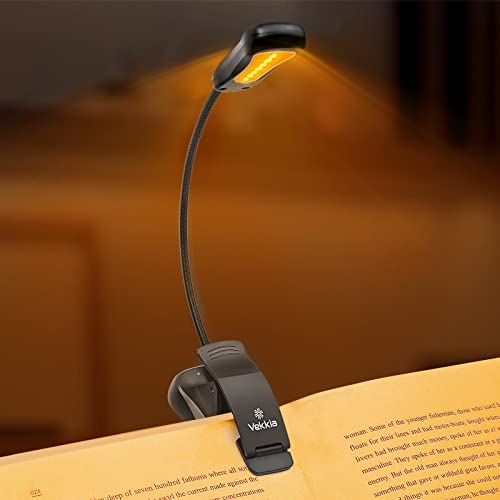
Sometimes, the bright white light of modern LEDs can be too harsh, especially if you are winding down for sleep. The Vekkia Amber light provides a warm, soft glow that is significantly easier on the eyes during late-night hours.
While it isn’t as bright as a daylight lamp, the amber hue reduces blue light exposure, which can help your brain prepare for rest. It’s perfect for simple garter stitch projects or mindless stockinette where you don’t need to see every microscopic detail of the fiber.
If you are working with very dark yarn, you might find this light a bit too dim. Use this for your "relaxing" knitting rather than your "technical" knitting.
Lepower Metal Architect Lamp: Best Industrial Style

If you appreciate a classic, functional aesthetic, the architect lamp is a timeless choice. Its articulated arm allows you to swing the light into virtually any position, making it incredibly useful for knitters who move around frequently.
The heavy metal construction feels substantial and durable, standing up well to the occasional bump. It provides a focused beam that is excellent for highlighting specific stitches when you are trying to fix a dropped stitch or pick up a hem.
The downside is the lack of built-in dimming features found in modern LED lamps. You will need to choose your own bulb carefully to ensure you get the right color temperature for your yarn.
Lumiy Lightblade LED Desk Lamp: Best Color Accuracy

For those who do a lot of complex colorwork, the Lumiy Lightblade is a dream. It features a high Color Rendering Index (CRI), which ensures that the colors you see under the light are the same ones you’ll see in natural daylight.
Nothing is worse than finishing a sweater only to realize the "gray" yarn you used actually has a strong blue undertone that only appeared once you stepped outside. This lamp prevents those color-matching disasters.
It is a more expensive option, but for the serious maker, the peace of mind is worth every penny. It’s the closest you can get to a professional studio setup at home.
Essential Factors for Choosing Your Knitting Light
- Adjustability: Can you move the light head to follow your hands?
- Brightness Control: Does it have multiple dimming levels for different yarn colors?
- Color Temperature: Is it "daylight" (cool) or "warm" (yellow)?
- Portability: Do you need to move the light between rooms or take it to guild meetings?
Why Color Rendering Index Matters for Yarn Colors
The Color Rendering Index (CRI) measures how accurately a light source reveals the true colors of an object. A low CRI light can make your yarn look dull or shift the hue entirely, leading to poor color choices in stranded work.
When you are working with hand-dyed yarns, the subtleties of the colorways are often the most expensive part of the project. A high CRI lamp ensures that you are seeing the full depth of the dye job, preventing "color fatigue" where your eyes struggle to make sense of the palette.
Always look for a CRI rating of 90 or above for the best results. Your eyes will thank you, and your finished projects will look exactly as you intended.
Tips to Prevent Eye Strain During Evening Knitting
- The 20-20-20 Rule: Every 20 minutes, look at something 20 feet away for 20 seconds.
- Contrast Matters: If you are knitting with dark yarn, use a light-colored project bag or a white cloth in your lap to create a bright background.
- Check Your Posture: Eye strain is often linked to neck and shoulder tension; ensure your chair supports your back so you aren’t leaning too close to your work.
- Use Magnification: If you are working on lace with tiny needles, consider a lamp with an integrated magnifying lens to reduce the need to squint.
Finding the right light is about balancing the technical demands of your project with the comfort of your own home. Whether you choose a high-end daylight lamp for complex colorwork or a simple clip-on for travel, your goal is to reduce the friction between you and your stitches. Don’t settle for dim, yellow bulbs that hide the beauty of your fiber. Invest in your vision, and you’ll find that your evening knitting sessions become the most relaxing part of your day.