6 Best Blocking Pins For Shape Retention Worth Owning
Discover the top 6 blocking pins for perfect shape retention. This guide highlights durable, rust-proof options essential for every crafter’s toolkit.
Blocking is the final, transformative step that turns a puckered, uneven piece of knitting into a professional-grade garment. Without the right pins to hold that tension, even the most meticulous stitch work can lose its intended drape and symmetry. Choosing the correct tool for your fiber type is the difference between a crisp lace edge and a distorted, sagging mess. Here are the top six blocking pins that will elevate your finished projects and ensure they maintain their shape for years to come.
Knitter’s Pride Rainbow T-Pins: Best for Versatility


These pins are a staple in my project bag because they handle everything from simple stockinette scarves to complex cable sweaters with ease. The T-bar head provides a secure grip, making it easy to push them into dense foam mats without losing them in the fibers.
The rainbow coating isn’t just for aesthetics; it helps you track your pins against different yarn colors. If you are working with a dark navy wool, the bright colors make it impossible to miss a pin during the cleanup process.
Because they are made of steel, they provide the necessary rigidity to hold tension in heavy, water-saturated wool. Keep in mind that while they are versatile, they can be slightly thick for extremely delicate, gossamer-weight lace.
Clover Rust-Resistant T-Pins: Best for Delicate Lace
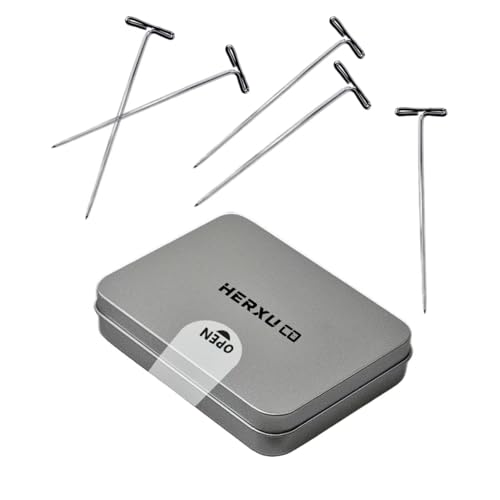
When you have spent weeks working on a fine mohair or silk lace shawl, you cannot risk rust stains marring your hard work. Clover’s pins are renowned for their high-quality finish, which remains smooth and snag-free even after repeated exposure to wet blocking.
The shaft of these pins is slightly thinner than standard T-pins, allowing them to glide through fine stitches without distorting the yarn. This is critical when you are stretching out intricate points or scalloped edges where every millimeter counts.
While they are pricier than generic options, the investment protects your most expensive, high-end fibers. If you are a lace enthusiast, these are the only pins you should trust with your heirloom-quality projects.
KnitIQ Stainless Steel Blocking Pins: Best for Durability

If you frequently block large blankets or heavy garments, you need pins that won’t bend under the weight of wet, bulky-weight yarn. KnitIQ pins are forged from high-grade stainless steel, meaning they maintain their straight shape regardless of the tension applied.
The length of these pins is particularly helpful when you need to pin through multiple layers of folded fabric. They provide a deep, secure anchor into your blocking mats, ensuring that your edges stay perfectly straight while the piece dries.
Because they are stainless steel, they are virtually immune to the oxidation that ruins cheaper metals. They are a "buy it once" tool that will likely outlast your current set of knitting needles.
Cocoknits Blocking Pins: Best for Precision Shaping

Cocoknits has mastered the art of the "steel pin" by focusing on a smooth, snag-free finish that is essential for delicate fibers like alpaca or cashmere. These pins are designed to be used with their specific system, but they work beautifully on any standard blocking mat.
The head of these pins is designed to lay flat against the fabric, which prevents the "tenting" effect that can occur with traditional T-pins. This allows for a more precise, professional finish on straight edges and sharp corners.
If you struggle with pinning in a perfectly straight line, these are your best friend. Their low profile helps you visualize the finished shape of your garment without the bulky T-bar getting in the way of your sightline.
Boye Rustproof Blocking T-Pins: Best Budget Choice

You don’t always need high-end equipment to get a professional result, and Boye has been a reliable standby for generations of knitters. These pins are affordable, widely available, and get the job done without any unnecessary frills.
They are perfectly adequate for standard wools and cottons where you aren’t worried about extreme sensitivity to metal finishes. If you are a beginner just starting to build your toolkit, buying a large pack of these will cover you for almost every project.
The only downside is that they may not be as refined as premium brands, so check them for any rough burrs before using them on silk or luxury blends. A quick swipe with a fine-grit emery board can smooth out any manufacturing imperfections.
Beadsmith Extra Long Pins: Best for Heavy Textiles

Sometimes, you are blocking a thick, cabled wool sweater that requires a deep anchor to prevent it from creeping back into its natural shape. Beadsmith’s extra-long pins provide the reach necessary to secure heavy, dense fabric firmly to your mats.
These pins are often used in jewelry making, which means they are incredibly strong and resistant to bending. They are a secret weapon for those who knit with bulky or super-bulky yarns that put a lot of pressure on your blocking setup.
Because they are so long, they are not ideal for delicate lace, as they can be unwieldy to manage. Use these specifically for your heavy-duty projects where structural integrity is the priority over stitch delicacy.
Understanding Why Blocking Pins Affect Shape Retention
Blocking is essentially a "reset" button for your stitches, allowing them to relax into their final, uniform position. The pins act as the anchors that hold the fabric in that relaxed state until the fibers dry and "set" into their new shape.
If your pins are too weak, they will bend under the weight of the damp yarn, causing your edges to ripple or sag. If they are too thick, they can permanently stretch out the delicate loops of your yarn, leaving unsightly holes in your work.
Proper pinning ensures that your gauge remains consistent across the entire piece. Without this tension, your finished garment might look lopsided or fail to drape correctly when worn.
How to Choose Between T-Pins and Blocking Combs
T-pins are the gold standard for individual stitch manipulation, allowing you to pull a single point into a specific location. They are essential for lace points, complex cables, and garments that require precise, point-by-point shaping.
Blocking combs, on the other hand, are designed for speed and long, straight edges. They are fantastic for blocking the straight seams of a sweater or a long, rectangular scarf where you want to ensure the edge is perfectly parallel.
Most expert knitters keep both in their stash. Use the combs for the long, straight sections to save time, and switch to T-pins for the tricky, curved, or intricate areas that need a delicate touch.
Essential Tips for Using Pins on Blocking Mats
Always ensure your blocking mats are on a flat, stable surface before you start pinning. If your mat is on a slanted table, your garment will dry in a distorted shape, regardless of how perfectly you pinned the edges.
When pinning, work from the center of the garment outward, or from one corner to the opposite corner. This prevents the fabric from bunching up or becoming skewed as you work your way around the piece.
Don’t over-stretch your knitting. You want to coax the fibers into their intended shape, not force them into a size they weren’t designed to be. Over-stretching can lead to "halo" distortion or, in the case of superwash wool, an irreversible loss of elasticity.
Maintaining Your Pins to Prevent Rust and Damage
Even "rust-resistant" pins can eventually succumb to moisture if they are stored improperly. Always ensure your pins are completely dry before putting them back into their container after a blocking session.
If you live in a humid climate, consider adding a small silica gel packet to your pin storage box. This simple step will absorb excess moisture and significantly extend the life of your metal tools.
If you ever notice a pin has become bent or developed a rough spot, discard it immediately. A single snagged pin can ruin hours of work by pulling a thread or splitting a ply in your yarn, which is a tragedy no knitter wants to experience.
Investing in high-quality blocking pins is a commitment to the longevity and beauty of your knitting. By matching the right tool to your specific project, you ensure that your hard work results in a professional, polished finish every time. Take the time to care for your pins, and they will remain reliable partners in your creative journey for years. Happy knitting, and may your edges always be perfectly blocked.