6 Best Pegboard Accessories For Knitting Notions
Organize your craft space with these 6 top pegboard accessories. From hooks to bins, discover essential tools to keep your knitting notions tidy and accessible.
Every knitter knows the frustration of hunting for a specific needle size or a lost tapestry needle in the middle of a complex lace row. A well-organized pegboard transforms your craft space from a chaotic pile of notions into a high-performance workstation. By utilizing vertical space, you keep your most-used tools visible, accessible, and ready for your next project. This guide breaks down the best accessories to turn your wall into a knitter’s sanctuary.
Wall Control Steel Pegboard Hooks for Scissors


Nothing kills the momentum of a finished bind-off like searching for your sharpest embroidery scissors. Standard plastic hooks often wobble or slip when you reach for your tools in a hurry.
Steel hooks provide the stability required for heavy-duty shears or delicate snips. Because they lock securely into the board, you can grab your scissors with one hand without the entire hook coming off the wall.
Look for hooks with a vinyl coating if you are worried about dulling your blades over time. For the best experience, place your most-used scissors at eye level to ensure you aren’t straining to reach them during a marathon knitting session.
IKEA Skådis Elastic Cords for Circular Needles
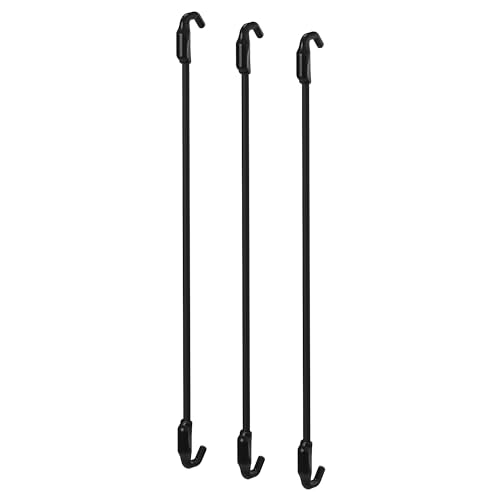
Circular needles are notoriously difficult to store without them springing back into a tangled mess. The Skådis elastic cord system is a game-changer for keeping those unruly cables under control.
Instead of stuffing needles into a drawer where cables can kink or develop memory, you can loop them gently over the cords. This maintains the integrity of the cable, which is vital for preventing snags when working with delicate silk or mohair blends.
Keep in mind that these cords are best for flexible cables. If you prefer fixed stainless steel needles with stiff cables, you may need to use larger loops to avoid putting unnecessary tension on the join.
Pegboard Bins for Storing Small Knitting Notions

Small notions like stitch markers, cable needles, and point protectors have a habit of disappearing into the abyss of a project bag. Clear or open-top bins allow you to categorize these tiny essentials by function.
I recommend using dedicated bins for different types of markers: locking markers for crochet-style fixes, and ring markers for knitting in the round. Keeping them separate saves you from digging through a pile of plastic when you’re trying to keep track of a complex lace repeat.
Don’t overfill these bins, as it defeats the purpose of quick access. If you find yourself digging, it’s a sign that you need to purge the markers you never actually use.
Steel Pegboard Shelves for Yarn Ball Organizers

Sometimes the best way to keep your current project on track is to see your yarn clearly. Steel shelves allow you to store small cakes of yarn or partial skeins right in front of your workspace.
This is particularly useful when you are working on a stranded colorwork project that requires switching between several balls of yarn. By keeping them on a shelf, you prevent the yarn from rolling onto the floor and picking up unwanted lint or pet hair.
Be mindful of natural fibers like wool or alpaca, which can attract dust if left exposed for long periods. If you live in a dusty environment, consider using a shelf primarily for current projects rather than long-term storage.
Pegboard Hook Rails for Measuring Tape Storage

A measuring tape is the most-used tool in your kit, whether you are checking gauge or measuring the length of a sleeve. Hook rails allow you to hang your tape measure so it doesn’t get tangled with your circular needles.
The key is to use a rail that allows the tape to hang freely without kinking. If your tape measure gets bent or twisted, the markings can become inaccurate over time, which is a disaster when you are working on a garment that requires precise fit.
Always hang your tape measure so the end is easily grabbable. If you have multiple tapes, color-code them by unit—metric on one hook, imperial on another—to avoid mid-project confusion.
Magnetic Strips for Keeping Tapestry Needles Safe

Tapestry needles are sharp, small, and prone to vanishing the moment you set them down. A magnetic strip mounted to your pegboard ensures they are always accounted for.
This setup is far superior to a pincushion, which can become a graveyard for needles you’ve forgotten about. With a magnetic strip, you can see exactly how many needles you have, which is a simple safety check before you finish your crafting session.
Make sure the magnet is strong enough to hold your needles securely. If you use nickel-plated or high-quality steel needles, they will adhere instantly, keeping your workspace clean and safe for everyone.
How to Design an Ergonomic Knitting Wall Station
Your pegboard shouldn’t just be storage; it should be an extension of your body’s reach. Place your most essential tools—scissors, tape measure, and current stitch markers—within a "golden zone" between your shoulder and waist height.
Avoid placing heavy items too high, as reaching up repeatedly can lead to shoulder fatigue. If you find yourself leaning or stretching to reach your tools, your pegboard layout needs a quick adjustment.
Think about your dominant hand. Place your most-used tools on the side you naturally reach toward, and keep secondary items like needle sizers or gauge rulers slightly further away.
Essential Notions to Keep Within Arm’s Reach
Every knitter needs a core set of items that are accessible at all times. This includes your tapestry needles, a reliable measuring tape, a small pair of scissors, and your favorite stitch markers.
Consider adding a small notepad or a dedicated space for your project notes to this area. Having your pattern instructions or row counter visible on the pegboard helps keep your place during intricate stitch patterns.
Don’t clutter this space with "just in case" items. If you haven’t used a tool in the last three projects, it doesn’t belong in your primary reach zone.
Maximizing Small Craft Room Vertical Storage
Vertical storage is the secret weapon of the small-space knitter. By moving your notions off the table, you create a larger surface area for spreading out your knitting, which is essential for blocking small swatches or checking gauge.
Use the full height of your wall by placing infrequently used items—like spare needle tips or cable connectors—at the very top. Reserve the middle for daily essentials and the bottom for heavier items like yarn bowls or project bags.
Remember that pegboards can be modular. If your knitting habits change—perhaps you shift from socks to sweaters—you can easily rearrange your hooks and bins to suit your new workflow.
Maintenance Tips for Your Pegboard Setup
A pegboard is a living system that requires periodic tidying. At the end of every major project, take five minutes to reorganize your hooks and empty out any bins that have collected stray yarn bits or dust.
Check your hooks occasionally to ensure they are still seated firmly in the board. Over time, the weight of tools can cause them to loosen, which is a simple fix with a quick tap or a repositioning.
Finally, treat your pegboard like your needles: keep it clean, keep it organized, and it will serve your knitting practice for years to come. A tidy board leads to a tidy mind, allowing you to focus entirely on the rhythm of your stitches.
Building a pegboard system is an investment in your own creative flow and peace of mind. By choosing the right accessories, you eliminate the friction of searching for tools and keep your focus where it belongs: on your stitches. Take the time to curate your wall, and you’ll find that your knitting sessions become much more productive and enjoyable. Happy knitting!