6 Best Point Sizers For Vintage Needle Identification
Identify vintage needles with precision. Our guide reviews the 6 best point sizers to help collectors accurately categorize tools and preserve sewing history.
Finding a stray needle in your knitting bag is a common occurrence, but identifying its exact size can be a frustrating mystery. Vintage needles often lose their markings over time, leaving you to guess at the diameter of your tools. Using a reliable point sizer is the only way to ensure your gauge remains consistent across every project. This guide explores the best tools to help you identify those mystery needles and keep your stash organized.
Susan Bates Knit Chek: The Classic Standard Choice
The Susan Bates Knit Chek is likely the most recognizable tool in any knitter’s notions kit. It is a simple, flat plastic card that combines a needle gauge with a built-in ruler for checking your stitch gauge.
Because it is lightweight and inexpensive, it is the perfect tool to tuck into a small project bag. You won’t worry about losing it, and it provides a reliable, no-nonsense way to verify needle sizes from US 1 to 15.
The downside is that the plastic can eventually warp or the printed numbers may fade with heavy use. However, for a quick check on a vintage set of aluminum needles, it remains the gold standard for accessibility.
Boye Aluminum Needle Gauge: Durable Metal Option
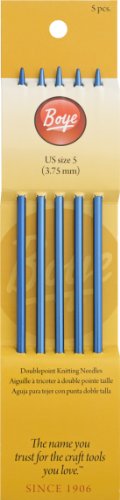

If you prefer tools with a bit of heft, the Boye Aluminum Needle Gauge is a fantastic, long-lasting alternative. Unlike plastic versions, this metal tool won’t snap in the bottom of your knitting bag or melt if left in a hot car.
The precision of the punched holes is generally excellent, providing a consistent fit for your needles. It is particularly useful if you frequently work with metal needles, as the metal-on-metal contact makes it easy to feel when the needle is the correct fit.
Be aware that these can sometimes develop sharp edges over time if they are handled roughly. A quick pass with a fine-grit sandpaper usually clears this up, ensuring your needles don’t get scratched during the sizing process.

Clover Knitting Needle Gauge: Precise Plastic Tool
Clover is known for manufacturing high-quality notions, and their needle gauge is no exception. It features a smooth, refined finish that prevents the snagging often found on cheaper plastic tools.
The standout feature here is the accuracy of the sizing holes. If you are working on a delicate lace project where a half-millimeter difference in needle size can ruin your drape, the Clover gauge is an investment in precision.
It covers a wide range of sizes and includes both US and metric measurements clearly printed on the surface. It is a reliable, professional-grade tool that sits comfortably between the budget-friendly plastic options and more expensive specialty gauges.
Cocoknits Maker’s Keep: Sleek Modern Gauge Tool
The Cocoknits Maker’s Keep is designed for the knitter who values aesthetics alongside functionality. It is a magnetized bracelet that keeps your needles, stitch markers, and gauge tool within arm’s reach at all times.
The gauge itself is made of a sturdy, eco-friendly material that feels great in the hand. It is exceptionally well-calibrated, making it a favorite for those who own a large collection of luxury needles and want to treat them with care.
While it is a higher-end purchase, the utility of having your sizing tool attached to your wrist is a game-changer for those who lose their notions constantly. It turns the chore of needle identification into a seamless part of your workflow.
HiyaHiya Multi-Gauge: Best for Metric Conversion

If you work with international patterns or vintage needles from Europe, the HiyaHiya Multi-Gauge is indispensable. It offers a comprehensive range of sizes that cater to both the US system and the precise millimeter measurements used globally.
This tool is particularly helpful because it includes a built-in crochet hook gauge as well. If you are a multi-craft maker, you can consolidate your tool kit significantly with this single, compact piece.
The design is slim and durable, making it easy to store in a needle case. If you find yourself constantly searching for a conversion chart online, this gauge will save you significant time and mental energy.
Brittany Birch Needle Gauge: The Eco-Friendly Pick

For knitters who prefer natural materials, the Brittany Birch needle gauge is a beautiful, tactile choice. It is crafted from sustainably harvested birch wood, offering a warm, organic feel that plastic tools simply cannot match.
Because wood is less abrasive than metal or hard plastic, it is gentle on your vintage wooden needles. It won’t cause micro-scratches on the finish of your favorite rosewood or bamboo tools.
Keep in mind that wood can be sensitive to humidity changes. While it is durable, you should avoid leaving it in extreme conditions to ensure the sizing holes remain perfectly round and accurate over the years.
Why Vintage Needles Often Lack Size Markings
Vintage needles were often manufactured before the standardization of needle sizes was strictly enforced. In many cases, the size was printed on a paper label that fell off decades ago, or it was etched lightly into the metal and has worn away.
Furthermore, older manufacturing techniques often resulted in slight variations in diameter even within the same "size." This is why you cannot always trust the label on a vintage needle; physical measurement is the only way to be certain.
If you are inheriting needles from a family member, assume that the markings are unreliable. Always run them through a gauge before starting a project to ensure your tension and gauge aren’t compromised.
How to Measure Worn or Faded Needle Points
When measuring a needle, always use the hole that allows the needle to slide through without forcing it. If the needle feels tight, it is likely too large for that hole; if there is significant wiggle room, it is too small.
If you are dealing with a needle that has a tapered tip, be careful not to push the tip too far through the gauge. The gauge measures the shaft of the needle, not the point, so ensure the main body is what you are testing.
- Test the shaft: Find the part of the needle where the diameter is most consistent.
- Check for debris: Clean your vintage needles before measuring, as old wax or oxidation can make them seem larger than they are.
- Verify with a swatch: If you are between sizes, knit a small swatch to see which needle produces the fabric density you desire.
Understanding Metric Versus US Sizing Systems
The US system uses a numbering sequence (e.g., US 8) that does not correlate directly to a measurement in inches or millimeters. This can be incredibly confusing for beginners, as a US 8 is 5.0mm, but a US 7 is 4.5mm.
Metric sizing is based on the diameter of the needle in millimeters, which is far more intuitive. Most modern patterns provide both, but vintage patterns often rely solely on the US numbering system.
- US 0 = 2.00mm
- US 3 = 3.25mm
- US 8 = 5.00mm
- US 10.5 = 6.50mm
Always prioritize the millimeter measurement when substituting yarns or needles. It is the universal language of knitting and will prevent you from accidentally using a needle that is slightly off-size.
Essential Tips for Organizing Your Needle Stash
The best way to keep your needles organized is to group them by type and size immediately after finishing a project. Don’t leave them loose in a basket; use a dedicated needle case with labeled pockets.
If you have a large collection of vintage needles, consider using small rubber bands to keep pairs together. You can also attach a small tag to the end of each needle with its size written in permanent ink.
- Sort by material: Keep your wood, metal, and plastic needles separated to prevent them from damaging each other.
- Use a master list: Keep an index card in your needle case that lists which sizes you own, so you don’t accidentally buy duplicates.
- Regular audits: Once a year, go through your stash and re-gauge any needles that have lost their markings to keep your collection functional.
Identifying your vintage needles is a simple step that pays off in the quality of your finished garments. Whether you choose a classic plastic card or a sophisticated wooden gauge, having a reliable tool will save you from the headache of mismatched gauge. Take the time to measure your stash today, and you will be ready to cast on your next project with total confidence. Happy knitting!