7 Best Ergonomic Knitting Chairs For Long Sessions
Find the perfect support for your craft. Our guide reviews the 7 best ergonomic knitting chairs to ensure comfort and posture during long, creative sessions.
Spending hours hunched over a complex lace shawl or a dense stranded colorwork sweater can wreak havoc on your neck, shoulders, and lower back. As someone who has spent two decades working through every weight of yarn from lace to super bulky, I know that your chair is just as important as your choice of needles. A supportive seat transforms a marathon knitting session from a painful chore into a relaxing, productive experience. Here are my top picks for keeping your body as comfortable as your hands are busy.
Herman Miller Aeron: The Ultimate Support Choice


The Aeron is the gold standard for a reason, particularly if you find yourself knitting for hours at a time. Its mesh suspension system is a game-changer for temperature regulation, preventing that uncomfortable "stuck" feeling when you’re working with warm wool fibers on a hot day.
Because it offers unparalleled adjustability, you can dial in the seat angle to support your thighs while you keep your elbows tucked comfortably. If you’re working on a large-scale project that requires a consistent gauge, this chair ensures your posture remains steady, preventing the fatigue-induced tension that often leads to uneven stitches.
The primary trade-off is the rigid frame, which can be unforgiving if you like to curl your legs up while you knit. However, for maintaining neutral spinal alignment during long sessions, it is virtually impossible to beat.
Steelcase Gesture: Best for Knitting Posture

The Steelcase Gesture is uniquely suited for knitters because of its highly adjustable arms. When you are working on intricate cables or fiddly bobbles, you need your arms to be supported at exactly the right height to prevent wrist strain.
This chair moves with you, which is essential when you are constantly shifting to manage your yarn tension or reach for a stitch marker. It provides a level of dynamic support that feels like an extension of your own body.
While the price point is significant, consider it an investment in your physical longevity as a maker. If you suffer from "knitter’s neck," the way this chair cradles your upper back will provide immediate, noticeable relief.
La-Z-Boy Harbor Rocker: Best Recliner for Knits

Sometimes, you just want to sink into a project with a cup of tea, and a traditional office chair won’t cut it. The La-Z-Boy Harbor Rocker offers a gentle motion that can actually help you find a meditative rhythm while you work through a simple stockinette blanket.
The deep cushioning is perfect for long-term comfort, especially if you are using heavy, natural fibers that take time to work through. It allows for a more relaxed, reclined posture that is much easier on the lower back than sitting bolt upright.
Just be aware that the lack of adjustable armrests can make fine-detail work—like picking up stitches along a neckline—a bit more challenging. This is your "comfort-first" chair for mindless, repetitive rows.
Hbada Ergonomic Office Chair: Best Budget Pick

You don’t have to spend a fortune to get the support you need to prevent cramping and fatigue. The Hbada chair provides essential lumbar support that keeps your spine aligned, which is critical when you’re focusing on complex chart reading.
Its compact design makes it perfect for those of us with dedicated knitting corners in smaller spaces. It offers enough adjustability to ensure your feet stay flat on the floor, which is non-negotiable for maintaining good circulation during long sessions.
While the materials aren’t as premium as higher-end models, it hits the "must-haves" for a knitter: adjustable height, decent lumbar support, and a breathable mesh back. It’s a solid entry-level choice that won’t break your yarn budget.
Secretlab Titan Evo: Best for Lumbar Support
Don’t let the "gaming" label fool you; this chair is built for people who sit for extended periods, making it a dream for dedicated knitters. The integrated, adjustable lumbar support is incredibly precise, allowing you to target the exact spot that aches after a long day of knitting.
The seat base is firm but supportive, which helps keep your hips level and prevents the slouching that often happens when you get lost in a pattern. If you are prone to lower back pain, the firm structure of this chair will likely be your best friend.
The synthetic upholstery is durable, but keep in mind that it doesn’t breathe as well as fabric or mesh. If you tend to run warm, you might want to drape a light cotton throw over it to keep things cool while you work.
HON Ignition 2.0: Best Adjustable Task Chair
The HON Ignition 2.0 is a workhorse that excels at versatility, making it a great choice for a knitter who also uses their space for blocking or sewing. Its synchro-tilt mechanism allows you to lean back while keeping your feet planted, a great feature for when you need to pause and check your tension.
The adjustable arms are easy to manipulate, allowing you to find the perfect height for your elbows regardless of whether you’re using long circular needles or short double-pointed needles. It’s a straightforward, no-nonsense chair that prioritizes function over flash.

It’s an excellent middle-ground option for those who want professional-grade support without the premium price tag. The construction is sturdy enough to withstand years of daily use, even if you’re a heavy-duty knitter.
Serta Air Health and Wellness: Best for Comfort

Serta has applied their mattress expertise to office seating, resulting in a chair that feels like a cloud. The "Air" lumbar technology responds to your movements, which is a massive help when you are shifting positions to manage long, circular-knit projects.
The seat is plush, making it ideal for those marathon sessions where you intend to finish a sleeve or a pair of socks in one sitting. It provides a level of softness that is rare in ergonomic furniture, ensuring you don’t feel stiff after an hour or two.
The downside is that the plushness can sometimes lead to a bit of heat buildup. However, for sheer physical comfort during a long, cozy evening of knitting, it is hard to beat.
Why Ergonomics Matter for Long Knitting Sessions
Knitting is a repetitive motion sport, and without proper ergonomics, you are inviting repetitive strain injuries. Your neck, shoulders, and wrists are the most vulnerable areas, especially when you’re working on projects with high tension or small gauge needles.
A good chair forces you to maintain a neutral posture, which takes the pressure off your nerves and tendons. When your spine is aligned, your hands and wrists can move more freely, leading to more consistent stitch tension and less fatigue.
Ignoring your posture isn’t just about immediate pain; it’s about the long-term health of your joints. Investing in your seating is an investment in your ability to keep knitting well into the future.
Key Features to Look for in a Knitting Chair
When shopping for a chair, prioritize features that accommodate your specific knitting style. Consider these non-negotiable elements:
- Adjustable Armrests: You need to be able to set these so your elbows are at a 90-degree angle to your needles.
- Lumbar Support: Look for adjustable depth or height to keep your lower back from rounding.
- Seat Depth: Ensure your thighs are supported without the edge of the chair cutting into the back of your knees.
- Breathability: If you use natural fibers that can make you warm, mesh or fabric is much better than leather.
How to Optimize Your Knitting Setup for Comfort
Beyond the chair, your environment plays a massive role in your comfort. Ensure your lighting is positioned so you aren’t leaning toward your work, which is the fastest way to trigger neck pain.
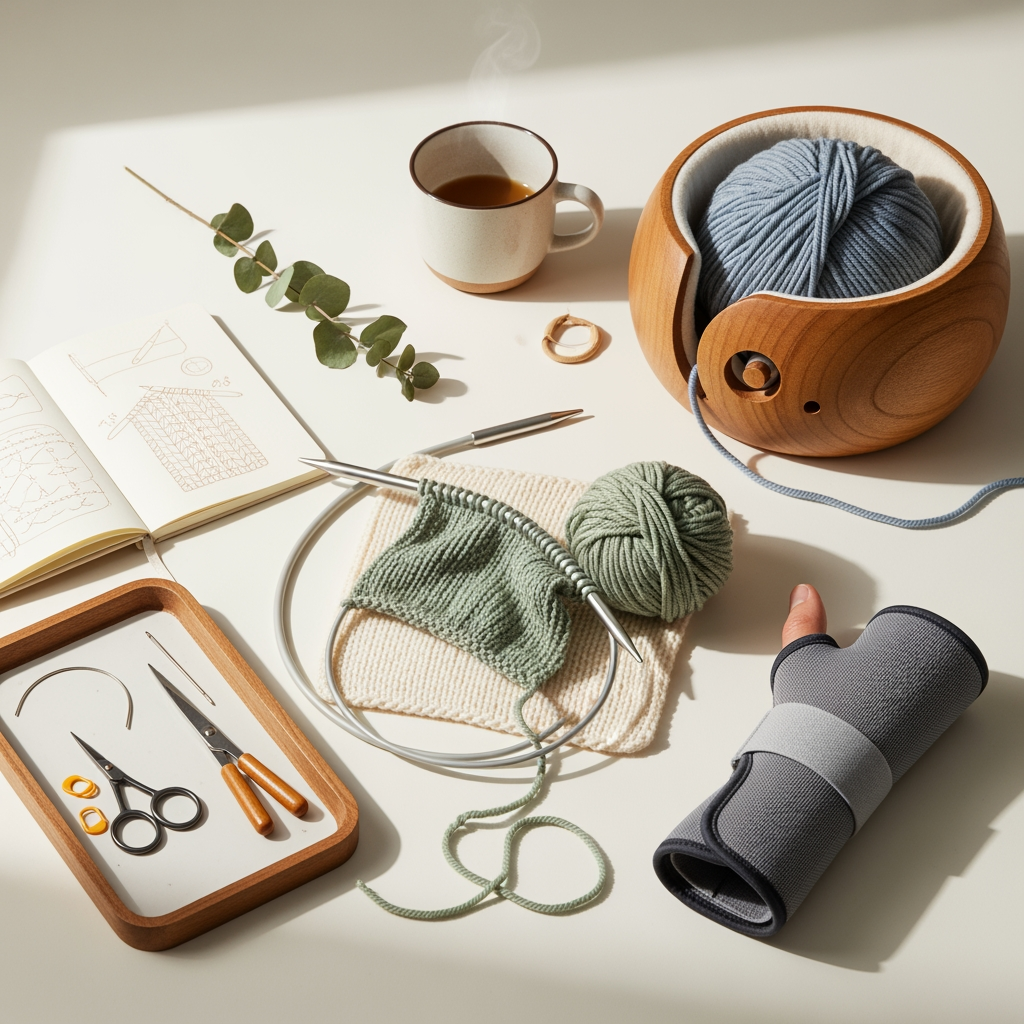
Keep your frequently used tools—scissors, stitch markers, and a crochet hook for dropped stitches—within easy reach so you don’t have to twist your torso. Finally, set a timer to stand up and stretch every 30 minutes; even a quick walk to the kitchen helps reset your muscles.
Remember, the best knitting setup is one that allows you to maintain your focus on the rhythm of your stitches rather than the ache in your back. Listen to your body, adjust your gear, and keep your needles clicking.
Finding the right knitting chair is a personal journey that depends on your body type, your knitting style, and your dedicated craft space. Don’t be afraid to test out different adjustments, as even the best chair needs to be calibrated to your specific needs. Prioritize your physical health so that your hands can continue to create beautiful, handmade pieces for years to come. Happy knitting, and may your tension always be even and your back always be pain-free.