6 Best Ball Winders For Large Capacity Worth Owning
Discover the top 6 large-capacity ball winders. We evaluate durability, tension control, and ease of use to help you find the perfect tool for your yarn stash.
Transforming a tangled, unruly hank of hand-dyed wool into a tidy, center-pull cake is one of the most satisfying rituals in a knitter’s life. When you are working with large-yardage projects like heavy blankets or oversized sweaters, standard-sized winders often struggle to keep up with the bulk. Investing in a high-capacity winder saves you from the frustration of mid-project tangles and allows you to focus entirely on your stitch tension. Here are the top tools designed to handle your biggest, fluffiest hanks with ease.
Stanwood Needlecraft Large Metal Ball Winder


The Stanwood Large Metal Ball Winder is a staple in many dedicated craft rooms for a reason: it is built like a tank. Unlike plastic models that can flex or wobble under the weight of a heavy skein of worsted weight wool, this unit maintains its structural integrity.
The heavy-duty metal gears provide a smooth, consistent rotation that makes winding large cakes feel effortless. If you frequently work with 400-gram cakes of bulky yarn, this winder handles the tension without skipping a beat.
The primary tradeoff is the footprint; it is a substantial piece of equipment that requires a sturdy table. However, if you are serious about stash management, the durability of the metal construction makes it an investment that will likely last a lifetime.
Knit Picks Yarn Ball Winder: Best Budget Pick
If you are just beginning to build your collection or only wind yarn occasionally, the Knit Picks winder is a fantastic entry point. It is lightweight, portable, and surprisingly capable for its price range.
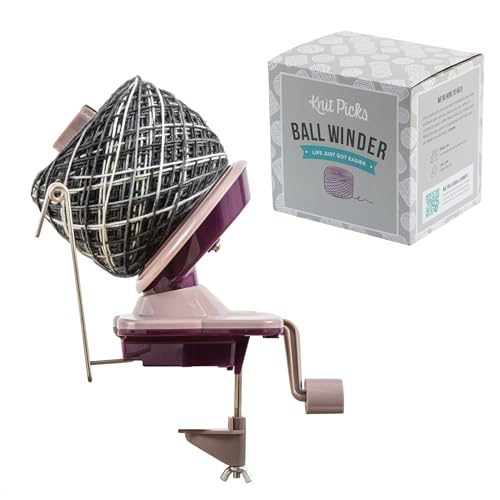
While it is primarily designed for standard hanks, it can accommodate larger cakes if you guide the yarn carefully by hand. It is perfect for the knitter who wants to organize their stash without committing to a professional-grade price tag.
Keep in mind that because it is made of plastic, it isn’t meant for marathon winding sessions of heavy, high-ply yarn. Use it for your fingering weight sock yarns or sport weight cottons, and it will serve you faithfully for years.

Lacis Jumbo Yarn Ball Winder for Bulk Projects
The Lacis Jumbo winder is specifically engineered for those massive, 10-ounce skeins that usually overwhelm standard tools. It features a wider base and a taller spindle, which prevents the yarn from slipping off the top as the cake grows in diameter.

This winder is a lifesaver when you are prepping yarn for a large-scale project like a cabled afghan. By creating a larger cake, you minimize the number of times you have to stop and restart your winding process.
The mechanical design is robust, though it does require a bit more table space to secure the clamp properly. If your goal is to minimize joins and knots in your finished fabric, the capacity of this winder is your best ally.
ChiaoGoo Hand-Operated Large Capacity Winder
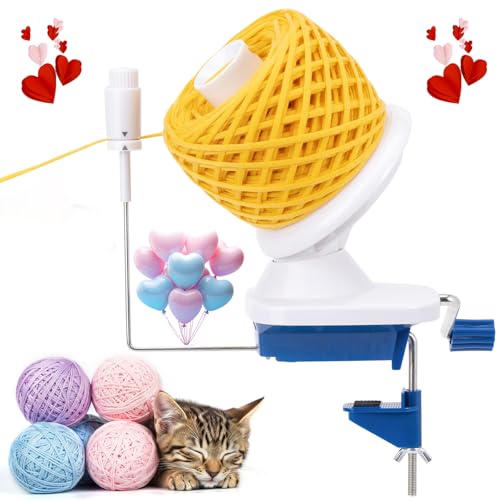
ChiaoGoo is a brand synonymous with quality in the needle world, and their winder reflects that same attention to detail. It is a manual, hand-operated machine that offers excellent control over the tension of the cake.
Hand-operated winders are often preferred by knitters who want to feel the yarn as it moves through their fingers. This allows you to catch any knots or debris in the fiber before they end up inside your ball.
It is a great choice for delicate fibers like mohair or silk blends that require a gentle touch. Because you control the speed, you are much less likely to over-stretch the yarn during the winding process.
Nancys Knit Knacks Heavy Duty Ball Winder

Nancys Knit Knacks has long been a favorite for knitters who prioritize precision engineering. Their heavy-duty winder is designed for high-volume use, making it ideal for those who wind yarn for a small business or a very active knitting group.
The gear mechanism is exceptionally smooth, which reduces the physical strain on your wrist during long winding sessions. It also features a very stable base, ensuring that it doesn’t vibrate or move on your tabletop.
While it is an investment, the consistency of the cakes it produces is unmatched. If you value a perfect center-pull cake that won’t collapse when you reach the end of your yarn, this is the gold standard.
Strauch Jumbo Ball Winder: The Professional Choice
The Strauch Jumbo is widely considered the "gold standard" for serious fiber artists. If you are regularly winding large amounts of fiber for weaving, spinning, or massive knitting projects, this machine is in a league of its own.
Its ability to handle large yardage is unparalleled, and the build quality is industrial-grade. It is designed to run for hours without overheating or losing its mechanical alignment.
This is not a casual tool; it is a piece of equipment for a dedicated studio. If your knitting habit has evolved into a full-blown fiber obsession, the Strauch is the final upgrade you will ever need to make.
How to Choose a Large Capacity Yarn Ball Winder
Choosing the right winder depends heavily on your typical project size and the space you have available. If you mostly knit socks, a standard winder is fine; if you knit blankets, you need a jumbo model.
Consider the material of the gears and the stability of the base. A winder that wobbles will result in uneven cakes, which can actually cause your yarn to tangle while you are knitting.
- Capacity: Ensure the spindle height matches your largest skeins.
- Stability: Look for a heavy base or a strong, non-slip clamp.
- Material: Metal gears generally offer better longevity than plastic.
Why Gear Quality Matters for Smooth Winding
The internal gears are the heart of your winder. When the gears are high-quality, the rotation is fluid, which helps maintain uniform tension on the yarn throughout the entire winding process.
Poor-quality gears often have "dead spots" or resistance points. These inconsistencies can cause the yarn to snag or pull, potentially stretching out elastic fibers like superwash wool or nylon-blend sock yarn.
Always look for a winder that offers a smooth, silent turn. If you hear grinding or clicking, it is a sign that the gears are struggling, which will eventually lead to mechanical failure.
Essential Tips for Perfect Center Pull Cakes
To get a perfect cake, always use a swift to hold your hank. Winding directly from a loose pile on the floor is a recipe for tangles and uneven tension.
Keep your tension consistent, but don’t pull too tightly. If you wind too hard, you can compromise the loft of the yarn, especially with delicate fibers like alpaca or cashmere, which can lose their "bloom" if stretched too much.
- Use a swift: Never wind from a loose pile.
- Control the tension: Guide the yarn gently with your hand.
- Stop and check: Periodically pause to ensure the cake isn’t becoming too wide at the base.
Maintaining Your Winder for Long-Term Use
A yarn winder is a mechanical tool that requires occasional care to keep it running smoothly. Keep the area around the gears clean and free of "yarn barf" or loose fibers that can get caught in the mechanism.
If your winder starts to sound noisy, a tiny drop of sewing machine oil on the gear teeth can work wonders. Avoid using heavy household lubricants, as they can attract dust and grime.
Finally, store your winder in a dry, cool place. Extreme temperature changes can warp plastic parts, and humidity can affect metal components over time.
Selecting the right ball winder is about balancing your current project needs with your long-term goals as a maker. Whether you choose a sturdy budget model or a professional-grade jumbo winder, the key is to prioritize smooth operation and stable construction. Once you find the tool that fits your rhythm, you will find that the prep work becomes just as enjoyable as the knitting itself. Happy winding, and may your yarn always pull from the center without a single snag.