6 Best Blocking Pins For Delicate Fabrics To Own
Protect delicate textiles with our top six blocking pins. Discover rust-resistant, snag-free options essential for maintaining shape without damaging fibers.
Blocking is the final, transformative step that turns a crumpled, uneven piece of knitting into a professional-looking garment. Choosing the right pins is just as critical as selecting the perfect yarn, as the wrong tool can leave permanent rust stains or unsightly gaps in delicate fibers. Whether you are working with ethereal mohair or structured wool, your choice of pin dictates the success of your final reveal. This guide will walk you through the essential tools to ensure your hard work is displayed to its absolute best advantage.
T-Pins: The Stainless Steel Gold Standard
T-pins are the workhorse of the knitting world for a reason. Their signature T-shaped head provides a sturdy grip, allowing you to push them into blocking mats with ease without hurting your thumb.
When you are blocking a heavy wool sweater that requires significant tension, these pins hold their ground. They don’t bend under the weight of wet, saturated fiber, which is a common failure point for cheaper, thinner alternatives.
However, be warned: not all T-pins are created equal. Always ensure you are buying high-quality stainless steel to avoid the heartbreak of rust marks appearing on your finished project after a long blocking session.
KnitIQ Blocking Pins for Precision Work
If you find yourself frequently blocking intricate lace shawls, standard T-pins might feel a bit clunky. KnitIQ pins are specifically designed with the lace knitter in mind, offering a finer gauge that slides effortlessly between delicate stitches.
These pins are often longer and thinner than traditional hardware-store pins, which allows you to anchor more of the lace edge at once. This is a game-changer when you are trying to create those sharp, crisp points on a scalloped border.
The tradeoff here is durability; because they are thinner, they can bend if you try to force them through a thick, felted seam. Use these specifically for your lace projects and keep your heavier pins for your sweaters and blankets.
Cocoknits Maker’s Keep Magnetic Pins
The Cocoknits Maker’s Keep system is less about the pin itself and more about the workflow. These pins come with a magnetic wristband, which keeps your pins organized and accessible while you are crawling around on the floor pinning out a large project.
For the knitter who is tired of losing pins in the carpet or accidentally sitting on one, this is a brilliant ergonomic solution. It keeps your hands free to manipulate the fabric while your tools remain within arm’s reach.
While the pins themselves are high-quality, the real value is in the system. If you are a prolific blocker, the time saved by not hunting for dropped pins is well worth the investment.
HiyaHiya Stainless Steel Blocking Pins


HiyaHiya is a brand known for precision, and their blocking pins follow that same philosophy. These pins are incredibly smooth, meaning they won’t snag on fragile fibers like silk or alpaca.
The finish on these pins is exceptionally polished, which is vital when working with light-colored yarns. Any slight imperfection on a pin surface can grab a single ply of yarn, causing a small, annoying pull that is difficult to fix once the piece has dried.
If you are working with luxury fibers, these are a safe bet. They offer a reliable, snag-free experience that protects the integrity of your yarn’s twist.
Clover Patchwork Pins for Fine Lace
Don’t be afraid to look outside the knitting aisle for your blocking supplies. Clover patchwork pins, often found in quilting sections, are frequently sharper and finer than standard knitting pins.
These are ideal for "pinning out" extremely fine-gauge lace where you need to hit very specific stitch points without distorting the surrounding fabric. Because they have a lower profile, they are less likely to pull at the fabric tension once the piece is pinned down.
Keep in mind that these are generally shorter than dedicated blocking pins. They are perfect for lace, but they won’t provide the leverage you need for heavy, dense knits.
Knitter’s Pride Lace Blocking T-Pins

Knitter’s Pride has managed to combine the strength of a T-pin with the delicacy required for lace. These pins are specifically engineered to be rust-resistant and feature a slightly thinner shaft than a standard hardware T-pin.
They are a great "middle ground" tool for the knitter who doesn’t want to buy five different types of pins. They are strong enough to block a heavy shawl but thin enough to maneuver through a delicate lace repeat.
The heads are also coated, which provides a bit more friction when your fingers are wet from the blocking process. This simple feature makes a world of difference when you are pinning a large project for an hour or more.
Why Rust-Proof Pins Matter for Your Lace
Rust is the silent killer of finished knits. When you block a garment, you are introducing moisture, which is the primary catalyst for oxidation on cheap, nickel-plated pins.
If you use non-stainless pins, you risk leaving permanent, orange-brown spots on your yarn that are nearly impossible to wash out. This is especially tragic when working with white or pale-colored luxury fibers like cashmere or silk.
Always check the packaging for "stainless steel" or "rust-proof" labels. If a pin feels lightweight and cheap, it likely isn’t high-quality steel and should be avoided for long-term blocking.
How to Properly Pin Delicate Fiber Knits
When blocking delicate knits, the goal is to gently guide the fabric into shape, not to stretch it into submission. Start by pinning the corners of your item, then work your way toward the center, spacing your pins evenly.
For lace, you want to pin out the "points" or "scallops" first to establish the overall geometry. Use enough pins so that the fabric doesn’t sag between them, which creates uneven tension and weird ripples in the finished lace.
Avoid pulling the fabric so tight that the stitches become distorted or the yarn looks strained. Your goal is to relax the fibers, allowing them to bloom and settle into their final, beautiful shape.
Avoiding Pin Marks on Your Finished Items
Pin marks occur when you force a pin through a stitch rather than between the strands of the yarn. Always try to place your pins through the gaps in the stitch pattern, especially when working with delicate, airy lace.
If you must pin through a stitch, try to use a thinner pin to minimize the hole. Once the piece is dry, you can often gently massage the fabric around the pin hole to help the yarn fibers return to their original position.
Remember that blocking is a process of "setting" the yarn. If you leave your pins in for a few days, the fibers will have plenty of time to relax, which is usually enough to make any minor pin marks disappear entirely.
Essential Blocking Tools for Every Knitter
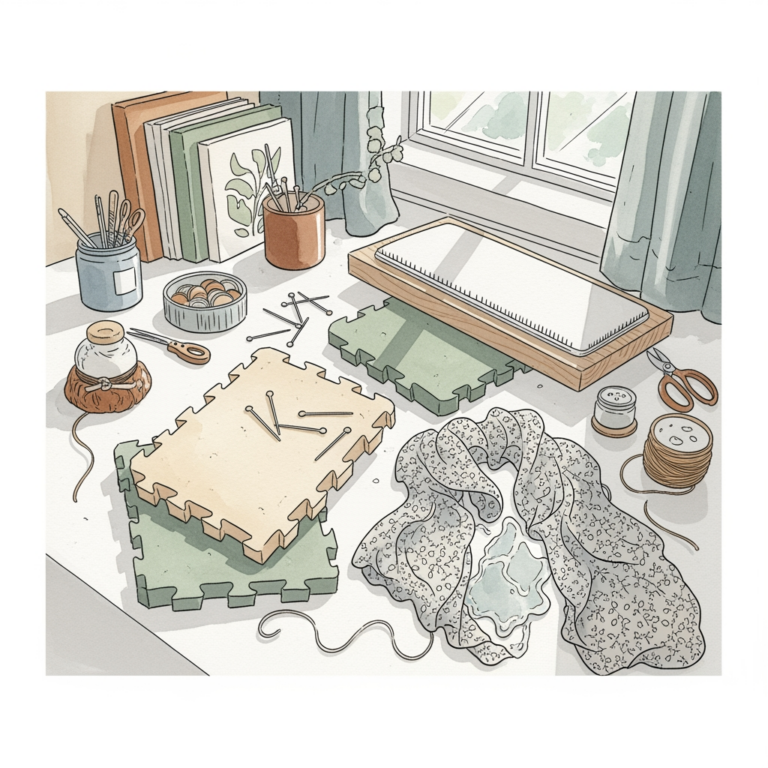
Beyond pins, a few other items will make your blocking life significantly easier. A set of interlocking foam mats is essential for creating a flat, consistent surface that you can pin into repeatedly.
- Blocking wires: These are thin, flexible wires you can thread through the edges of a shawl to create perfectly straight lines.
- Measuring tape: Always verify your dimensions while pinning to ensure your garment matches the schematic.
- Spray bottle: Use this to dampen your knitting if you don’t want to fully soak the item.
Investing in these tools early on will save you from the frustration of uneven edges and misshapen garments. Good blocking is the bridge between a "homemade" look and a professional, store-quality finish.
Mastering the art of blocking is a journey that changes how you view your finished work. By investing in high-quality, rust-proof pins, you protect your precious fiber investments and ensure your hard work shines through. Remember that every project has unique needs, so don’t be afraid to mix and match your tools to achieve the perfect result. Happy blocking, and may your points always be sharp and your edges perfectly straight.