6 Best Craft Knives For Shaping Felt To Try
Master shaping felt with precision. We review the six best craft knives to help you achieve clean, professional cuts for your next textile design project.
Shaping felted wool requires a level of precision that standard fabric shears simply cannot provide. When you are trimming a stiff, dense piece of felted work, you need a tool that slices through the fibers cleanly without dragging or fraying the edges. Choosing the right craft knife transforms a tedious trimming task into a smooth, satisfying step in your finishing process. These six tools are the industry standards for achieving professional results on your fiber art projects.
X-Acto #1 Precision Knife: Best Overall Tool


The X-Acto #1 is the classic choice for a reason, offering a perfect balance of weight and control. Its slim, pen-like barrel allows you to grip it naturally, mimicking the way you hold a knitting needle during intricate colorwork.
This knife excels when you need to trim excess felt from the edges of a bag or a structural piece. Because the blade is easily replaceable, you can always ensure you are working with a razor-sharp edge, which is vital for preventing the "chewing" effect on dense wool.
The trade-off here is the tension required to keep the blade tightened in the collet. If you are doing heavy-duty cutting for hours, the metal handle can feel a bit thin in the hand. For most precision trimming, however, it remains the gold standard.
Fiskars Detail Knife: Best for Ergonomics
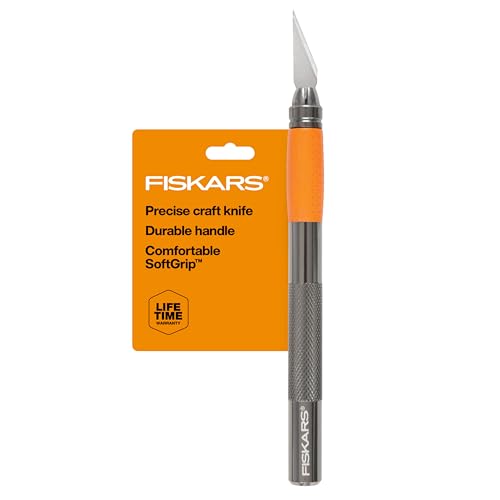
If you have spent years knitting, you know that hand fatigue is the enemy of a long project. The Fiskars Detail Knife features a wider, more ergonomic grip that relieves the strain on your fingers during long sessions of shaping.
The soft-grip handle is particularly helpful if you have arthritis or simply find that thin metal handles cause cramping. It feels much more like a comfortable crochet hook than a surgical tool, making it approachable for those who aren’t used to working with blades.
The only downside is that the ergonomic shape can occasionally obscure your line of sight if you are working on very small, tight curves. It is best suited for larger, sweeping cuts where comfort is more important than microscopic visibility.
Olfa Art Knife: Best for Heavy-Duty Felt

When you are working with thick, multi-layered felt—like the base of a heavy-duty felted slipper—the Olfa Art Knife is your best friend. It features a robust design that can handle the resistance of dense wool without the blade flexing.
Unlike lighter knives, the Olfa maintains stability when you have to apply significant downward pressure. If you are cutting through quarter-inch thick felt, you need that structural integrity to ensure your cut line stays straight.
The handle is slightly bulkier, which might feel less nimble for delicate work. However, when you need to carve through a thick seam or a dense felted edge, the extra power is well worth the trade-off.
Excel Blades K1 Knife: Best for Precision
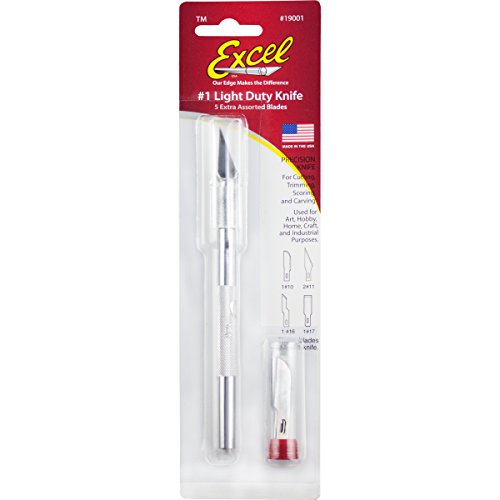
The Excel Blades K1 is remarkably similar to the X-Acto, but it often wins on build quality and blade variety. The knurled grip on the handle provides a secure hold, even if your hands are a bit clammy from working with warm wool.
This tool is exceptionally good at "surgical" cuts, such as removing a small section of felt to accommodate a buttonhole or a strap attachment. Its precision allows you to cut right up to a stitched seam without accidentally slicing your yarn.
Be aware that the blades are quite sharp and relatively brittle. Avoid using this knife for prying or heavy carving, as the tip can snap if you apply side-to-side pressure.
Westcott Carving Knife: Best for Beginners

The Westcott Carving Knife is an excellent entry point for those new to shaping felt. It is affordable, reliable, and features a safety cap that is actually easy to use, which is a major plus for your craft room organization.
The handle is lightweight and balanced, making it very easy to maneuver for someone not used to blade work. It doesn’t have the heavy-duty feel of the Olfa, but it is perfect for trimming edges on felted coasters or decorative appliques.
Because it is lightweight, you may find yourself pressing down too hard to compensate. Remember to let the sharpness of the blade do the work rather than your own muscle strength to keep your lines clean.
Swann-Morton Scalpel: Best for Fine Detail

If you are doing intricate, sculptural work or fine needle-felted details, the Swann-Morton scalpel is the professional’s choice. These blades are incredibly thin and sharp, allowing for cuts so fine they are practically invisible.
These are often used in medical settings, so they are engineered for extreme precision. When you are trimming stray fibers or shaping a tiny felted detail, no other tool provides the same level of control.
The trade-off is that these blades do not retract and are very dangerous if handled carelessly. You must be extremely disciplined about capping the blade immediately after every single cut to keep your workspace safe.
How to Select Blades for Your Felt Projects
Selecting the right blade is just as important as choosing the right knife handle. For felt, you generally want a #11 blade, which has a sharp, pointed tip perfect for starting cuts in the middle of a piece of fabric.
- #11 Blade: Best for general precision and piercing.
- #10 Blade: Better for curved cuts and carving.
- #16 Blade: Useful for scoring or light trimming.
Always consider the density of your felt. If you have used a high-micron wool that has felted into a brick-like consistency, you will need to change your blade more frequently. Dull blades are actually more dangerous because they require more force, which increases the likelihood of slipping.
Essential Safety Tips for Cutting Wet Felt
Cutting felt that has been dampened or is still slightly moist requires extra caution. Wet felt is often denser and can "grab" the blade, causing it to jump or skip, which is a recipe for a sliced finger.
Always cut away from your body, and keep your non-cutting hand well behind the path of the blade. If you are trimming a piece on a table, use a self-healing cutting mat to protect your surface and keep the blade from dulling instantly against a hard table.
Never try to "force" a cut through wet, thick felt. If the knife isn’t gliding through, take several shallow passes rather than one deep, aggressive cut.
Maintaining Your Craft Knife Cutting Edge
Even the best blades will dull after cutting through the natural lanolin and fibers of wool. You will know it is time to change the blade when you see the felt fibers beginning to fray or "fuzz" along the cut line.
Keep a small container specifically for used blades to ensure they don’t end up loose in your project bag. A dull blade is a knitter’s worst enemy because it creates ragged, uneven edges that are nearly impossible to fix once cut.
Consider investing in a blade sharpener if you do a high volume of work, though replacing the blade is almost always more effective. A fresh blade is the cheapest way to improve the quality of your finished fiber art.
Techniques for Precision Felt Shaping Work
To get a professional, clean edge, try using a metal ruler as a guide for straight cuts. Hold the ruler firmly in place with your non-dominant hand and use the knife like a pencil, keeping the blade flush against the metal edge.
For curves, don’t try to turn the knife in the handle. Instead, rotate the piece of felt itself underneath the stationary blade. This keeps your hand in a comfortable, stable position and results in a much smoother, more fluid curve.
Finally, always test your cutting technique on a scrap piece of felt before tackling the actual project. Practice your pressure and speed until you feel confident that you can achieve a clean, single-pass cut.
Shaping your felted projects with a craft knife opens up a world of structural possibilities that simple scissors cannot match. By choosing the right tool for your specific project and keeping your blades sharp, you will elevate the finish of your work to a professional standard. Remember that patience and steady pressure are the keys to success in any fiber shaping endeavor. With these tools in your kit, you are well-equipped to refine your felted creations with confidence and precision.