6 Best Ball Winders For Weaving Prep Worth Owning
Streamline your weaving prep with these six top-rated ball winders. Discover durable, efficient tools designed to keep your yarn organized and tangle-free.
Preparing your yarn properly is the unsung hero of a successful weaving or knitting project. A tangled mess of yarn can turn a relaxing afternoon into a frustrating struggle before you even pick up your shuttle or needles. Investing in a quality ball winder transforms hanks or uneven skeins into neat, center-pull cakes that feed smoothly without snags. These six tools are the industry standards that will save you time and keep your fiber stash organized and ready for action.
Stanwood Needlecraft Large Metal Ball Winder


If you have ever spent an hour untangling a massive hank of hand-dyed wool, you know exactly why the Stanwood Metal Ball Winder is a game-changer. Unlike plastic alternatives, this model features metal gears that provide the durability required for heavy, frequent use. It is a workhorse designed for those who buy yarn in bulk and need a reliable, long-term solution.
The weight and sturdiness of the metal construction prevent the winder from "walking" across your table during operation. This stability is crucial when winding heavier, high-ply yarns that exert more tension on the mechanism. It handles large yardage with ease, making it a favorite for weavers who process multiple skeins for a single warp.
However, keep in mind that metal gears require periodic lubrication to maintain a smooth rotation. If you hear a grinding noise, a drop of sewing machine oil is usually all it takes to restore peak performance. For the dedicated fiber artist, this is the most reliable long-term investment in your studio.
Knit Picks Yarn Ball Winder: Best for Beginners
When you are just starting your journey into winding your own yarn, you don’t need a complex industrial machine. The Knit Picks winder is the quintessential entry-level tool because it is intuitive, lightweight, and incredibly easy to set up. It is designed to handle standard-weight yarns—like your typical worsted or DK wool—without any fuss.
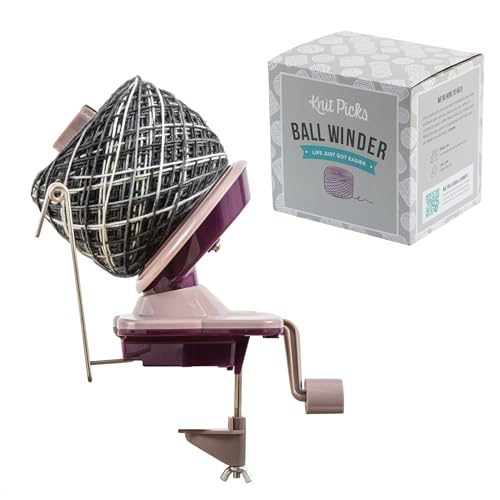
This winder is perfect for the knitter who occasionally treats themselves to a hand-dyed hank but doesn’t process massive quantities daily. Its compact footprint means it stores easily in a project bag or a small drawer. It is a no-nonsense tool that gets the job done without requiring a master’s degree in mechanics.
Be aware that because it is primarily plastic, it isn’t meant for heavy-duty, continuous industrial use. If you try to force a thick, bulky-weight yarn through the guide, you might stress the plastic gears. Treat it gently with light to medium-weight fibers, and it will serve you faithfully for years.
Lacis Jumbo Ball Winder for Bulky Yarn Projects

Weavers and knitters working with bulky, roving-style, or art yarns often find that standard winders are simply too small. The Lacis Jumbo Ball Winder is specifically engineered to accommodate these larger volumes of fiber. Its wider spindle creates a larger core, which prevents the yarn from becoming overly compressed and losing its loft.
The benefit of maintaining loft is significant; when you compress delicate wool too tightly, you risk stretching the fibers and altering your gauge. This winder allows you to create generous cakes that feed out effortlessly. It is an essential tool for anyone working on chunky blankets or heavy-duty tapestry weaving projects.
Because of its size, this winder requires a bit more table space and a sturdy surface to clamp onto. It is not the most portable option, but for the weaver who needs to process large skeins of heavy yarn, the capacity is unmatched. It is the definition of function over form.
Nancy’s Knit Knacks Heavy Duty Ball Winder

Nancy’s Knit Knacks has long been a trusted name for serious fiber artists who demand precision. Their heavy-duty winder is built for those who find themselves winding yarn multiple times a week. It features a robust design that minimizes the vibration often felt with cheaper models, resulting in a perfectly even, professional-looking cake.
The standout feature here is the precision engineering of the yarn guide and the spindle. It produces a cake with consistent tension, which is vital when you are measuring yarn for a warp. Even tension prevents the "looping" or "tangling" that can occur when yarn is wound too loosely or too tightly.
While this winder comes at a higher price point, the consistency it provides is worth the investment for a professional or serious hobbyist. It bridges the gap between hobby tools and commercial equipment. If you value efficiency and perfect results, this is a top-tier choice.
U-nitt High Capacity Yarn Winder for Weavers

Weaving requires a high volume of yarn, often processed in long, continuous lengths. The U-nitt High Capacity winder is designed to handle this specific demand, allowing you to wind large amounts of yarn without needing to stop and restart constantly. It is a robust, high-capacity tool that stands up well to the rigors of a busy studio.
The design focuses on stability and speed, which are essential when you have a large stash to prepare for a loom. It is particularly effective for winding smooth, slippery fibers like cotton or bamboo, which can be notoriously difficult to keep in place on smaller winders. The tension control is excellent, keeping your yarn secure throughout the process.
For the weaver, this tool is less about convenience and more about productivity. When you are preparing a warp, you want the process to be as fast and accurate as possible. This winder provides that reliability, ensuring your yarn is ready to be measured and beamed.
ChiaoGoo Hand-Operated Yarn Winder Review
Sometimes, you want a simple, portable, and quiet solution that doesn’t rely on complex plastic gears. The ChiaoGoo hand-operated winder is a classic choice that offers a tactile experience many knitters prefer. It is small, lightweight, and perfect for taking to knitting groups or travel.
Because you are the one providing the power, you have complete control over the speed and tension of the winding. This is particularly helpful when working with fragile, hand-spun, or delicate lace-weight yarns that might snap under the force of an automatic winder. You can feel the yarn as it moves, allowing you to catch any knots or imperfections immediately.
While it isn’t meant for winding massive quantities of heavy yarn, it is a master of control and portability. It is an ideal companion for the knitter who values a hands-on approach. It is a simple tool that does exactly what it promises without unnecessary complexity.
Factors to Consider When Buying a Yarn Winder
Choosing the right winder depends heavily on your specific fiber habits. Start by asking yourself what kind of yarn you use most often. If you exclusively work with fine lace-weight mohair, you need a winder with precise, gentle tension control. If you are a weaver working with thick wool, capacity and gear strength become your primary concerns.
Consider the following factors before making your purchase:
- Material: Metal gears offer longevity; plastic is lighter and more affordable.
- Capacity: Ensure the spindle can handle the yardage of your largest skeins.
- Clamping Mechanism: Make sure it fits the thickness of the tables in your workspace.
- Portability: Do you need to store it away, or will it have a permanent home on your desk?
Don’t be swayed by the "cheapest" option if you plan on winding yarn regularly. A winder that breaks or struggles with tension will end up costing you more in frustration and ruined yarn. Look for a balance between your budget and your long-term volume needs.
Why Weavers Need Center-Pull Yarn Cakes Daily

For a weaver, a center-pull cake is not just a convenience; it is a necessity for maintaining a smooth workflow. When you pull from the center, the cake remains stationary on your table or in a yarn bowl. This prevents the yarn from rolling across the floor, picking up dust, or getting tangled with other supplies.
More importantly, center-pull cakes provide a consistent feed rate, which is critical when measuring warp threads. If your yarn is pulling from the outside of a ball, the tension changes as the ball gets smaller, which can lead to uneven warp lengths. A center-pull setup ensures that the tension remains uniform from the first yard to the last.
Essentially, a center-pull cake acts as a built-in tension regulator. It keeps your workspace tidy and your yarn clean, allowing you to focus entirely on the rhythm of your weaving. Once you switch to center-pull cakes, you will never want to go back to dealing with loose, rolling balls.
Proper Maintenance Tips for Your Ball Winder
A ball winder is a mechanical device, and like any tool, it requires regular care to function correctly. The most important step is to keep the gears clean and free of yarn debris. Small fibers can easily get caught in the rotating parts, causing friction and eventually stalling the mechanism.
Every few months, take a soft brush to the gears to remove any dust or stray fibers. If your winder has metal gears, apply a very small amount of silicone-based lubricant to the moving parts. Do not over-oil, as excess lubricant can attract dust and eventually gum up the gears.
Finally, always store your winder in a clean, dry place. If it is a clamp-on model, ensure the clamp is not left tightened when not in use, as this can fatigue the plastic or metal over time. Taking five minutes to clean your tool after a large winding session will extend its life by years.
Troubleshooting Common Yarn Winding Problems
Even the best winders can occasionally act up. If you notice your yarn is winding into a "cone" shape rather than a flat-topped cake, the tension is likely too high or the yarn is being fed at an incorrect angle. Try moving your yarn swift further away from the winder to create a smoother, more gradual angle of entry.
If the winder is making a clicking sound or feels "stuck," check for yarn caught in the base of the spindle. It is surprisingly common for a single strand to wrap around the shaft, creating enough friction to stop the rotation. Remove the spindle, clear the debris, and ensure the gears are aligned.
If you are winding very slick yarn, like silk or mercerized cotton, it may slide off the cake. You can solve this by placing a small piece of tissue paper or a light fabric sleeve over the spindle before you start winding. This provides just enough grip to keep the yarn in place until the cake is large enough to hold its own shape.
Selecting the right ball winder is a personal decision that should reflect the reality of your fiber stash and your specific project needs. Whether you choose the industrial strength of a metal-geared winder or the simple control of a hand-operated model, the goal remains the same: creating a stress-free experience for your hands and your yarn. Take your time, assess your typical yarn weight, and choose a tool that will grow with your skills. Happy winding, and may your yarn always feed smoothly into your next masterpiece.