6 Best Swifts For Hanks Of Yarn Worth Owning
Discover the top six swifts for winding yarn. This guide evaluates stability, material, and ease of use to help you find the best tool for your fiber stash.
There is nothing more heartbreaking for a knitter than watching a beautiful, hand-dyed hank of luxury wool collapse into a chaotic, tangled "yarn barf" during the winding process. A reliable yarn swift is the silent partner in every successful project, transforming unruly hanks into neat, tension-controlled cakes ready for your needles. Choosing the right tool depends on your space, your budget, and how often you find yourself falling for those gorgeous, un-wound hanks at the local yarn shop. Here are the six best swifts on the market to help you keep your stash organized and your sanity intact.
Stanwood Needlecraft Wooden Umbrella Swift


The Stanwood Umbrella Swift is widely considered the gold standard for serious hobbyists who want a tool that lasts a lifetime. Its heavy-duty construction and smooth, ball-bearing operation ensure that your yarn flows off the swift without any jerky resistance.
When you are working with delicate, high-twist merino or hand-dyed silk blends, consistency is everything. If the swift catches or drags, you risk stretching the yarn, which can lead to uneven gauge in your finished fabric.
The beauty of this model lies in its sturdy metal clamp, which grips tables firmly without wobbling. It is a workhorse that handles everything from heavy worsted wool to fragile lace-weight cobwebs with equal grace.
Amish Style Wooden Tabletop Yarn Swift
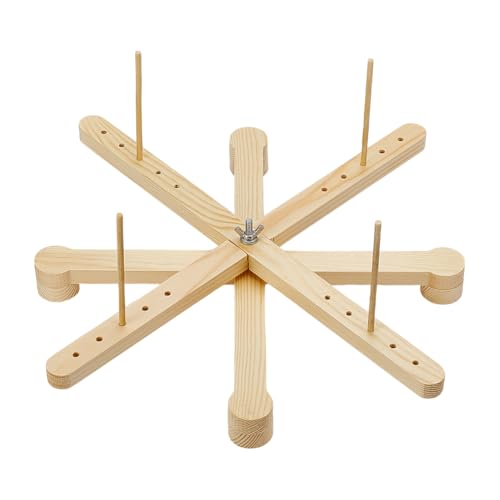
If you lack a permanent place to clamp a swift, the Amish style is your best friend. This design sits directly on your table and relies on a rotating wooden cross-arm assembly rather than a vertical umbrella mechanism.
Because it doesn’t require a clamp, it is incredibly easy to set up on any flat surface, including coffee tables or cramped dining areas. It is also remarkably quiet, making it the perfect choice if you like to wind your yarn while the rest of the house is sleeping.
However, keep in mind that these swifts have a fixed diameter range. If you frequently purchase massive, oversized hanks of hand-spun yarn, you might find the arms a bit restrictive compared to an umbrella style.
Lacis Wooden Umbrella Swift for Yarn
Lacis has a reputation for precision, and their wooden umbrella swift is no exception. It is designed for the knitter who appreciates fine craftsmanship and wants a tool that functions as beautifully as it looks in a craft room.
The wood is polished to a high sheen, ensuring that even the most "grabby" fibers, like mohair or un-superwash wool, glide off the arms without snagging. This is crucial when dealing with fuzzy fibers that tend to hook onto rough surfaces.
While it carries a premium price tag, the durability of the hardwood construction means it won’t warp over time. It is a long-term investment for the knitter who views their tools as an extension of their craft.
KnitPicks Yarn Swift: The Budget Choice
The KnitPicks umbrella swift is the quintessential "first swift" for many knitters. It provides the essential umbrella functionality at a price point that leaves more room in your budget for actual yarn.
It is lightweight and portable, making it easy to tuck away into a closet when you aren’t winding. For those who only wind yarn occasionally, this model is more than sufficient to get the job done without unnecessary bells and whistles.
The trade-off is in the materials; the plastic components are functional but won’t stand up to heavy, daily industrial-style use. If you are a prolific knitter who winds multiple hanks every single day, you might eventually want to upgrade to a metal or hardwood model.
Ashford Wooden Umbrella Yarn Swift

Ashford is a trusted name in the spinning and weaving world, and their yarn swift reflects that heritage. This is a sturdy, well-engineered tool that handles the weight of heavy, hand-spun skeins with impressive stability.
The umbrella mechanism is particularly smooth, allowing for a wide range of adjustment to accommodate different skein sizes. If you are a spinner who regularly deals with varying skein lengths, this adjustability is a significant advantage.
It is built to withstand the rigors of a busy studio environment. If you want a swift that feels solid under your hands and won’t buckle under the tension of a heavy alpaca blend, this is a top-tier contender.
Strauch Ball Winder and Swift Combo Kit

For the knitter who wants to streamline their workflow, the Strauch combo is the ultimate efficiency upgrade. By pairing a high-capacity ball winder with a perfectly matched swift, you eliminate the guesswork of finding compatible tools.
These systems are designed for high-volume winding. If you are preparing yarn for a large-scale project, like a king-sized blanket or a collection of sweaters for the whole family, this setup will save you hours of labor.
The investment is substantial, but the time saved is invaluable for the professional or dedicated hobbyist. It turns a chore into a seamless, satisfying experience where you can go from hank to cake in under a minute.
Umbrella vs. Amish Style: Choosing Your Swift
Umbrella swifts are superior for versatility and speed. They can expand to fit almost any hank size and are generally easier to collapse for storage, making them ideal for knitters with limited space.
Amish style swifts are better for stability and simplicity. Because they don’t require clamping, they won’t damage your furniture, and they are generally more durable because they have fewer moving parts to break or wear out.
Consider your primary workspace when deciding. If you have a dedicated craft table with a sturdy edge, go with an umbrella style; if you prefer to wind while sitting on the couch, the Amish style is the more practical choice.
How to Properly Mount Your Yarn Swift
Always ensure your swift is positioned at a height that allows the yarn to flow freely toward your ball winder or your hands. If the swift is too low, the yarn will drag against the table, causing uneven tension in your cake.
When using a clamped swift, double-check that the clamp is tightened securely but not so hard that it cracks your table finish. A piece of felt or a silicone coaster between the clamp and the table can protect your furniture while providing extra grip.
Before you start winding, give the swift a gentle spin to ensure it rotates freely. If it feels sluggish, check for any stray fibers or dust bunnies caught in the central bearing or the umbrella joints.
Preventing Tangles When Winding Your Hanks
The secret to a tangle-free experience is to remove the ties from the hank after it is already on the swift. Keep the ties loose so you don’t accidentally pull the yarn out of its original circular alignment.
Always start by winding slowly, especially if you are using a hand-cranked ball winder. If you go too fast, the yarn can jump off the swift arms, creating a "bird’s nest" that can take an hour to untangle.
If you are winding by hand, maintain a consistent, gentle tension. Avoid pulling tight, as this can stretch the yarn, particularly with elastic fibers like wool, which can affect your final gauge and drape.
Essential Maintenance for Your Yarn Swift
Wooden swifts benefit from an occasional light rub with a bit of beeswax or furniture polish to keep the arms moving smoothly. This prevents the wood from drying out and ensures that delicate fibers don’t snag on microscopic splinters.
For umbrella swifts, keep an eye on the screws and hinges. A drop of sewing machine oil on the main rotating point once a year can work wonders for keeping the action silent and fluid.
Finally, always store your swift in a dry, temperature-controlled environment. Wood is a natural material that can warp or crack if exposed to extreme humidity or heat, so keep it away from radiators or damp basements.
Investing in a quality yarn swift is one of the most practical decisions you can make to protect your fiber stash and improve your knitting workflow. Whether you choose the portable convenience of an Amish style or the high-performance mechanics of an umbrella model, the right tool will make every project start on the right foot. Take the time to maintain your equipment, and it will serve you faithfully for decades of beautiful stitches. Happy winding, and may your yarn always flow smoothly from the swift to your needles.