6 Best Felt Wool Balls For Jewelry Making To Try
Discover the 6 best felt wool balls for jewelry making. Our guide evaluates texture, color variety, and durability to help you craft professional-grade pieces.
Adding tactile, soft elements to your fiber projects can elevate a simple accessory into a true statement piece. Felted wool balls offer a lightweight, colorful, and durable medium that pairs beautifully with hand-knitted or crocheted items. Whether you are creating a chunky necklace or embellishing a cozy winter scarf, choosing the right wool is the foundation of a successful design. Here are the top options to help you achieve a professional finish.
Felted Wool Balls by Benzie Design: Best Overall


Benzie Design has become a staple for fiber artists because their wool consistently hits that "Goldilocks" zone of density. If you’ve ever tried to string a bead only to have your needle pull straight through a loose, airy center, you know how frustrating that can be.
These balls are firm enough to hold their shape under the weight of a long necklace but soft enough to pierce easily with a tapestry needle. The felt is dense, meaning the fibers don’t fray or pill after being handled.
For a knitter working with delicate lace-weight yarn or heavy wool roving, these are a reliable choice. They provide a structural anchor that won’t distort your tension when incorporated into a piece.
Wooly Felted Wonders Solid Felt Balls: Best Value

When you are planning a massive project—like a long, multi-strand garland or a set of matching jewelry for a guild—cost becomes a significant factor. Wooly Felted Wonders provides a high-quality product that doesn’t break the bank.
You might worry that "value" implies a sacrifice in quality, but these balls are surprisingly uniform in size and color. They lack the slight variations found in artisan-dyed batches, which is actually a benefit when you need perfect symmetry across a project.
If you are a beginner practicing your stringing techniques, start here. You can experiment with different patterns and layouts without feeling the pressure of using expensive, boutique materials.
Papermoon Felted Wool Balls: Best Color Selection

Color theory is just as important in jewelry making as it is in stranded colorwork. Papermoon offers a palette that feels curated for artists, featuring nuanced shades rather than just basic primary colors.
If you are trying to match a specific hand-dyed yarn colorway, this is your best bet. Their range includes subtle heathered tones and deep, saturated hues that can act as the perfect accent to your knitting.
Be aware that these are often handmade, which means you might find slight deviations in diameter. Embrace these tiny imperfections; they add a human touch to your finished accessory, much like the subtle variations in a hand-spun yarn.
Crafting Happiness Wool Felt Balls: Best for Kids
If you are teaching a younger maker the basics of jewelry design, safety and ease of use are paramount. These felt balls are soft, lightweight, and very forgiving for small hands to manipulate.
The fibers are slightly less compressed than professional-grade felts, which makes them much easier to thread. A child won’t struggle with the physical resistance of a dense wool core, keeping the experience fun rather than frustrating.
Because they are so gentle, they also work well for projects meant for babies or toddlers. You can create soft, tactile sensory necklaces that are safe for little ones to tug on.
Dharma Trading Co. Felted Wool Balls: Best Quality
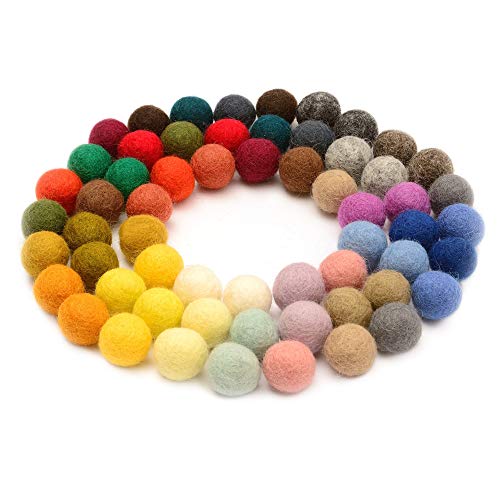
Dharma Trading Co. is a legendary resource for fiber artists, and their wool balls reflect their commitment to natural materials. These are typically made from high-quality sheep’s wool that feels substantial and premium in the hand.
The density here is exceptional, which is critical if you are planning to use these in high-wear jewelry. They won’t lose their shape or develop that "fuzzy" look over time, even with frequent daily use.
When you invest in these, you are paying for longevity. They are the perfect choice for a piece you intend to keep for years, much like a well-crafted heirloom sweater.
Felted Wool Beads by The Felt Store: Best Variety
Sometimes a design calls for more than just a standard sphere. The Felt Store offers an impressive array of shapes and sizes that can add depth to your jewelry designs.
Mixing shapes—like combining spheres with cubes or flat discs—creates visual interest that mimics the texture play in mixed-media knitting. It’s a great way to break up the monotony of a long string of beads.
If you are feeling adventurous, try pairing these with your own knitted beads or pom-poms. The contrast between the dense felt and your own soft, knitted textures will make your work stand out.
How to Choose Felt Balls for Jewelry Projects
Start by considering the weight of your finished piece. Denser, firmer balls are better for necklaces that need to drape properly, while lighter, softer ones are better for earrings or delicate hair accessories.
Look at the surface texture of the wool. A smooth, tightly felted ball will look more polished and modern, while a slightly "fuzzier" ball creates a rustic, cozy aesthetic that pairs well with chunky garter stitch.
Always check the consistency of the sizing. If you are stringing them in a row, a 2mm difference in size can make the entire piece look lopsided.
Essential Tools for Designing Felted Wool Jewelry
You don’t need a massive workshop to get started, but a few specific tools make a world of difference. A long, sharp tapestry needle is non-negotiable for piercing through the center of the felt.
Consider using a sturdy cord rather than thin thread. Waxed cotton or a fine, durable nylon cord will prevent the beads from sliding around and keep your knots secure.
Keep a pair of sharp embroidery scissors handy for trimming ends. If you are using wool yarn to string your beads, a needle threader will save you from unnecessary eye strain.

Techniques for Stringing Felted Wool Beads Securely
When stringing, always pass the needle through the center of the ball to ensure it hangs straight. If you find the ball is too dense, a tiny dab of soap on the needle tip can act as a lubricant.
To prevent the beads from bunching up, try tying a small knot between each one. This creates a professional, high-end look and keeps the weight distributed evenly across the cord.
If you are using a stretchy cord, be mindful of the weight. Even light wool can stretch out elastic over time, so ensure your knots are reinforced with a drop of fabric glue.
Caring for Your Felted Wool Jewelry Creations
Felted wool is a natural fiber, so treat it with the same care you would a fine wool sweater. Avoid getting the jewelry wet, as moisture can cause the wool to shrink or lose its shape.
If the beads start to look a little fuzzy from friction, you can gently trim the loose fibers with small scissors. Never pull at the fuzz, as this will only loosen more fibers and compromise the structure.
When you aren’t wearing your jewelry, store it flat or hang it in a way that doesn’t stretch the cord. A little bit of gentle maintenance will keep your handmade pieces looking fresh for years to come.
Working with felted wool balls is a delightful way to expand your creative repertoire beyond traditional knitting. By choosing high-quality materials and using the right stringing techniques, you can produce jewelry that is as durable as it is beautiful. Remember to experiment with textures and colors to find the style that best complements your handmade wardrobe. Happy crafting, and enjoy the process of bringing your unique visions to life.