7 Best Felt Needles For Needle Felting Worth Using
Discover the top 7 needle felting tools to elevate your craft. We analyze essential needle types to help you achieve precision and efficiency in every project.
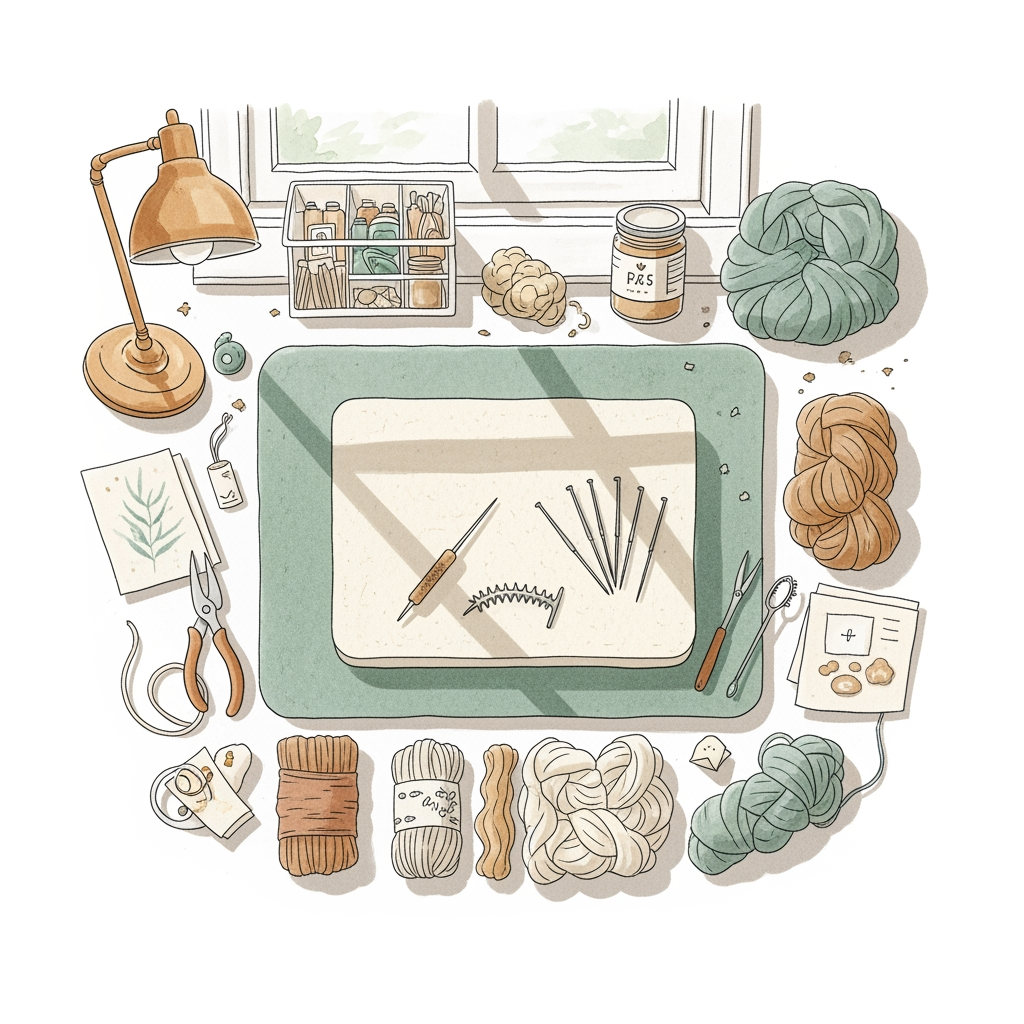
Needle felting is the quiet, meditative cousin to knitting, turning loose wool roving into solid, sculptural art through the mechanical action of barbed needles. Just as you wouldn’t use a size 10 needle for a delicate lace shawl, choosing the right felting needle is the difference between a smooth finish and a broken tool. Over my two decades in the fiber arts, I’ve learned that the quality of your steel dictates the flow of your work. Here are my top picks to help you master your craft with precision and ease.
Clover Pen Style Needle Felting Tool: Best Overall


If you’ve ever felt like your hand was cramping after an hour of intensive sculpting, the Clover Pen Style tool is a revelation. Its ergonomic, pen-like grip mimics the motion of holding a crochet hook or a pencil, making it perfect for long sessions of adding dimension to wool projects.
The real beauty here is the three-needle configuration, which speeds up the felting process significantly compared to a single needle. It is an excellent choice for beginners who want to avoid the "poking fatigue" that often discourages newcomers from finishing their first project.
However, keep in mind that the needles are fixed in a specific pattern, which can be limiting for very fine, intricate work. Use this for building up the core of your sculptures or covering large surface areas, and switch to a single needle for the final details.
Hamanaka Felt Wool Needle Regular: Best for Detail

When it comes to fine-tuning the facial features of a needle-felted animal or smoothing out a surface, Hamanaka needles are the gold standard. These Japanese needles are exceptionally sharp and possess a refined barb structure that catches fibers without leaving large, unsightly holes.
They are incredibly responsive, allowing you to feel exactly how the wool is compacting beneath your hand. I often recommend these to knitters who are used to the precision of working with fine-gauge needles on stranded colorwork; you’ll appreciate the control they offer.
Because they are so fine, they are more prone to snapping if you apply too much lateral pressure. Treat these like your delicate bamboo DPNs—use a light touch, go at an angle, and let the barbs do the work rather than forcing the needle deep into the core.
Ashford Felting Needles Assorted: Best for Beginners

Ashford is a name synonymous with quality in the spinning and weaving world, and their felting needles are just as reliable. This assorted pack is the perfect "starter kit" for someone who isn’t yet sure what gauge they prefer for their specific fiber types.
You get a variety of gauges, which allows you to experiment with how different needles interact with coarse wool versus fine Merino. It’s a low-risk investment that teaches you the mechanics of the craft through hands-on experience.
I suggest labeling your needles as soon as you open the pack, as it’s easy to mix up the gauges once they are out of the original packaging. Use the coarser needles for your initial shaping and the finer ones for surface finishing to avoid a "pitted" look on your final piece.
Groz-Beckert Felting Needles: Best Professional Pick

Groz-Beckert is the industrial powerhouse of the felting world, and their needles are engineered for consistency and longevity. If you are producing pieces to sell or working on large-scale installations, these needles provide the reliable performance you need to maintain a consistent gauge.
These needles are designed for heavy-duty, repetitive use and are less likely to bend out of shape during vigorous felting. They are the "stainless steel circulars" of the felting world—sturdy, dependable, and built to withstand hours of intensive labor.
You will likely need to source these from specialized fiber supply shops, as they aren’t always found in big-box craft stores. They are an investment in your process, rewarding those who are committed to the medium with a superior, snag-free experience.
Schmetz Felting Needle Set: Best for Durability
Schmetz is legendary for their sewing machine needles, and that engineering expertise translates perfectly into their felting line. Their needles are known for a high-quality steel alloy that resists snapping, even when working with tougher, coarser wools.
If you are the type of crafter who tends to break needles frequently, this set is your best insurance policy. They hold their sharpness incredibly well, meaning you won’t have to replace them as often as cheaper, generic alternatives.
Remember that even the most durable needle will break if it hits a hard surface or is bent at an extreme angle. Maintain a consistent, vertical stabbing motion to ensure you get the full life out of these high-performance tools.
Bear Creek Felting Needles: Best for Sculpting
Bear Creek needles are a favorite among those who focus on 3D sculpting and character work. They are designed to move wool quickly and efficiently, which is vital when you are trying to build up structure and volume in a short amount of time.
They have a unique way of "grabbing" the fibers, which helps in creating tight, dense shapes that hold their form. If you are used to knitting with grippy wools that require a specific tension, you will find the tactile feedback of these needles very intuitive.
These are excellent for shaping extremities like ears, paws, or noses where precision and speed are both required. They strike a great balance between the aggressive "felting" needles and the fine "finishing" needles.
Dimensions Needle Felting Tool: Best Value Choice

If you are just dipping your toes into the hobby and don’t want to spend a fortune, the Dimensions tool is a solid, entry-level option. It is widely available and provides a comfortable handle that makes the learning curve much less intimidating.
It is a great way to understand the basics of fiber interlocking without overthinking the technical specs of different needle gauges. Think of this as your "starter set" of aluminum needles—perfectly functional, easy to find, and great for learning the ropes.
Once you’ve mastered the basics, you may find yourself wanting to upgrade to more specialized needles for finer detail. However, for a beginner’s first project, this tool is more than capable of delivering a professional-looking result.
Understanding Felting Needle Gauges and Barbs

Felting needles are categorized by their gauge—the higher the number, the thinner the needle. A 36-gauge needle is thicker and more aggressive, ideal for core work, while a 42-gauge needle is very fine, meant for delicate surface work or attaching tiny details.
The barbs are the tiny notches cut into the needle that push the fiber into the wool core. Different needles have different barb configurations, which determine how fast they felt and how much they "disturb" the surface of your project.
- Coarse (32-36 gauge): Best for core building and heavy-duty wools.
- Medium (38-40 gauge): The "all-purpose" needles for most projects.
- Fine (42+ gauge): Essential for final smoothing and adding fine details.
How to Select the Right Needle for Your Project
Selecting the right needle is much like choosing the right yarn weight for a pattern. If you are working with a coarse, rustic wool, you need a thicker needle to penetrate the dense fibers effectively.
Conversely, if you are working with fine Merino or Angora, a thick needle will leave large, visible holes in your work. Always start with a medium gauge and test a small scrap of your fiber to see how the needle interacts with the material.
If you find the wool isn’t compacting, your needle may be too fine; if you see large holes forming, your needle is likely too coarse. Trust your hands—if the needle feels like it’s struggling to enter the wool, it’s time to switch to a slightly coarser gauge.
Essential Tips for Maintaining Felting Needles
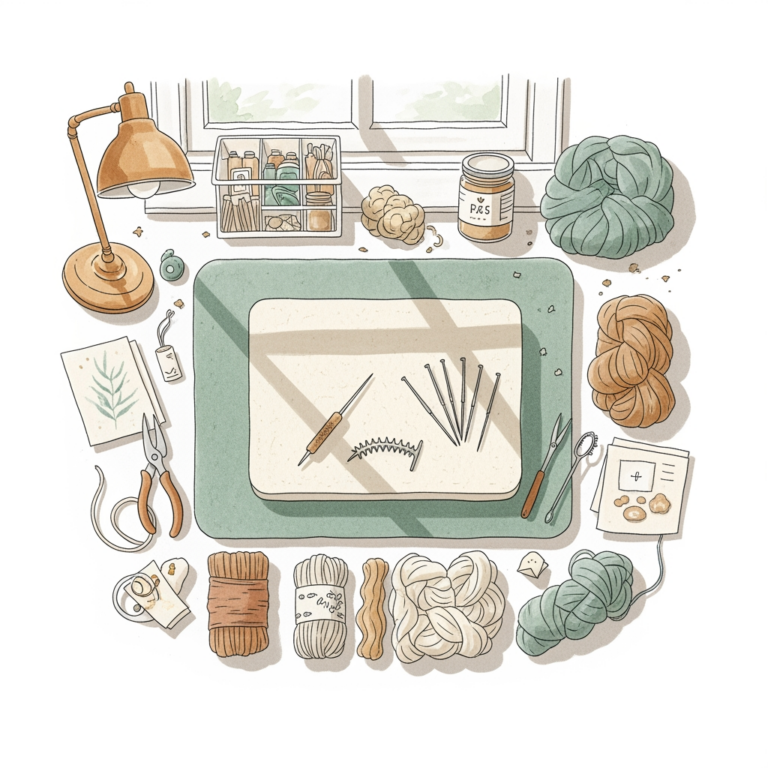
Felting needles are essentially precision tools, and they require care to stay effective. Always work on a dedicated foam or brush mat; stabbing directly into a hard table will dull your barbs and snap the tips instantly.
Keep your needles clean and free of rust by wiping them down with a soft cloth after use. If you live in a humid environment, consider storing them in a container with a small desiccant packet to prevent oxidation, just as you would protect your high-end knitting needles.
Finally, know when to retire a needle. If you notice it’s dragging, snagging, or requires more force than usual to enter the wool, the barbs are likely worn out or the tip is bent. Don’t force it; a fresh needle will make your work feel effortless again.
Needle felting is a tactile journey that rewards patience and the right equipment. By understanding the relationship between needle gauge, fiber type, and your own hand tension, you can elevate your projects from simple shapes to intricate works of art. Treat your tools with respect, experiment with different gauges, and most importantly, enjoy the process of watching your fibers transform. Happy felting!