6 Best Snap Pliers For Easy Hardware Installation
Upgrade your DIY projects with our top 6 snap pliers. This guide compares the best tools for easy, professional-grade hardware installation and durability.
Adding hardware to your hand-knitted garments is the final step that transforms a simple project into a professional, functional piece. Whether you are finishing a sturdy wool cardigan or a delicate baby onesie, the right snap pliers ensure your hard work stays secure. Choosing the wrong tool can lead to crushed snaps or damaged fabric, which is heartbreaking after hours of careful stitching. This guide breaks down the best options to help you finalize your projects with confidence.
KAM Professional Snap Pliers: Best Overall Choice


When you reach the point of adding closures to a project, you want consistency. The KAM Professional pliers are the industry standard for a reason, offering a reliable, mechanical feel that mimics the precision of professional garment manufacturing.
These pliers are incredibly versatile, handling various sizes of plastic snaps with ease. For knitters who frequently work with baby items or heavy-duty cardigans, the ability to switch between die sets is a major advantage.
The trade-off is the initial learning curve, as the pressure required to set the snap correctly takes a little practice. Once you find the "sweet spot" for your specific yarn weight and fabric thickness, these become an extension of your hands.
Prym Vario Pliers: Best for Versatile Projects
If your knitting repertoire spans from fine lace-weight shawls to chunky-knit outerwear, you need a tool that adapts. The Prym Vario pliers are essentially a multi-tool for the fiber artist, designed to work with a wide range of Prym-brand fasteners.
These pliers are particularly useful because they come with interchangeable tools for eyelets, rivets, and snaps. They feel ergonomic in the hand, which is a blessing if you are installing a dozen snaps on a long row of button bands.
Keep in mind that these are optimized for the Prym ecosystem. While they are stellar for their intended hardware, they may not play nicely with generic or off-brand snaps you find in discount bins.
Goldstar Heavy Duty Pliers: Best for Durability

There is nothing more frustrating than a tool that flexes or feels flimsy when you are trying to set a snap on a dense, wool-blend fabric. The Goldstar pliers are built like a tank, providing the structural integrity needed for thicker, more demanding materials.
These are ideal for the knitter who makes heavy coats or bags that require a firm, permanent closure. The leverage provided by the long handles makes it significantly easier to compress the snap prongs through multiple layers of yarn.
Because they are heavy-duty, they can be overkill for very delicate, lightweight projects. Use these when your fabric has significant "heft" and you need a snap that absolutely will not budge.
T3 Snap Fastener Pliers: Best for Beginners
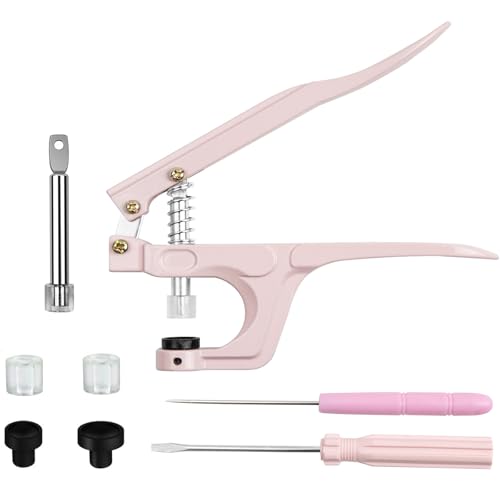
If you are just starting to experiment with adding hardware to your knits, the T3 pliers are a gentle introduction. They are lightweight, intuitive, and designed to remove the guesswork from the installation process.
The main benefit here is the simplicity of the mechanism. You don’t need a degree in engineering to align the dies, which prevents the common disaster of a misaligned or lopsided snap on your finished sweater.
They are perfect for the occasional project where you don’t want to invest in a professional-grade kit. Just be aware that they are best suited for standard plastic snaps rather than heavy-duty metal hardware.
Dritz Home Snap Pliers: Best for Upholstery Use

While labeled for home decor, these pliers are a secret weapon for knitters working with heavy, felted wool or thick, structured knits. When you are creating a home-goods project like a cushion cover, you need a tool that can pierce through dense fibers.
These pliers provide a clean, professional finish that holds up to daily wear and tear. They are designed for reliability, ensuring that the snap backing sits flush against the fabric without snagging your yarn.
They are less portable than other options, but for a dedicated studio space, they are unmatched. If you find your standard snap pliers struggle to penetrate your thickest felted projects, this is your solution.
I-Beautee Hand Press Tool: Best for Precision

Precision is everything when you are working with fine-gauge knitwear. The I-Beautee hand press offers a level of control that handheld pliers sometimes lack, allowing for a steady, vertical application of pressure.
This tool is excellent for ensuring that the snap is perfectly centered on your button band. It is a favorite among knitters who are meticulous about the "finish" of their garments and want a factory-quality look.
The trade-off is that it occupies more space on your craft table than a pair of pliers. However, the accuracy it provides is worth the footprint if you value a pristine, professional aesthetic.
Key Features to Consider Before Buying Snap Pliers
Before you commit to a tool, consider the weight of your yarn and the frequency of your projects. A tool that works for a fingering-weight baby hat will likely fail on a bulky-weight coat.
- Interchangeability: Check if the pliers accept different die sizes for various snap diameters.
- Handle Ergonomics: You want a grip that won’t strain your hands, especially if you have arthritis or work on large batches of items.
- Material Compatibility: Ensure the tool is rated for the specific snap material (plastic vs. metal) you intend to use.
- Leverage: Look for longer handles if you plan on working with thick, multi-layered fabric.
Essential Tips for Perfect Snap Installation
Always test your setup on a scrap piece of the same yarn and fabric combination before touching your finished garment. A quick "practice snap" on a swatch can save you from ruining hours of work.
Use a small amount of fray check or a tiny dab of clear nail polish on the fabric where the snap will be placed if your yarn is prone to splitting. This reinforces the area and prevents the snap from pulling through the stitches over time.
Always ensure the snap prongs go through the fabric cleanly. If you feel resistance, don’t force it; re-position the tool to avoid bending the metal or cracking the plastic.
Common Mistakes to Avoid When Attaching Snaps
The most common mistake is failing to properly interface the fabric. Even the best snap pliers cannot compensate for a weak foundation; always use a small square of iron-on interfacing behind the snap location to add stability.
Another error is using the wrong die for the snap size. Even a millimeter of difference can cause the snap to be loose or fail to close entirely.
Finally, avoid rushing the process. Take the time to measure your spacing carefully; nothing ruins a beautiful cardigan faster than a row of crooked snaps.
Frequently Asked Questions About Snap Hardware
Can I use these pliers on hand-dyed wool? Yes, but be cautious with delicate fibers. Always use an interfacing patch to distribute the tension so the metal prongs don’t cut the yarn fibers.
Do I need different pliers for plastic and metal snaps? Often, yes. Most pliers are optimized for one or the other, so check the manufacturer’s specifications before assuming universal compatibility.
How do I remove a snap if I make a mistake? It is difficult, but you can usually pry the back of the snap off with a small screwdriver or wire cutters. Be prepared that the fabric underneath may be permanently stretched or damaged.

Selecting the right snap pliers is just as important as choosing the right needles for your gauge. By matching your tool to the specific needs of your project, you ensure that your hard work is rewarded with a durable, beautiful finish. Take your time, test your materials, and don’t be afraid to add that final professional touch to your hand-knitted creations. Happy crafting, and may your snaps always click perfectly into place.