6 Best Felting Foam Refills For Worn Workspaces
Revitalize your needle felting station with our top six foam refill picks. Discover durable, high-density options that ensure stability for every project.
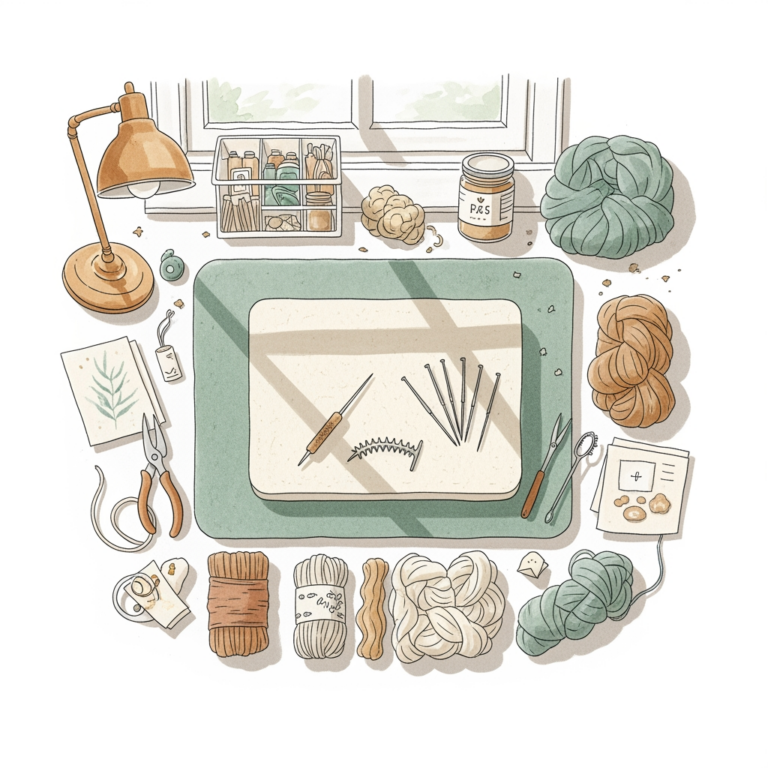
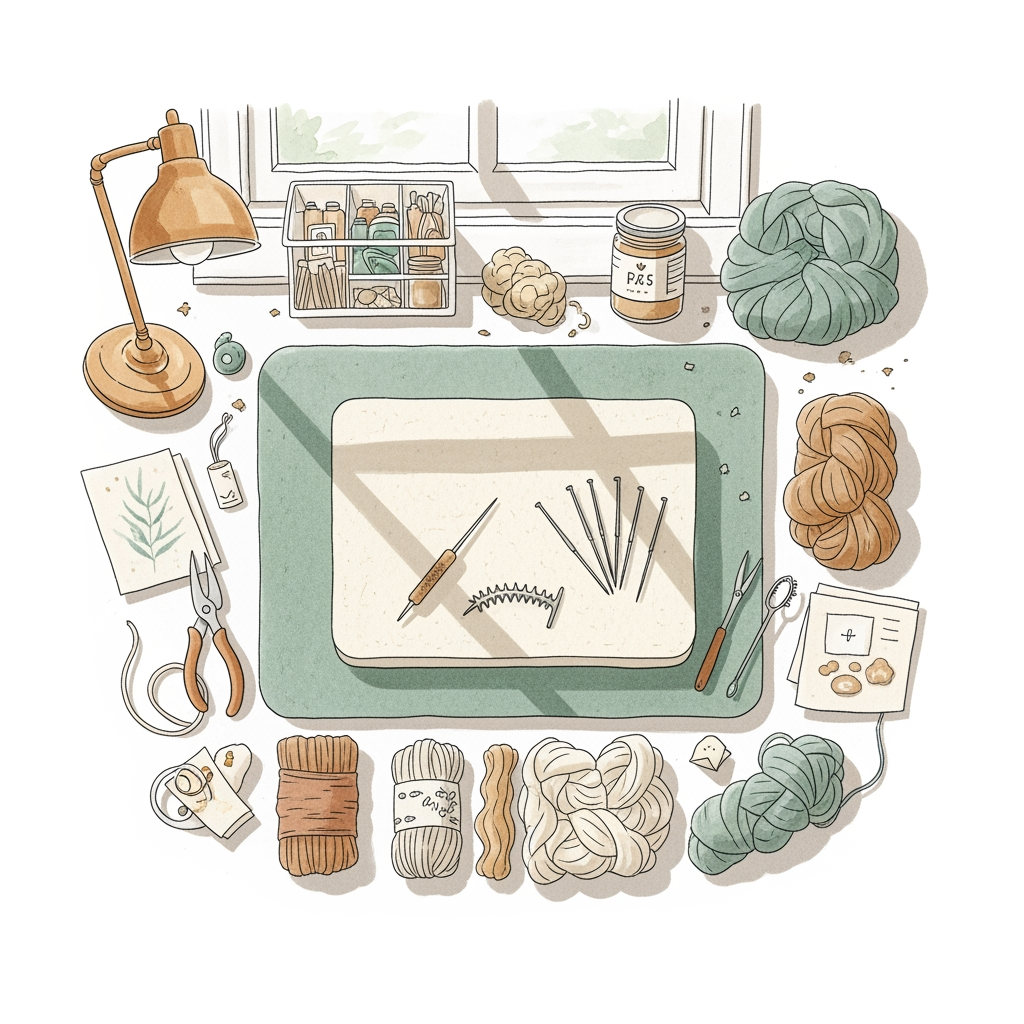
Needle felting is the quiet, meditative counterpart to the rhythmic clicking of knitting needles, but it demands its own specialized workspace. Just as a dull needle can ruin a delicate lace project, a worn-out felting mat can lead to broken needles and uneven fiber density. Finding the right foam surface is essential for protecting your tools and ensuring your wool sculptures maintain their intended shape. Here are the top six foam refills to keep your felting station in peak condition.
Clover Felting Needle Mat: Best Overall Choice


The Clover mat is a staple in many fiber studios for good reason. Its unique bristle-like structure provides a firm yet forgiving surface that allows your needles to pass through without hitting a hard bottom.
This design is particularly beneficial when you are working on intricate details, such as adding eyes to a needle-felted animal or sculpting small appendages. Because the fibers don’t get "stuck" in the foam the way they do in solid blocks, you spend less time prying your work off the mat.
The tradeoff here is that the bristles can eventually bend or collect stray fiber bits. However, for the balance of longevity and ease of use, it remains the gold standard for most makers.
Ashford High Density Foam: Durable Work Surface

If you have ever felt your needle "bottom out" on a cheap piece of craft foam, you know how quickly that leads to snapped tips. The Ashford High Density Foam is engineered specifically to withstand the repetitive, high-impact motion of felting.
This foam is dense enough to hold its shape even after months of intensive use, much like a high-quality blocking board holds its pins without sagging. It provides a consistent resistance that helps you gauge how much you are compressing your wool fibers.
It is an excellent choice for those who prefer a solid surface over a brush-style mat. Just remember that because it is so dense, you will need to rotate your working area frequently to avoid creating deep, permanent divots.
Woolbuddy Felting Pad: Best for Precision Work

Precision is everything when you are working at the scale of a miniature. The Woolbuddy pad offers a refined texture that grips the wool just enough to keep it from sliding around while you work.
This is the mat I recommend when you are transitioning from large, structural shapes to the fine-tuning phase of a project. It provides a stable base that prevents the "drift" often experienced when working on slippery or overly soft surfaces.
While it excels at detail work, it is not the best choice for aggressive, heavy-duty felting. Use this pad for the final stages of your project to ensure clean, crisp lines and smooth surfaces.
Sullivans Replacement Foam: Best Budget Pick

Sometimes the best tool is the one that is readily available and won’t break the bank. Sullivans replacement foam provides a reliable, no-frills surface that gets the job done without unnecessary bells and whistles.
Think of this as the "workhorse" of your felting kit. It is perfect for beginners who are still learning how much force to apply and don’t want to invest heavily in premium equipment before they know their own style.
The primary tradeoff is that it will wear out faster than high-density alternatives. If you find yourself felting daily, keep a few of these on hand so you can swap them out as soon as the surface begins to crumble.
Dimensions Needle Felting Mat: Great for Small

When your workspace is limited—perhaps you are felting at the kitchen table between knitting sessions—the Dimensions mat is a fantastic space-saver. It is compact, lightweight, and easy to store away in a project bag.
Despite its smaller footprint, it offers a surprisingly sturdy surface that doesn’t compromise on quality. It is ideal for those who focus on small-scale projects like jewelry, ornaments, or embellishments for knitted garments.
Because of its size, you will need to be mindful of your needle placement. It is easy to accidentally drift off the edge, so keep your work centered to maximize the life of the foam.
Bear Creek Felting Pad: Best for Large Projects

Working on a large-scale sculpture requires a surface that can accommodate the entire piece without you having to constantly reposition it. The Bear Creek pad offers a generous working area that provides ample room for movement.
This pad is designed for makers who aren’t afraid of big projects, such as life-sized animals or large wall hangings. The foam is thick and resilient, offering the support needed for long-term, structural felting.
The main consideration here is storage; you will need a dedicated spot for a larger mat. However, the convenience of having a wide, uninterrupted workspace is well worth the extra room it occupies in your craft room.
Understanding Foam Density for Needle Felting
Foam density is the secret to a professional finish. A mat that is too soft will absorb your needle strikes, making it difficult to felt the wool efficiently, while a mat that is too hard will cause your needles to bounce and potentially shatter.
- Low Density: Soft, affordable, but wears out quickly. Good for occasional, light projects.
- Medium Density: The "Goldilocks" zone for most hobbyists. Offers a good balance of support and needle protection.
- High Density: Firm, long-lasting, and ideal for heavy-duty, repetitive felting.
Always consider the gauge of your needles when choosing a mat. Finer needles require a firmer surface to prevent bending, whereas heavy-duty needles can handle slightly softer foam.
How to Properly Maintain Your Felting Workspace
Treat your felting mat with the same care you would treat your favorite wooden knitting needles. Regularly remove loose fibers from the surface to prevent them from becoming embedded in your future projects.
If you are using a brush-style mat, use a small comb to lift out trapped wool. For solid foam pads, a quick pass with a piece of tape or a lint roller can pull away surface fuzz.
Avoid using harsh chemicals or water to clean your foam. If the foam becomes saturated, it can lose its structural integrity and begin to disintegrate much faster than intended.
Signs Your Felting Foam Needs a Replacement
The most obvious sign is a visible "trench" or deep crater in the center of your mat. When the foam loses its ability to spring back, it is no longer providing the resistance necessary to felt your wool properly.
- Excessive Debris: If you can no longer pull the loose fibers out of the mat, it is time for a refresh.
- Needle Resistance: If you feel your needle hitting the table underneath, your foam has lost its depth.
- Crumbling Surface: Bits of foam ending up inside your project are a clear indicator that the material has reached the end of its life.
Ignoring these signs will only lead to broken needles and frustration. When the mat starts to fail, your work will inevitably suffer from uneven texture and poor structural density.
Essential Tips for Extending Foam Mat Longevity
The easiest way to extend the life of your mat is to rotate it frequently. Don’t always felt in the center; move your project around the entire surface to distribute the wear and tear evenly.
Another pro-tip is to use a secondary piece of felt or a scrap of fabric over your foam pad. This acts as a buffer, catching the stray fibers and preventing the needles from piercing the foam directly as often.
Finally, keep your mat covered when not in use. Dust and pet hair can settle into the foam, making it feel gritty and reducing its effectiveness over time.
Investing in a quality felting foam is just as important as choosing the right wool for your project. By understanding the density and maintenance needs of your workspace, you ensure that every jab of the needle brings you closer to your creative goal. Keep your mat clean, rotate your working area, and your tools will reward you with years of reliable service. Happy felting, and may your fibers always bond perfectly.