7 Best Project Log Notebooks For Tracking Lace Modifications
Master your lace craft with our top 7 log notebooks. Track intricate modifications, tension settings, and patterns effortlessly with these essential tools.
Lace knitting is a delicate dance of yarn-overs and decreases that requires absolute precision to maintain pattern integrity. When you decide to deviate from a charted design, the risk of losing your place or forgetting a crucial adjustment increases tenfold. A dedicated project log acts as your safety net, ensuring that every modification is documented for future reference. These seven notebooks provide the structure necessary to turn complex lace work into a repeatable, successful process.
The KnitIQ Knitting Journal: Best for Lace Detail
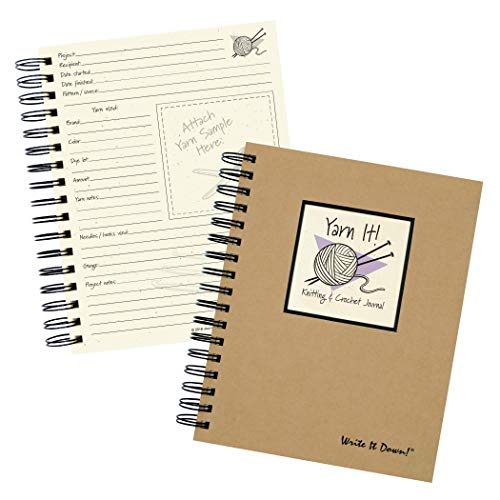

This journal is designed specifically for those who treat their lace projects like architectural blueprints. It includes dedicated sections for charting, which is vital when you are adding extra repeats to a shawl border or adjusting a lace motif to fit a different yarn weight.
The layout encourages you to map out your stitch counts before you even pick up your needles. For lace knitters, this is the difference between a perfectly symmetrical edge and a frustrating, uneven bind-off.
The paper quality is thick enough to handle ink pens without bleeding, allowing you to sketch out complex lace repeats with clarity. If you are prone to making "on-the-fly" modifications, this journal forces you to slow down and document the math first.
Fringe Supply Co. Field Notes: Best for Portability
If you are the type of knitter who takes their lace project to the park, the train, or a coffee shop, you need something that fits in a project bag without adding bulk. These slim notebooks are unobtrusive but surprisingly resilient.
When you are working on a high-stakes lace project, you often need to scribble a quick note about where you left off in a chart. The compact size of these notebooks means they are always within reach, preventing the "I’ll remember that later" trap that leads to dropped stitches.
While they lack the specialized grids of a dedicated knitting journal, their simplicity is their greatest strength. They are perfect for capturing the raw, messy reality of a project in progress.
Cocoknits Maker’s Journal: Best for Modification
The Cocoknits system is built for the knitter who constantly tinkers with their patterns. It uses a modular design that allows you to add or remove pages, which is essential when a lace project grows from a simple scarf into a complex, multi-chart masterpiece.
This journal excels at tracking the "why" behind your modifications. You can easily insert a new page to explain why you swapped a standard yarn-over for a twisted one to prevent holes in a specific lace section.
It is an investment, but for the knitter who views their patterns as living documents, it is worth every penny. It bridges the gap between a simple diary and a professional design portfolio.
Leuchtturm1917 Notebook: Best for Custom Layouts

Lace knitters often have unique ways of visualizing their charts, and the dot-grid format of the Leuchtturm1917 is a blank canvas for that creativity. It allows you to draw your own custom charts or stitch maps exactly how your brain processes them.

If you are modifying a lace pattern to account for a different fiber—perhaps switching from a crisp linen to a drapey silk—you can use the grid to calculate your gauge adjustments. The page numbering and table of contents also help you keep track of multiple lace projects at once.
The trade-off is that you have to build your own system from scratch. However, for those who find pre-printed journals too restrictive, this is the ultimate tool for bespoke project management.
Moleskine Classic Notebook: Best for Durability
Lace projects can take months, or even years, to complete. You need a notebook that will survive the wear and tear of being tossed into a knitting bag alongside sharp needles and potentially leaky water bottles.
The Moleskine’s sturdy cover and high-quality binding ensure that your notes remain intact for as long as your project takes. It provides a tactile, reliable experience that feels more permanent than a digital app.
While it doesn’t have "knitting-specific" templates, its longevity makes it an excellent choice for a "knitting legacy" book. You can document your lace modifications here and trust that the information will be just as legible three years from now.
Rite in the Rain Journal: Best for Travel Knitting

If your knitting life involves outdoor festivals or humid climates, you know how moisture can ruin paper and ink. This journal features specialized paper that repels water, sweat, and spilled coffee.
When you are working on a lace project in challenging conditions, you don’t want to worry about your notes smearing or disintegrating. This is the only notebook on the list that offers true peace of mind for the adventurous knitter.
It is a niche choice, but it solves a very specific, high-stress problem. If you are knitting a lace shawl on a beach or in a damp workshop, this will keep your stitch adjustments safe.
Meadow Yarn Knitting Journal: Best for Archivists
This journal is beautifully structured to help you track the "story" of your lace project. It includes specific prompts for yarn choices, needle types, and final blocking measurements, which are critical for lace.
For lace knitters, blocking is where the magic happens; documenting your pre- and post-blocking dimensions is essential for future modifications. This journal makes that data collection feel like a natural part of the process.
It is the best choice for the knitter who wants to look back on a project and understand exactly how they achieved a specific result. It turns your notebook into a beautiful, organized archive of your craft.
Why Tracking Lace Modifications Is Essential Now
Lace knitting relies on a delicate balance of tension and stitch count that is easily disrupted by even minor changes. When you decide to add a few extra rows to a lace motif or change a decrease to accommodate a different yarn, you are effectively rewriting the pattern.
Without a log, you are relying on memory, which is notoriously unreliable in the middle of a complex lace project. Tracking these changes ensures that if you ever want to replicate the piece, you aren’t starting from scratch.
Furthermore, tracking helps you learn the "physics" of your own knitting. By recording your modifications, you begin to understand how your specific tension interacts with different fiber types and needle materials.
Essential Data to Record for Every Lace Project
To ensure your modifications are successful, your logs should go beyond simple row counts. Always include the following data points:
- Yarn Specs: Brand, fiber content, and actual yardage used versus the pattern’s estimate.
- Needle Details: Material (wood vs. metal), size, and whether you used a different size for the lace border.
- Modification Math: The exact change made (e.g., "Added 4 stitches to the repeat to increase width by 1 inch").
- Blocking Notes: How you blocked the piece and how much it "grew" after washing.
These details provide the context needed to troubleshoot any issues that arise during the knitting process. They are the difference between a project that is a "happy accident" and one that is a masterfully controlled creation.
How to Annotate Lace Charts for Future Success
When modifying a lace chart, don’t just write down the change; draw it directly onto the chart if possible. Use a highlighter or a specific color of pen to mark where your modification begins and ends.
If you are adding a repeat, mark the "new" stitches with a distinct symbol that you define in a legend at the bottom of the page. This prevents confusion when you return to the project after a few days away from your needles.
Finally, write a brief "post-mortem" note once the project is finished. Explain what worked, what didn’t, and what you would change if you were to knit the piece again.
Tracking your lace modifications is the hallmark of a knitter who has moved beyond following instructions to truly understanding the craft. By choosing the right notebook and committing to consistent documentation, you transform your knitting from a series of isolated projects into a continuous learning journey. Whether you prefer the portability of a field notebook or the archival structure of a dedicated journal, your future self will thank you for the detailed notes. Happy knitting, and may your lace always block out perfectly.