6 Best Crochet Hooks For Intricate Lace Borders
Master delicate lace borders with our top six crochet hook picks. Explore ergonomic designs and precise tips essential for achieving flawless, fine stitching.
Working with fine lace thread requires a level of precision that standard crochet hooks simply cannot provide. When you are maneuvering through delicate, cobweb-weight fibers, the quality of your tool dictates the clarity of your stitch definition. Selecting the right steel hook is the difference between a relaxing afternoon of lace-making and a frustrating bout of hand cramps. These six selections represent the gold standard for those who demand excellence in their intricate borders.
Clover Amour Steel Hooks: Best Overall Choice


Clover Amour hooks are widely considered the industry benchmark for a reason. The handle features a unique, soft-touch elastomer grip that is perfectly shaped to sit in the palm without causing strain during long lace-making sessions.
The steel tip is polished to a mirror-like finish, which allows the thread to glide effortlessly. This is vital when you are working with fine mercerized cotton that might otherwise snag on a rougher surface.
The primary advantage here is the consistency of the hook’s throat and head shape. Whether you are working a complex picot or a simple chain space, the hook catches the thread reliably every time. It is the most balanced choice for those who want one reliable tool that does everything well.
Tulip Etimo Rose Steel Crochet Hook Set

The Tulip Etimo Rose series is often the first choice for makers who prioritize aesthetics alongside high-end performance. Beyond the charming pink finish, these hooks are crafted with a remarkably smooth surface that feels almost frictionless against fine thread.
The cushion grip is slightly firmer than the Clover Amour, providing a tactile feedback that many lace workers prefer. If you find that a softer grip makes you squeeze too hard, the structural integrity of the Tulip handle will help you maintain a lighter, more sustainable hold.
These hooks are an investment, but they are built to last a lifetime of heavy use. If you are planning a massive project like a full-lace tablecloth, the ergonomic design will pay for itself in comfort alone.
Addi Swing Steel Hooks for Ergonomic Comfort

Addi Swing hooks feature a radically different, curved handle design that is specifically engineered to accommodate the hand’s natural resting position. For those suffering from arthritis or repetitive strain, this design can be a genuine game-changer.
The handle is long and weighted, which shifts the balance of the hook toward your palm. This helps stabilize your movements when you are working with extremely fine thread that requires steady, controlled tension.
The tradeoff is that the unique shape takes a few hours of practice to master. Once you adjust your grip, however, the ergonomic relief is unmatched by traditional cylindrical handles.
Boye Steel Crochet Hooks for Fine Thread
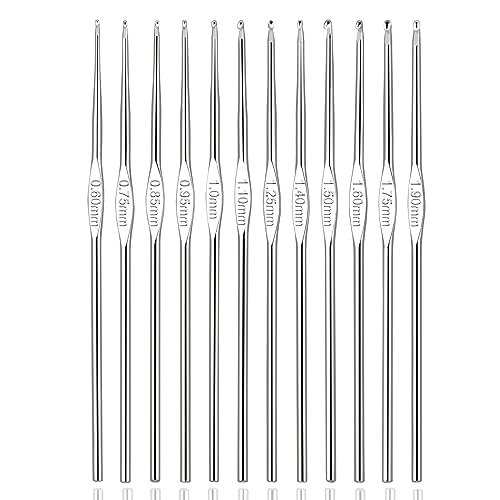
Boye hooks are the classic, no-nonsense choice for the traditionalist. These are simple, unadorned steel hooks that have been a staple in craft stores for decades, and they remain a reliable option for those on a budget.
Because they lack a bulky handle, they are incredibly slim and lightweight. This makes them perfect for carrying in a small notions pouch, or for projects where you need to keep your hand very close to the work.
They are not as ergonomic as the premium options, so they are best suited for shorter sessions or for those who prefer a "pencil grip" when crocheting. If you want a tool that gets the job done without any bells and whistles, these are your go-to.
Susan Bates Steel Hooks for Precise Stitches

Susan Bates hooks are famous for their "inline" head design, which is distinct from the tapered heads found on most other brands. The throat is deeper, which helps lock the thread in place as you pull through, preventing accidental drops.
This design is particularly beneficial when working with slippery, high-sheen threads that tend to slide off the hook. The inline shape forces you to be more intentional with your movements, which results in remarkably even stitch gauge.
Many advanced lace makers swear by the Susan Bates tip for complex maneuvering. If you struggle with inconsistent tension, the mechanical advantage of this hook design can help you tighten up your work.
HiyaHiya Steel Crochet Hooks for Intricate Work

HiyaHiya is a brand that understands the needs of the precision-oriented maker. Their steel hooks are known for having a slightly sharper, more refined point that can pierce through tight stitch patterns with ease.
When you are working on a dense lace border where space is limited, that extra sharpness is invaluable. It allows you to enter stitches that might feel "closed off" or difficult to access with a blunter hook.
These hooks are minimalist and elegant, focusing entirely on the quality of the steel. They are a fantastic choice for the intermediate to advanced maker who needs a specialized tool for tight, complex lace motifs.
Understanding Steel Hook Sizes for Lace Work
Steel hooks are sized differently than standard aluminum hooks, with the numbering system often feeling counterintuitive. In the steel scale, the higher the number, the smaller the hook diameter.
For example, a size 12 or 14 is incredibly fine, intended for the thinnest crochet threads. A size 0 or 1 is significantly larger, better suited for heavier lace-weight yarns or thicker cotton threads.
Always check the recommended hook size on your thread label, but remember that your personal tension is the final authority. If your lace looks puckered, move up a size; if it looks loose and sloppy, move down.
Ergonomics: Choosing Hooks for Fine Thread
Fine thread work is notorious for causing hand fatigue because the movements are so small and repetitive. Choosing a hook with a comfortable grip is not just a luxury; it is a necessity for long-term health.
Look for a handle that allows your hand to stay relaxed rather than clenched. If you find yourself gripping the hook tightly, your hook handle is likely too small or poorly balanced for your specific hand size.
Don’t be afraid to add your own modifications, such as foam grips or clay handles, if you find a hook that performs well but feels uncomfortable. Your hands are your most important tools—protect them.
Comparing Steel Hook Materials and Finishes
Steel is the standard for lace hooks because it is strong enough to be drawn into very thin diameters without bending. However, the finish on that steel can vary significantly between manufacturers.
- Polished Steel: Extremely slick, perfect for fast work but can be slippery.
- Matte/Satin Finish: Provides a slight amount of "drag," which can help keep thread from sliding off too easily.
- Coated Steel: Often used for color-coding, though the coating can sometimes wear off over years of heavy use.
Choose a finish based on how tightly you hold your thread. If you are a "tight" crocheter, a slicker finish will help you maintain speed; if you are a "loose" crocheter, a matte finish can provide the control you need.
Tips for Managing Tension in Lace Edging
Maintaining even tension is the biggest challenge in lace border work. Because lace is often blocked aggressively, any inconsistencies in your tension will be magnified once the piece is pinned out and stretched.
Practice the "flick" method, where you allow the thread to glide through your fingers rather than holding it with a death grip. Consistent tension comes from the thread flowing through your hand at a steady pace, not from pulling it tight.
Remember that blocking is your best friend. Even if your tension feels slightly uneven while you work, a good soak and a careful pinning process can correct minor flaws in the final lace border.
Finding the perfect steel hook is a personal journey that depends as much on your hand anatomy as it does on your project requirements. Whether you prioritize the ergonomic relief of an Addi Swing or the classic precision of a Susan Bates, the right tool will elevate your lace work to new levels of beauty. Take the time to experiment with these different profiles and finishes to see what truly suits your unique style. Happy stitching, and may your lace borders always be perfectly crisp.