6 Best Sweater Stones For Removing Pilling To Try
Revive your knitwear with these 6 top-rated sweater stones. Learn how these effective tools safely remove pilling to keep your favorite garments looking new.
There is nothing more heartbreaking than pulling your favorite hand-knit sweater from the drawer only to find it covered in unsightly, fuzzy pills. Over my two decades behind the needles, I have learned that pilling is an inevitable byproduct of friction, not necessarily a sign of poor yarn quality. Investing in the right maintenance tool is the difference between retiring a cherished garment and wearing it for a decade. These six options are the gold standard for keeping your knitwear looking as pristine as the day you bound off.
The Laundress Sweater Stone: Best Overall Choice
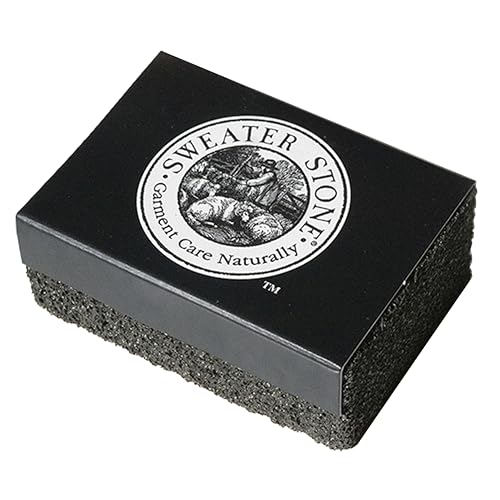

The Laundress Sweater Stone is a staple in many professional knitters’ kits because of its refined, consistent texture. It is essentially a block of natural volcanic pumice that gently lifts fibers without the aggressive snagging often found in cheaper, uneven stones.
When using this on a high-twist wool or a delicate alpaca blend, you will notice it catches the loose surface fibers effectively. It doesn’t "cut" the yarn like a razor, which protects the structural integrity of your stitch pattern.
This is my go-to recommendation for those who want a reliable, no-fuss solution. The bottom line: it balances efficacy with a gentle touch, making it the safest bet for your most precious hand-knits.
Dritz Sweater Stone: The Classic Budget Pick

If you are just starting your journey into garment care, the Dritz Sweater Stone is an accessible entry point. It functions on the same principle of friction as more expensive stones, utilizing a porous surface to snag and pull away tangled fibers.
You might find that it sheds a bit more grit than premium options, so always use it over a tray or a clean surface. It is particularly effective on sturdier, multi-ply yarns that can withstand a bit of surface abrasion.
Because it is cost-effective, it is a great tool to keep in your knitting bag for quick touch-ups on the go. Just remember to use a light hand; you are grooming the sweater, not sanding a piece of furniture.
Gleener Fabric Shaver: A Versatile Alternative

The Gleener is a unique hybrid that moves away from the traditional stone concept entirely. It uses three interchangeable edges, each designed for a different weight of fabric, from heavy wool coats to delicate cashmere.
This versatility is a massive advantage if your wardrobe contains a mix of fiber types. If you have a stash of sweaters ranging from bulky, rustic Icelandic wool to fine, lightweight merino, one tool will handle them all.
The tradeoff here is that it requires a bit more mechanical handling than a simple stone. If you prefer the tactile, low-tech feel of a stone, this might feel a bit too much like a gadget, but its performance on varied textures is unmatched.
Cocoknits Sweater Stone: Best Sustainable Option
Cocoknits has built a reputation on thoughtful, ergonomic design, and their sweater stone is no exception. It is designed to be comfortable in the hand, which matters significantly if you are tackling a large, full-length cardigan that has seen a lot of wear.
What sets this apart is the brand’s commitment to sustainable, natural materials that feel good to hold. It is a tool that feels like a natural extension of the knitting process rather than a harsh cleaning appliance.
If you value aesthetics and ergonomics in your tool kit, this is the clear winner. It performs beautifully on natural fibers, lifting pills with a satisfying, rhythmic motion that feels almost meditative.
Cedar Hill Fabric Comb: Best for Delicate Knits

Sometimes a stone is simply too abrasive for fine-gauge, luxury fibers like silk-mohair or high-end cashmere. The Cedar Hill Fabric Comb uses a fine-toothed metal edge to gently groom the surface of the knit.
This tool is ideal for those "haloed" yarns where you want to remove the pills without stripping away the soft, fuzzy texture that makes the garment desirable. It requires patience and a steady hand, but the results are far cleaner than what you could achieve with a stone.
Use this when you are working with delicate, single-ply yarns that might pull apart if snagged by a rougher pumice stone. It is a specialized tool, but for the serious knitter, it is an essential piece of equipment.
Evercare Fabric Shaver: Best for Heavy Pilling

When a sweater has been neglected for a season and is suffering from severe, dense pilling, a stone might not be enough. The Evercare Fabric Shaver uses a battery-operated rotary blade to shear the pills away quickly and efficiently.
This is the "nuclear option" for well-loved, sturdy sweaters that have seen a lot of friction. It is incredibly fast, allowing you to refresh an entire garment in minutes rather than spending an hour with a stone.
However, use this with extreme caution on loose knits or yarns with a lot of texture, like cables or bobbles. You risk catching the yarn and creating a hole, so always test it on an inconspicuous area first.
Understanding Why Your Favorite Sweaters Pill
Pilling occurs when short fiber ends work their way to the surface of the fabric and get tangled together through friction. This is most common in areas like underarms and cuffs, where the fabric constantly rubs against itself.
Contrary to popular belief, pilling is not always a sign of low-quality yarn. Even the finest cashmere will pill if it is loosely spun or has a short staple length, as there is less "anchor" to hold the fibers in place.
Soft, lofty yarns are almost always more prone to pilling than tightly twisted, high-twist yarns. When you choose a yarn for a project, look for a tight twist if you want maximum durability and minimum maintenance.

How to Safely Use a Sweater Stone on Wool Knits
Always lay your garment perfectly flat on a hard, non-slip surface before beginning. If the sweater is bunched up, you risk pulling the fabric taut in one spot and creating an uneven, stretched-out look.
Use short, light, unidirectional strokes rather than circular motions. Starting from the top of the garment and moving downward helps to "train" the fibers to lay flat again, mirroring the way they were knitted.
If you feel the stone snagging, stop immediately. Do not force it, as you are likely catching a stitch rather than a pill, which could lead to a dropped stitch or a ladder in your beautiful work.
Essential Tips for Preventing Future Fiber Pilling
The best way to manage pilling is to reduce the friction that causes it in the first place. When washing your hand-knits, always turn them inside out to protect the surface fibers from the agitator or other garments.
Using a high-quality wool wash that contains a conditioner can help soften the fibers and keep them laying flat. Additionally, consider "resting" your sweaters between wears to allow the fibers to recover their natural shape.
If you notice a pill starting to form, remove it immediately rather than waiting for it to become a large, knotted clump. A quick swipe with a stone once every few wears will keep your sweater looking brand new for years.
Comparing Sweater Stones to Battery Fabric Shavers
Sweater stones are manual, tactile, and generally safer for the long-term health of your yarn. They rely on the natural texture of the stone to catch pills, which is a gentle, forgiving process that is hard to get wrong.
Battery-operated fabric shavers are mechanical and aggressive, designed for speed and heavy-duty removal. While they are faster, they carry a higher risk of cutting the yarn itself, which can be catastrophic for a hand-knit garment.
I personally prefer stones for my hand-knits because they respect the fiber. Use a shaver only when the pilling is so severe that a stone would take hours to clear, and always use it with the lightest possible touch.
Maintaining your knitwear is an act of love that extends the life of your hard work. Whether you choose the gentle precision of a stone or the rapid efficiency of a shaver, the key is consistency and a light touch. Remember that your garments are living textiles that respond to care, so choose the tool that best fits your specific fiber types. With these tools in your kit, you can wear your hand-knits with confidence for many years to come.