6 Best Spinning Wheel Yarn Guides For Smooth Feeding
Enhance your spinning with these top 6 yarn guides. Discover how these essential tools improve tension, ensure smooth fiber feeding, and boost consistency.
A smooth, consistent yarn feed is the secret bridge between a pile of raw, unruly fiber and the perfectly balanced singles you need for your next sweater. Whether you are spinning delicate laceweight merino or chunky, textured art yarns, the guide you choose dictates the tension and flow of your draft. Mastering your flyer setup is just as critical as choosing the right breed of wool for your project. Let’s dive into the components that will transform your spinning experience from a struggle into a seamless rhythm.
Ashford Sliding Hook Flyer: Versatile Choice
The Ashford Sliding Hook Flyer is a staple for a reason: it eliminates the need to stop spinning just to move your yarn to a new hook. For the knitter who enjoys a long, uninterrupted drafting session, this is a game-changer.
The sliding mechanism allows you to distribute fiber evenly across the bobbin with a simple flick of the thumb. You won’t have to worry about your yarn building up in one spot and causing the bobbin to wobble or the drag to fluctuate.
However, consider that the hook itself is quite open. If you are spinning very fine, slick silk or slippery synthetic fibers, ensure your tension is set correctly to prevent the yarn from jumping out of the guide during high-speed spinning.
Kromski Jumbo Flyer: Best for Art Yarns
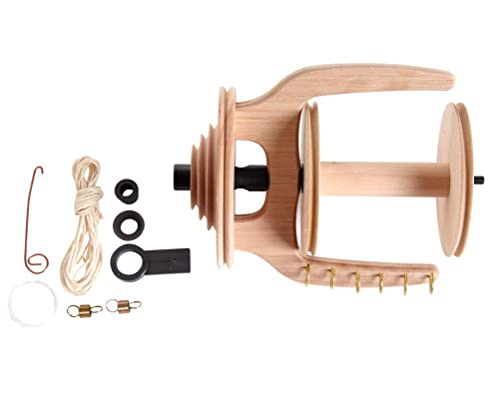

When you move into the world of bulky, textured art yarns, standard flyer hooks often feel restrictive. The Kromski Jumbo Flyer features a wide orifice and a large-gauge hook designed to accommodate thick, "slubby" singles without snagging or breaking.
This flyer is essential if you are spinning locks, beads, or thick-and-thin yarns for a statement cowl. The wider path prevents the fiber from catching, which is the primary cause of those frustrating "thumps" that ruin your rhythm.
Be aware that the increased weight of the jumbo flyer can change the inertia of your wheel. You might find you need to adjust your treadling pace to maintain the same twist-per-inch you’ve grown accustomed to with standard bobbins.
Schacht Matchless Flyer: Precision Feeding
Schacht is known for engineering that feels like clockwork, and their flyer guides are no exception. The precision-engineered hooks on the Matchless flyer provide a consistent, smooth path that minimizes friction.
If you are a spinner who obsesses over the consistency of your gauge—perhaps spinning a fine 2-ply for a pair of intricate socks—this guide is your best friend. It offers a predictable, steady drag that allows you to focus entirely on your drafting hand.
The tradeoff here is maintenance. Because the tolerances are so tight, you must keep the flyer clean and free of "fiber dust" to ensure the sliding parts move fluidly. A quick wipe-down after every bobbin change is a small price to pay for such high-end performance.
Majacraft Delta Flyer: Smooth Fiber Flow
The Majacraft Delta Flyer is unique because it uses a triangular orifice rather than a traditional hook. This design is specifically engineered to keep the yarn centered, which significantly reduces the "wobble" often felt when spinning at high speeds.
This is a fantastic option for beginners who find themselves struggling with uneven tension. The shape of the guide naturally guides the yarn into the bobbin, making it much easier to achieve a consistent, balanced yarn.
Keep in mind that the delta design is less "open" than a standard hook. While this keeps the yarn secure, it can be slightly more fiddly to thread if you are prone to changing bobbins mid-project.
SpinOlution Flyer Guide: High Capacity
SpinOlution wheels are built for the heavy-duty spinner, and their flyer guides are designed to handle massive bobbins. These guides are sturdy, reliable, and built to withstand the torque required for spinning long, high-yardage projects.
If you are spinning enough wool for a full-sized blanket, you need a guide that won’t bend or deform under the pressure of a full bobbin. These guides provide the structural integrity required for high-capacity spinning without sacrificing smooth fiber flow.
The downside is that they are often less adjustable than sliding hook systems. You may find yourself manually moving the yarn more often, but the trade-off is a robust, "set it and forget it" spinning experience.
Louet Sliding Hook Flyer: Easy Threading

Louet’s sliding hook system is famous for being incredibly user-friendly, especially for those who struggle with fine motor tasks. The hooks are designed to be easily accessible, making the threading process intuitive and fast.
For the knitter who frequently switches between different plying techniques, the ability to quickly adjust the yarn path is invaluable. It saves time and allows you to focus on the ply-angle rather than the mechanics of the wheel.
One thing to watch for is the "bite" of the hook on certain fibers. Because the hooks are designed for ease of use, they can sometimes be a bit aggressive with delicate, high-twist fibers; keep your tension light to avoid damaging the yarn.
Why Yarn Guides Matter for Consistent Spin
Your yarn guide is the final point of contact before your fiber becomes a finished yarn. If the guide is poorly aligned or creates unnecessary friction, your drafting hand will feel it immediately.
Consistent feeding is the foundation of a balanced yarn. When your guide is working correctly, you can maintain a steady rhythm, which directly translates to a more uniform gauge in your finished knitting projects.
Think of it like needle size: if your needle is too blunt, you struggle to knit into the stitch. If your yarn guide is catching or resisting, you struggle to draft the fiber. Both lead to fatigue and uneven results.
Materials: Steel vs Ceramic Fiber Guides
- Steel Hooks: Durable and classic, but they can develop small burs over time. These burs can snag delicate fibers like mohair or angora, so inspect them regularly.
- Ceramic/Smooth Guides: These are the gold standard for friction reduction. They allow the yarn to glide effortlessly, which is essential when spinning at high speeds or with very fine, delicate singles.
- The Verdict: If you spin a lot of high-friction fibers like raw wool or sticky longwools, invest in a ceramic guide. If you stick to soft, processed rovings, polished steel is perfectly adequate.
How to Properly Align Your Yarn Guide
Proper alignment means your yarn should travel in a straight, unobstructed line from the orifice to the hook. If the yarn is forced to bend at an awkward angle, it creates uneven tension and can cause your yarn to "snap" or over-twist.
Start by centering the flyer on your wheel and ensuring the bobbin is seated correctly. Move your sliding hook so that the yarn is pulling at a slight, gentle angle toward the bobbin, rather than a sharp, harsh one.
If you find yourself constantly fighting the flyer, stop and check your drive band tension. Often, what we perceive as a "guide issue" is actually a result of the flyer being slightly out of square with the wheel’s drive mechanism.
Troubleshooting Common Fiber Feeding Issues
If your yarn is constantly snagging, the first culprit is usually a small piece of stray fiber caught in the hook. Use a soft brush to clean the guide area thoroughly before you assume the hardware is at fault.
If you are experiencing "jerky" feeding, check your flyer for signs of wear. Even a tiny, microscopic nick in a steel hook can catch on a single strand of wool, causing a sudden tension spike that leads to a break.
Finally, remember that the "best" setting is whatever feels effortless. If your hands are cramping or your yarn looks inconsistent, don’t be afraid to stop, re-thread, and adjust the hook position. Spinning should be a flow state, not a wrestling match.
Finding the right yarn guide is a journey of trial and error, much like finding your favorite needle material or yarn weight. By understanding how these tools influence your fiber flow, you gain more control over the final character of your handspun. Take the time to experiment with your flyer settings, keep your equipment clean, and listen to what your hands are telling you. Your perfectly balanced, consistent yarn is waiting for you at the end of a well-guided spin.