6 Best Pattern Clips For Organizing Paper Charts
Keep your workspace tidy with our guide to the 6 best pattern clips. Discover durable, efficient tools to organize and secure your essential paper charts.
Keeping your place in a complex lace chart or a dense colorwork graph is often the difference between a finished heirloom and a project left in the "naughty corner." Paper charts are notorious for sliding off your lap or losing their place just as you reach the most intricate row. Investing in a reliable set of pattern clips transforms your workspace from a chaotic pile of paper into a streamlined, professional knitting station. These tools are the unsung heroes of the craft, ensuring your eyes stay on the stitches rather than hunting for your current row.
Cocoknits Maker’s Clips: Best Overall for Charts
The Cocoknits Maker’s Clips are essentially the gold standard for those who value minimalist design and functionality. Unlike bulky office supplies, these are coated in a soft, matte finish that feels gentle on both your hands and your paper.
They provide just enough tension to hold a chart firmly against a board without leaving deep, permanent indentations. For knitters who frequently swap between projects, these clips are easy to reposition quickly.
The bottom line is that these offer the best balance of aesthetics and utility. If you want a tool that looks as good as your finished hand-knits, these are the ones to reach for.
Clover Jumbo Wonder Clips: Best for Bulkier Paper


When you are working from a thick, laminated pattern or a heavy cardstock reference, standard clips often fail to open wide enough. The Clover Jumbo Wonder Clips are designed with a generous opening capacity that handles thick stacks with ease.
Their flat base is a brilliant feature for knitters who work on a table. Because they don’t roll or tilt, they keep your instructions perfectly oriented while you focus on your tension.
While they are slightly larger than typical paper clips, their grip is incredibly secure. They are perfect for those heavy, multi-page charts that tend to fight back when you try to keep them flat.
TULIP Knitting Pattern Clips: Best Ergonomic Grip
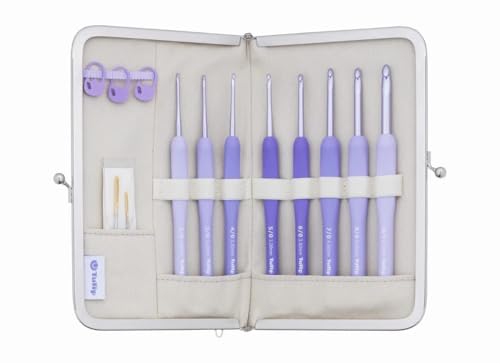
TULIP is renowned for its high-quality steel needles, and their pattern clips follow that same tradition of excellence. The standout feature here is the ergonomic design, which makes them easy to pinch and open even if you suffer from hand fatigue.
If you’ve spent hours working with fine-gauge yarn, your hands are likely already tired. These clips require minimal pressure to operate, saving your joints for the actual knitting.
They are durable, sleek, and built to last for decades of projects. Choose these if comfort is your primary concern during long, late-night knitting sessions.
Bohin Extra Fine Sewing Clips: Best for Precision

Sometimes you need to pin a chart to a very specific spot on a fabric holder or a tight corner of a knitting bag. Bohin’s extra fine clips are perfect for these high-precision moments where space is at a premium.
They are much smaller than traditional quilting clips, which prevents them from obscuring the row you are currently working on. You won’t have to move them as often to see the next set of instructions.
Because they are so compact, they are ideal for travel knitting. If you pack your projects into small project bags, these won’t take up valuable space.
Dritz Quilting Clips: Best for Heavy Duty Charts

Dritz quilting clips are essentially workhorses designed for heavy-duty materials. If you are using a magnetic board or a stiff backing for your charts, these clips provide an unwavering grip that won’t slip.
They are particularly useful if your chart is printed on heavy-weight paper that resists folding. They hold tight, ensuring that your pattern doesn’t curl up while you’re busy managing a complex cable cross.
While they might be overkill for a single sheet of printer paper, they are essential for heavy-duty setups. They are the reliable choice for the knitter who demands absolute stability.
CHIBI Pattern Holders: Best for Magnetic Boards
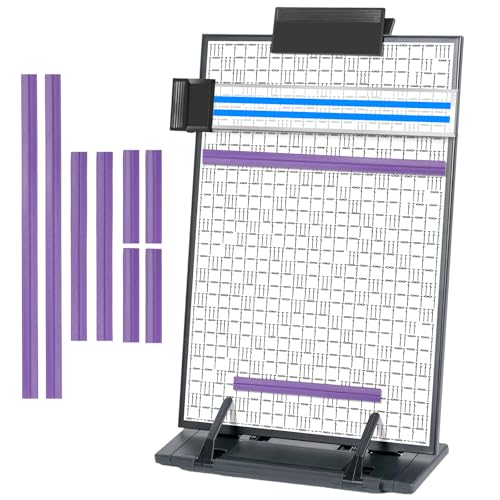
Magnetic boards are a favorite in the knitting community for their ability to hold a row-marker magnet in place. The CHIBI pattern holders are specifically engineered to work in tandem with these boards.
They bridge the gap between mechanical clipping and magnetic convenience. By securing the edges of your chart with these clips, you ensure that your magnetic row-marker doesn’t accidentally slide off the edge of the paper.
They are a smart addition to any kit that already utilizes magnetic tools. They offer a secondary layer of security that prevents the "oops" moments that ruin a perfectly good cable row.
Why Pattern Clips Beat Traditional Paperweights
Using a heavy mug or a pair of scissors as a paperweight is a common habit, but it’s a recipe for disaster. Unlike dedicated clips, household objects are prone to sliding, tipping, or accidentally snagging your delicate yarn.
Clips provide a consistent, localized hold that doesn’t take up your entire table surface. They keep your pattern pinned exactly where you need it, rather than just pinning it down "somewhere" on the page.
Moreover, clips allow you to stand your pattern up. This is a game-changer for knitters who prefer to look at a chart at eye level rather than hunching over a flat surface.
Key Features to Consider When Buying Chart Clips
When shopping for clips, prioritize the material and the tension strength. A clip that is too tight will crease your paper, while one that is too loose will be useless for heavy cardstock.
- Coating: Look for rubberized or matte finishes to prevent paper tearing.
- Opening Capacity: Ensure the clip can accommodate the thickness of your specific pattern.
- Weight: Lighter clips are better for portable projects, while heavier ones suit stationary setups.
- Ergonomics: Consider how easy they are to open if your hands are tired from a long day of knitting.
Always think about your specific knitting environment. If you knit in a cramped chair, you need something low-profile; if you have a dedicated desk, you have more flexibility.
How to Prevent Paper Creasing With Proper Clips
Creasing is the enemy of a long-term pattern, especially if you plan to reuse it for multiple garments. To avoid this, always look for clips with smooth, rounded edges rather than sharp, metal teeth.
If you are worried about a particularly fragile vintage pattern, place a small piece of scrap cardstock between the clip and the pattern. This acts as a buffer and distributes the pressure more evenly.
Avoid clipping the same spot repeatedly. Move your clips around the perimeter of the paper periodically to prevent permanent stress marks.
Maintaining Your Knitting Notions for Longevity
Even the smallest tools need care to ensure they stay functional for years. Keep your clips in a dedicated tin or small pouch so they don’t get lost in the bottom of your project bag.
If your clips are metal, keep them away from moisture to prevent rust, which can transfer to your precious yarn. A quick wipe down with a dry cloth after a messy project is usually enough to keep them in top shape.
Treating your notions with respect is part of the craft. When you take care of your tools, they return the favor by making your knitting experience smoother and more enjoyable.
Finding the right pattern clip is a small investment that yields massive returns in your knitting flow. By choosing a tool that suits your specific workspace and pattern type, you eliminate one of the most frustrating barriers to success. Don’t settle for makeshift solutions that distract you from the rhythm of your needles. Choose the right clip, secure your chart, and get back to the joy of creating something beautiful.