6 Best Stitch Marker Rings for Marking Pattern Repeats
Struggling to keep track of your knitting? Discover our top six stitch marker rings that simplify pattern repeats and ensure your project stays on target.
Finding the right stitch marker is often the difference between a meditative knitting rhythm and a frustrating session of snagged yarn. When you are navigating complex pattern repeats, the right tool acts as a silent guide that keeps your stitch count accurate without disrupting your flow. This guide breaks down the best options available to help you find the perfect companion for your needles. With two decades behind the needles, I have learned that the best marker is the one you forget you are even wearing.
Cocoknits Colorful Nylon Stitch Markers
These nylon rings are the gold standard for many knitters because they are incredibly lightweight and snag-free. Because they are made of coated nylon, they slide over metal, bamboo, and carbon fiber needles with equal ease.
The color-coding system is their true superpower. If you are working a complicated lace project with multiple pattern repeats, you can assign a specific color to your "beginning of round" marker and different colors to your "repeat" markers.
The trade-off here is the material’s flexibility. While they won’t break, they can occasionally disappear into dark-colored mohair or fuzzy alpaca yarns. If you are using a high-halo fiber, choose a high-contrast color to ensure you can spot them quickly.
Clover Locking Stitch Marker Assortment


Locking markers are essential when you need to mark a specific stitch rather than a position between stitches. These are particularly useful for tracking increases in a raglan sweater or marking the "right side" of your work.
The hinge mechanism on these is remarkably durable compared to cheaper plastic alternatives. They snap shut with a satisfying click, ensuring they stay put even if your project bag gets tossed around during travel.
However, be mindful of the plastic seam. If you knit with delicate, single-ply silk or loosely twisted wool, that tiny hinge can occasionally catch a strand. If you feel a snag, stop immediately and check the marker’s closure.
Knitter’s Pride Smooth Ring Markers

If you prefer a classic, no-nonsense approach, these metal rings are an excellent choice. They are thin, unobtrusive, and have a polished finish that glides effortlessly across your needles.
Because they are metal, they have a bit of weight to them. This is helpful for knitters who find plastic markers too light, as the slight pull helps remind you exactly where the repeat begins.
The primary downside is the lack of "give." If you accidentally knit a marker into your work, metal rings don’t flex, which can cause a small amount of tension distortion. Always double-check your count before starting a new round to avoid this.
Katrinkles Wooden Pattern Repeat Rings
Katrinkles markers offer a tactile, organic experience that feels wonderful in the hands. The wood is sanded to a smooth finish, meaning they won’t snag even on delicate lace-weight yarns.
These are particularly lovely for knitters who suffer from "clicky-clack" fatigue. If you find the sound of metal needles hitting metal markers distracting, the soft, muted sound of wood against your needles can make your knitting feel much more serene.
Keep in mind that wood can be porous. Avoid leaving these in damp, unblocked projects for extended periods, as they can occasionally absorb oils or moisture from the yarn. They are best suited for dry, finished projects or long-term storage.
Tulip Etimo Silicone Stitch Ring Set
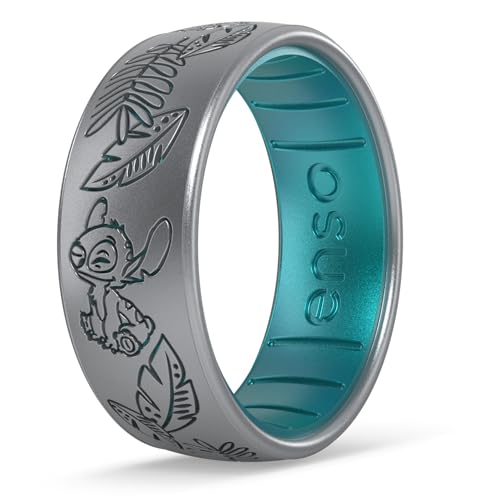
Silicone markers are the ultimate solution for knitters who use very slick nickel-plated or brass needles. Because silicone has a natural "grip," these markers stay exactly where you place them without sliding off during a quick move.
They are incredibly soft and pliable. If you are knitting a project that requires you to fold the fabric frequently—like a long scarf or a blanket—these won’t leave permanent indentations or creases in your yarn.
The trade-off is their tendency to attract lint. If you are working with a dark, fuzzy wool, these markers will pick up every stray fiber. A quick rinse with water will restore their grip and appearance in seconds.
Thread & Maple Leather Stitch Markers
These leather markers are a luxury item that ages beautifully over time. Much like a well-loved pair of leather boots, they develop a patina the more you use them, making them a sentimental part of your knitting kit.
They are surprisingly lightweight and incredibly durable. Unlike plastic, which can crack, or metal, which can bend, leather holds its shape and provides a soft, quiet experience that is perfect for long knitting sessions.
Because they are slightly thicker than nylon or metal rings, they are best suited for needles size 3.5mm and up. On very tiny needles, they might feel a bit bulky and interfere with your stitch tension.
How to Choose the Right Marker for Your Yarn
The most important rule is to match your marker material to your yarn’s texture. For high-friction yarns like mohair or boucle, you want the slickest, thinnest marker possible to prevent snagging.
If you are working with slippery materials like silk, bamboo, or superwash wool, you may prefer a marker with a bit of texture or weight. This prevents the marker from sliding off the needle tip while you are adjusting your grip.
- Slick Yarns: Use silicone or rubberized markers to prevent sliding.
- Fuzzy Yarns: Use smooth, snag-free nylon or polished metal.
- Delicate Yarns: Use rounded, seamless rings to avoid fiber breakage.
Why Shape Matters: Open vs Closed Markers
Closed rings are the standard for marking repeats because they are seamless and move perfectly with the fabric. They are best for patterns that remain consistent throughout the round, like simple lace or ribbing.
Open or locking markers, however, provide versatility. They are essential for "working" a pattern, such as marking the center stitch of a cable or noting where an increase row occurred.
Don’t be afraid to mix and match. I often use closed rings for my pattern repeats and a single, distinct locking marker to denote the start of the round so I never lose my place.
Managing Stitch Markers in Complex Lace Work
Lace knitting is a game of counting, and stitch markers are your best defense against errors. When working a complex chart, place a marker between every single pattern repeat.
If you find yourself overwhelmed by too many markers, try using a "landmark" system. Use a different color or shape to mark every third or fourth repeat; this helps you visualize your progress without needing to count every single stitch.
If you make a mistake, don’t panic. The markers are there to help you isolate the error to a single repeat, making it much easier to "tink" (knit backward) just a few stitches rather than ripping back the entire row.
Essential Tips for Organizing Your Notions
A messy notion bag is the enemy of a productive knitting session. I recommend keeping your markers in a small, compartmentalized tin or a dedicated notions pouch that clips onto your project bag.

Sort your markers by size and type. It is incredibly frustrating to reach for a locking marker only to find it tangled with a dozen tiny rings. A little bit of organization at the end of a project saves you twenty minutes of searching when you start the next one.
Finally, keep a "miscellaneous" container for the stray markers you find under the couch or at the bottom of your bag. You never know when you’ll need a spare for a last-minute cast-on.
Choosing the right stitch marker is a small detail that yields significant rewards in your knitting practice. By selecting tools that complement your yarn and your personal tension, you remove the friction that often leads to mistakes. Take the time to experiment with different materials and shapes until you find the ones that feel like an extension of your own hands. Happy knitting, and may your stitch counts always remain perfectly aligned.