6 Best Iron On Interfacings For Stabilizing Thin Knits
Stabilize thin knits with ease. Discover the 6 best iron-on interfacings to prevent stretching and ensure professional, durable results for your garments.
Working with thin, drapey knits often feels like a balancing act between achieving professional structure and maintaining the fabric’s natural movement. When you spend hours perfecting a garment, the last thing you want is for a neckline to stretch out or a button band to sag after the first wash. Choosing the right iron-on interfacing is the secret to moving from "homemade" to "handcrafted perfection." This guide breaks down the best stabilizers to ensure your knit projects stay exactly as you intended.
Pellon EK130 Easy-Knit: Best Overall Choice


If you have ever struggled with a neckline that ripples like a wave despite your best efforts, Pellon EK130 is your new best friend. It is a tricot interfacing, meaning it has a subtle two-way stretch that moves in harmony with your knit fabric rather than fighting against it.
Because it is specifically engineered for knits, it won’t turn your soft, fluid jersey into a stiff piece of cardboard. It provides just enough "memory" to prevent distortion while allowing the garment to drape beautifully against the body.
The real beauty here is its versatility across different fiber contents. Whether you are stabilizing a rayon blend or a standard cotton jersey, the adhesive bonds reliably without puckering. It is my go-to recommendation for beginners because it is incredibly forgiving during the application process.
Vilene G785: Top Pick for Lightweight Knits
When you are working with high-end, gossamer-thin knits like silk jersey or fine bamboo, standard interfacings are often far too heavy. Vilene G785 is exceptionally lightweight and provides a soft, supple hand that feels virtually invisible once fused.
It offers a gentle reinforcement that preserves the delicate nature of luxury fibers. You get the stability needed for buttonholes or facings without adding the bulk that usually ruins the professional finish of a high-quality knit.
Keep in mind that because it is so thin, it requires a precise hand during application. If your iron is too hot or you press for too long, you risk "strike-through," where the adhesive melts through the weave of the fabric. Always start with a lower temperature setting to be safe.
HTC Stitch Witchery: Best for Quick Repairs

Stitch Witchery is technically a fusible bonding web rather than a traditional interfacing, but it is indispensable for knitters in a pinch. If you need to quickly stabilize a hem or secure a facing without adding a full layer of fabric, this is the tool for the job.
It is essentially a thin, dry adhesive net that melts between two layers of fabric. It is perfect for those "oops" moments when you realize a hem is rolling up or a facing is shifting out of place during construction.
However, use it sparingly. Because it lacks a fabric base of its own, it can make the area it touches feel slightly stiffer than the surrounding knit. It is best reserved for small, targeted areas rather than large structural panels.
Dritz Knit Stay Tape: Best for Seam Control

Shoulder seams are the most vulnerable points in any knit garment, often bearing the weight of the entire piece. Dritz Knit Stay Tape is a pre-cut, fusible strip designed specifically to prevent these seams from growing out of shape over time.
Instead of cutting your own strips from a larger piece of interfacing, this tape gives you consistent, clean edges every time. It is a massive time-saver and ensures that your structural seams are reinforced with surgical precision.
I always suggest applying this tape to the back of your shoulder seams before you sew them. It locks the seam allowance in place, meaning you won’t have to worry about your sweater stretching out of shape when it’s hanging on a coat hanger.
Freudenberg H180: Ideal for Delicate Fabrics
Freudenberg H180 is a sophisticated choice for knitters who prioritize a high-end, professional drape. It is incredibly fine and maintains the soft, fluid characteristics of your fabric while providing the structural integrity needed for collars and cuffs.
It is particularly effective on fabrics that have a tendency to "grow" or lose their shape during the sewing process. By fusing this to your pattern pieces before you begin assembly, you effectively freeze the fabric in its original dimensions.
The tradeoff for this quality is that it can be slightly more difficult to find in local craft stores compared to mass-market brands. If you find a supplier, it is worth stocking up, especially if you frequently work with lightweight, high-stretch wool knits.
Therm O Web HeatnBond: Best for Heavy Knits
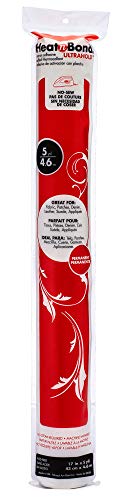
If you are working with a beefy, heavyweight knit—think a dense wool interlock or a thick French terry—you need an interfacing that can actually hold its own. Therm O Web HeatnBond provides a stronger, more substantial bond that stands up to the weight of heavier fibers.
This product is excellent for creating structured elements like waistbands or heavy-duty plackets. It provides a crisp, firm finish that prevents the fabric from sagging under its own weight.
Be aware that this is not the right choice for thin or delicate knits. If you use it on something too light, it will feel stiff and unnatural, essentially killing the "knit" feel of the garment. Reserve this for projects where structure is more important than fluid drape.
How to Apply Interfacing to Thin Knit Fabrics
The secret to success is not just the product, but the technique. Always place the adhesive side of the interfacing against the wrong side of your knit fabric. Use a press cloth—a scrap of cotton fabric—between the iron and the interfacing to protect your delicate knit fibers from direct heat.
Never slide your iron across the fabric. Instead, use a "press and lift" motion, holding the iron firmly in one spot for the recommended amount of time before moving to the next section. Sliding the iron can cause the knit fabric to stretch and distort before the adhesive has a chance to set.
Make sure your iron is set to the correct temperature for your fabric, not the interfacing. If you are using a wool setting on a delicate synthetic, you will melt your project before the interfacing even sticks.
Why Temperature Matters During Heat Bonding
Heat is the catalyst that activates the adhesive polymers on your interfacing. If the temperature is too low, the bond will be weak and will likely peel away after the first wash or dry cleaning. If the temperature is too high, you risk damaging the heat-sensitive fibers of your knit fabric.
Most knit fabrics, especially those with synthetic content like spandex or polyester, are highly sensitive to heat. Always start by testing a small scrap of your fabric to see how it reacts to the heat of your iron.
If the fabric starts to look shiny or loses its texture, your iron is too hot. Adjust your settings downward until you find the "sweet spot" where the interfacing adheres firmly without affecting the hand or appearance of the fabric.
Testing Adhesion on Swatches Before Projects
Never skip the swatch. Just as you knit a gauge swatch to ensure your sweater will fit, you must test your interfacing on a scrap of the same fabric you are using for your garment. This is the only way to see how the interfacing changes the drape and feel of the piece.
Cut a two-inch square of your knit fabric and apply a piece of the interfacing to it. Once it has cooled, give it a good tug and see how it behaves. Does it feel too stiff? Does the adhesive show through the front?
This simple test saves hours of frustration. If the interfacing ruins the feel of your fabric, you can swap it out for a lighter weight or a different type before you have committed to an entire project.
Troubleshooting Common Interfacing Mistakes
If your interfacing is bubbling, it usually means it wasn’t pressed long enough or the iron wasn’t hot enough to create a full bond. You can often fix this by re-pressing the area with a slightly hotter iron and more pressure, using a damp press cloth to help steam the adhesive into the fibers.
If the interfacing is peeling at the edges, it may be due to the "edge effect," where the fabric moves more than the interfacing during wear. To prevent this, always cut your interfacing slightly smaller than the fabric piece so that the edges of the interfacing are caught within the seam allowance.
Finally, if your fabric feels stiff and board-like, you have likely chosen an interfacing that is too heavy for the weight of your knit. In this case, there is no easy fix; it is better to cut new pieces and use a lighter-weight product to ensure you are happy with the final result.
Mastering the use of interfacing is a major milestone in any knitter’s garment-making journey. By selecting the right stabilizer for your specific fiber and project, you ensure that your hard work results in a durable, professional piece of clothing. Remember to always test your materials on a swatch, maintain a gentle pressing technique, and prioritize the drape of your fabric above all else. With these tools in your kit, you can confidently tackle any knit project with the knowledge that it will look as good in a year as it does the day you finish it.