6 Best Drafting Rulers For Measuring Fabric Strips
Precision is key in sewing. Discover the 6 best drafting rulers for cutting perfect fabric strips, ensuring accuracy and efficiency in every quilting project.
Precision in fabric preparation is just as vital to a successful quilt as choosing the right tension is to a balanced stockinette stitch. Whether you are cutting strips for a log cabin block or preparing binding for a finished heirloom, the right ruler acts as your foundation. A high-quality drafting ruler ensures your grainlines remain true, preventing the dreaded "wavy" edge that can ruin a project’s drape. These six tools are the industry standards that help quilters achieve the crisp, clean edges necessary for professional results.
Omnigrid 6×24 Inch Quilting Ruler: Best Overall


The Omnigrid 6×24 inch ruler is the workhorse of the quilting world, much like a reliable set of stainless steel needles that never fails you. Its size is perfectly calibrated for the width of standard quilting cotton, allowing you to cut across the entire folded bolt in one fluid motion.
The yellow and black grid lines provide high-contrast visibility, which is essential when you are working with dark, moody wools or vibrant, busy prints. If you have ever struggled to see your markings against a dark fabric, you will appreciate how this color scheme cuts through the visual noise.
While some beginners find the length intimidating, it is actually a safety feature. It allows you to keep your hands well away from the rotary blade path, providing a stable, long edge that won’t shift mid-cut.
Fiskars Acrylic Ruler: Best for Precise Cutting

Fiskars has long been a staple in the craft room, and their acrylic rulers are designed for those who value absolute clarity. The transparency of the material is excellent, allowing you to see exactly where your fabric grain sits before you commit to a cut.
This ruler is particularly useful when you are fussy-cutting motifs or trying to align a specific pattern repeat. Just as you might spend extra time matching stripes on a stranded colorwork sweater, using this ruler ensures your fabric patches align with mathematical precision.
However, note that this ruler lacks the heavy-duty grip of some specialized options. It is best suited for quilters who have developed a steady, light touch with their rotary cutter rather than those who tend to press down with excessive force.
Creative Grids 6.5×24 Inch Ruler: Best Stability

Creative Grids rulers are renowned for their patented embedded grip, which acts like a non-slip backing for your knitting needles. If you have ever had a ruler slide just a fraction of an inch while cutting, you know how quickly that can ruin an entire yard of fabric.
The "turn-around" feature is a clever design choice that allows you to read the measurements from either direction without flipping the ruler. This is a massive time-saver when you are batch-cutting strips for a complex quilt top.
Because the grip is built into the ruler, it doesn’t wear off like adhesive-backed pads might. It provides a consistent, reliable resistance that keeps your fabric locked in place throughout the cutting process.
Quilter’s Select Non-Slip Ruler: Best for Safety
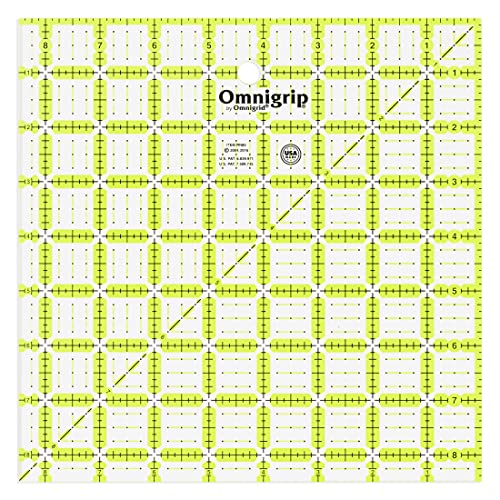
The Quilter’s Select ruler feels almost "tacky" to the touch, providing a level of friction that is unparalleled in the market. It is the ideal choice for anyone who worries about their rotary cutter slipping, especially when working with slippery silks or rayon blends.
This ruler essentially eliminates the need for extra pressure, which can actually cause you to lose control of your blade. Think of it like using a high-friction bamboo needle when working with a slippery mohair yarn; the tool does the work of holding the material for you.
The tradeoff here is that the ruler can sometimes be difficult to reposition quickly. If you are a fast-paced quilter who likes to slide your ruler across the table, you may find the grip almost too effective.
June Tailor Shape Cut Ruler: Best for Efficiency

The June Tailor Shape Cut ruler is a specialized tool designed specifically for cutting multiple strips at once. It features slotted channels that guide your rotary blade, ensuring that every strip is identical in width.
This is a game-changer for scrap quilts or projects requiring a high volume of uniform pieces. It removes the human error factor entirely, much like using a stitch counter ensures you don’t accidentally drop a stitch during a long row of lace.
Do keep in mind that these slots require a specific blade size to function correctly. If you are used to a larger rotary cutter, you may need to invest in a smaller blade to navigate the channels effectively.
Dritz Omnigrid 3×18 Inch Ruler: Best for Details

Sometimes you don’t need a massive ruler; you need something agile for trimming small blocks or squaring up edges. The 3×18 inch size is perfect for those smaller, detail-oriented tasks that require maneuverability.
Just as you would reach for a set of double-pointed needles rather than a long circular needle for a small sleeve, you reach for this ruler when the large 24-inch versions feel cumbersome. It is lightweight, easy to store, and fits perfectly in a small project bag.
It is an essential "second" ruler to have on your table. While it isn’t meant for cutting full-width fabric strips, it is indispensable for the finishing work that gives a quilt its polished, professional look.
How to Choose the Right Ruler for Fabric Strips
Selecting the right ruler comes down to your personal cutting style and the types of projects you tackle most often. If you prioritize speed and volume, a slotted ruler like the June Tailor might be your best investment.
If you are a precision-focused quilter who enjoys the meditative process of slow, careful cutting, a high-visibility acrylic ruler is superior. Consider your workspace size as well; a 24-inch ruler is standard, but it can be difficult to manage on a cramped craft table.
- Consider the markings: Look for rulers with 1/8-inch increments if you do intricate piecing.
- Check the grip: Decide if you prefer a ruler that stays put or one that slides easily for quick adjustments.
- Think about durability: Acrylic can crack if dropped on a hard floor, so treat your tools with care.
Acrylic vs. Metal Rulers: Which One to Select
Acrylic rulers are the gold standard for quilting because they offer the transparency required to align fabric patterns. Metal rulers are more durable, but their opacity makes them a poor choice for fabric work where visual alignment is key.
Metal rulers are better suited for drafting patterns on paper or marking seam allowances on cardboard templates. For fabric, the tradeoff of potential breakage with acrylic is worth the benefit of being able to see your textile underneath.
Always choose a heavy-duty acrylic rather than a thin, flimsy plastic. A thicker edge acts as a better guide for your rotary cutter, preventing the blade from "jumping" over the ruler and causing a dangerous slip.
Tips for Maintaining Your Drafting Ruler Edges
Over time, your rotary blade can nick the edge of your acrylic ruler, creating tiny divots that make future cuts imprecise. Once your ruler has "burrs" or nicks, it is time to replace it, as these imperfections will steer your blade off-course every time.
Store your rulers hanging up or flat in a dedicated drawer to prevent warping. If you leave them leaning at an angle against a wall, they can develop a permanent bend that makes them useless for accurate cutting.
Clean your rulers occasionally with a damp cloth to remove lint and fabric sizing. A clean ruler is easier to read and won’t leave residue on your delicate fabrics.
Essential Techniques for Accurate Fabric Cutting
The most important technique is to always keep your hand in a "claw" position on the ruler, with your fingers well away from the cutting path. Apply firm, even pressure across the length of the ruler to prevent it from shifting.
When cutting, keep your rotary cutter blade at a consistent 90-degree angle to the mat. Tilting the blade can cause it to undercut the ruler, resulting in strips that are narrower at the bottom than at the top.
- Square up first: Always ensure your fabric edge is straight before cutting your strips.
- Change your blade: A dull blade requires more pressure, which increases the likelihood of slipping.
- Work in batches: Cut all your strips at once to ensure consistent tension and width across the entire project.
Investing in quality drafting rulers is one of the most practical upgrades you can make for your quilting practice. By choosing a tool that matches your cutting style, you ensure that your fabric pieces are uniform and ready for perfect assembly. Take the time to care for these tools, and they will serve as the reliable backbone of your creative process for years to come. Happy quilting!